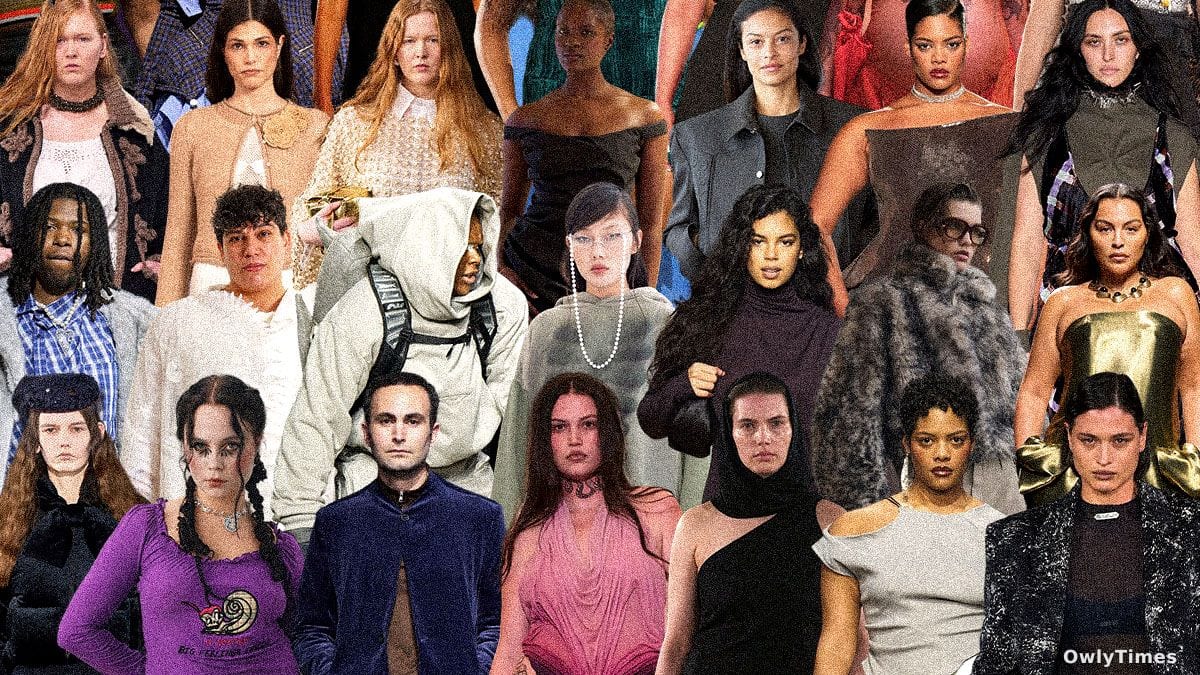

0.3%: That’s the percentage of looks on Fall/Winter 2026 runways dedicated to plus-size models – a figure that represents not a surge in inclusivity, but a concerning regression. While isolated moments of representation from brands like Balenciaga and Givenchy garner headlines, a deeper look at the data reveals a luxury fashion industry increasingly shrinking its definition of beauty, even as the market for extended sizes demonstrably exists. This isn’t simply a matter of optics; it’s a quantifiable business decision with implications for brand loyalty, consumer spending, and ultimately, the future of luxury.
The Declining Curve: Runway Representation in Reverse
The latest data from Vogue Business, analyzing 7,817 looks across 182 shows, paints a stark picture. Plus-size representation has fallen to 0.3%, matching the lowest level recorded since tracking began three years ago. This represents a dip from 0.9% last season, and a worrying trend against a backdrop of rising conservatism and the increasing prevalence of GLP-1 medications – a confluence of factors that, according to industry observers, are subtly reshaping beauty standards. Mid-size representation (US 6-12) remains stagnant at 2.1%, flat for the past three seasons, while straight-size (US 0-4) continues to dominate at 97.6%. Follow the money: brands are allocating runway real estate – and by extension, marketing spend – to a body type that represents a shrinking percentage of their potential customer base.
This piece references the vogue.com report.
The geographic breakdown further illuminates the problem. Paris, traditionally a beacon of high fashion, exhibited the lowest inclusivity, with only 0.1% of looks featuring plus-size models. London, bolstered by designers like Karoline Vitto, remains the most inclusive, but even there, representation declined from 2.8% to 0.8% season-over-season. New York saw a similar drop, from 1% to 0.4%. Milan experienced a slight uptick, largely attributed to Brunello Cucinelli’s decision to cast exclusively mid-size models, but this remains an outlier. Casting director Chloe Rosolek, who worked with Vitto, succinctly identifies the core issue: “[The lack of size inclusivity] is from the brand side — there are ample curve women who are ready to walk.”
The Retail Disconnect: Visibility Without Viability
The runway’s limited inclusivity is compounded by a significant disconnect between what’s shown and what’s sold. Vogue Business’s research into brand e-commerce sites reveals that while some brands technically offer plus-size options, most cap out at US 14 or 16 – effectively the entry point to plus-size, and far from the extended ranges demanded by consumers. Moreover, these limited sizes are frequently out of stock. This performative inclusivity, showcasing larger bodies on the runway without providing corresponding product availability, is increasingly visible – and frustrating – to consumers. Influencer Remi Bader highlights the disconnect: “I didn’t realize that a brand might throw in a mid-size or plus-size model, but you can’t actually buy those pieces in those sizes. It’s confusing.”
This isn’t simply a matter of goodwill; it’s a missed revenue opportunity. A Vogue Business survey from last summer found that 48% of consumers feel pressure to lose weight to feel fashionable, and of those, 63% cite sizing challenges as the primary source of that pressure. Crucially, 27% of plus-size respondents stated they “can never” or “usually can’t” find their size among luxury brands, compared to 16% of mid-size and 12% of straight-size respondents. Tiffany Hsu, chief buying officer at Mytheresa, acknowledges the commercial potential: “Extended sizes often sell through quickly, largely due to limited supply rather than lack of demand.”
The Cost of Commitment: Production and Perception
The reluctance to expand sizing isn’t solely about aesthetics; it’s about the perceived cost and complexity of production. Grading patterns, sourcing materials, and ensuring consistent fit across a wider range of sizes require significant investment. However, designers like Christian Siriano, who consistently champions inclusivity, argue that this investment is a fundamental responsibility. “If you’re going to design for more women, you have to put in the work to make sure the clothes actually fit and feel great,” he states. “When you approach it with the same level of design and care, it absolutely works commercially.”
Smaller brands are exploring innovative solutions, such as adjustable garments and modular designs, to mitigate these costs. Karoline Vitto’s recent collection featured tops designed to be worn in multiple ways, reducing the need for extensive grading. Collaborations with high-street retailers, like Vitto’s partnership with Pull&Bear, can also provide access to established grading and production infrastructure. But even these strategies require significant time and resources. The industry’s historical exclusion of plus-size consumers further complicates matters, requiring brands to build trust and demonstrate a genuine commitment to inclusivity beyond superficial representation.
What This Means for Your Wallet
The decline in size inclusivity on the runway isn’t just a symbolic issue; it’s a signal of a market failing to adapt to evolving consumer demands. For investors, this represents a potential risk. Brands that ignore the growing demand for extended sizes risk alienating a significant segment of the population and ceding market share to competitors who prioritize inclusivity. For consumers, particularly those who have historically been underserved by the luxury market, this means continuing to face limited options and a frustrating shopping experience. The question now is: will luxury brands proactively address this disconnect, or will they continue to prioritize a narrow definition of beauty at the expense of both their bottom line and their social responsibility? Watch closely for brands that move beyond runway representation and invest in consistent, accessible sizing – those are the ones poised to thrive in the evolving landscape of luxury fashion.