
If you think the "Internet of Things" is just about your smart fridge failing to order milk, look closer at how the modern logistics supply chain is being weaponized. The real story here isn't just a series of headline-grabbing explosions in Russia; it is the total collapse of the distinction between e-commerce infrastructure and military logistics in a hyper-connected, drone-dominated conflict.
This week saw a massive escalation in aerial warfare that hit home for the Russian public in an unprecedented way. According to the BBC, Russia launched a heavy barrage of ballistic missiles against Ukrainian cities, resulting in five deaths and dozens of injuries. Simultaneously, Ukraine unleashed a wave of long-range drone strikes deep inside Russian territory. While the exact casualty figures remain a point of contention among outlets—with CBS News reporting nine dead and over 60 wounded, and ABC News citing the same death toll but a higher injury count of over 80—the target of these strikes is clear: the backbone of Russian retail.
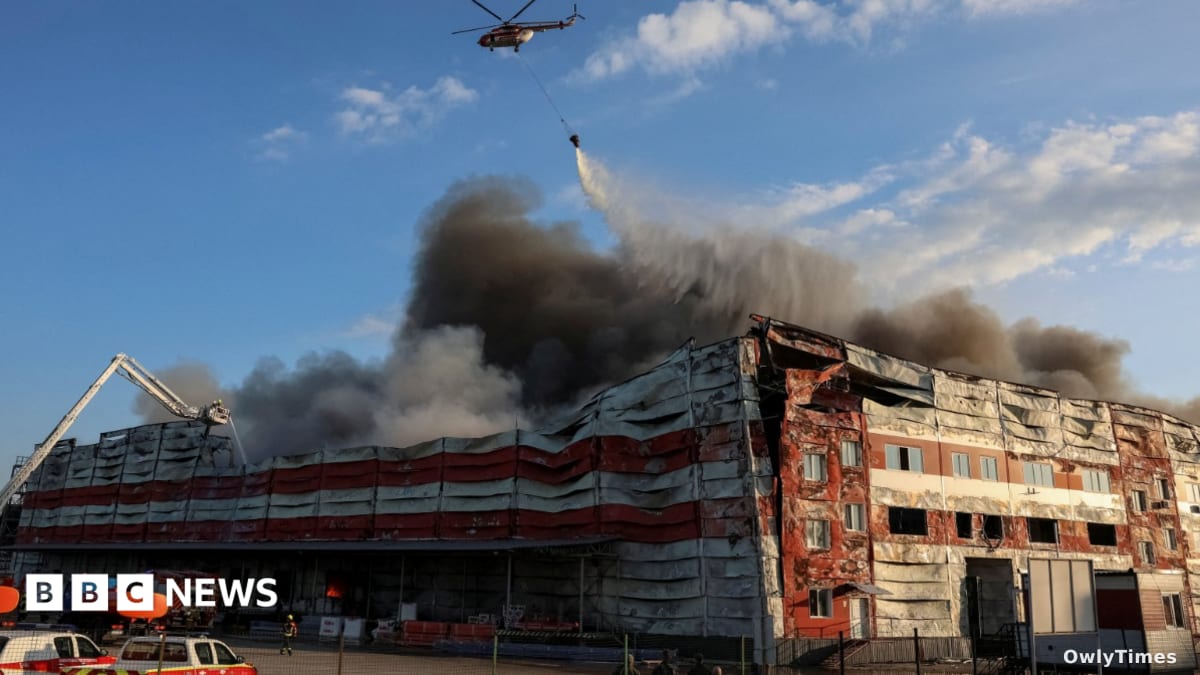
The primary targets for the Ukrainian drone campaign were two massive distribution centers belonging to Wildberries, often described as the Russian equivalent of Amazon. The BBC notes that the RWB group, which operates Wildberries, was valued at approximately $12.6 billion in 2026. However, Ukrainian President Volodymyr Zelenskyy defended the strikes, claiming on Telegram that these warehouses were being used to supply sanctioned components for drone production and navigation equipment, as reported by CBS News.
The technical scale of the Russian response is staggering. The Russian Defense Ministry claimed its air defenses intercepted 379 drones across 19 regions, as well as over the Sea of Azov and the Black Sea, according to ABC News. For the average user, this highlights the fragility of globalized supply chains; when a retail giant’s logistics hub is hit, the downstream effect is not just a late delivery, but a geopolitical shockwave that halts industrial operations. BBC reports that the Caspian Pipeline Consortium even had to suspend oil loading operations after two tankers were damaged in the Black Sea.
The discrepancy in how these events are reported reflects the chaos of the front lines. While ABC News specifies that Moscow region governor Andrei Vorobyov accounted for 61 wounded in his jurisdiction—breaking them down into 40 hospitalizations and 20 outpatient cases—CBS News provides a slightly different total, attributing 37 wounded to that same region. These numbers serve as a grim reminder that in modern warfare, the "industrial park" next door is no longer a neutral zone.
Looking ahead, expect the intensity of these long-range strikes to dictate the next phase of the conflict. As Zelenskyy noted, Ukraine is actively prioritizing the acquisition of ballistic missile interceptors to defend against Russian strikes, signaling that both nations are locked in a cycle of attempting to systematically dismantle the other’s critical energy and logistical infrastructure. The measurable signal to watch is the availability of interceptor systems, which will determine if these retaliatory strikes become a temporary escalation or the new, permanent baseline for civilian life in the region.