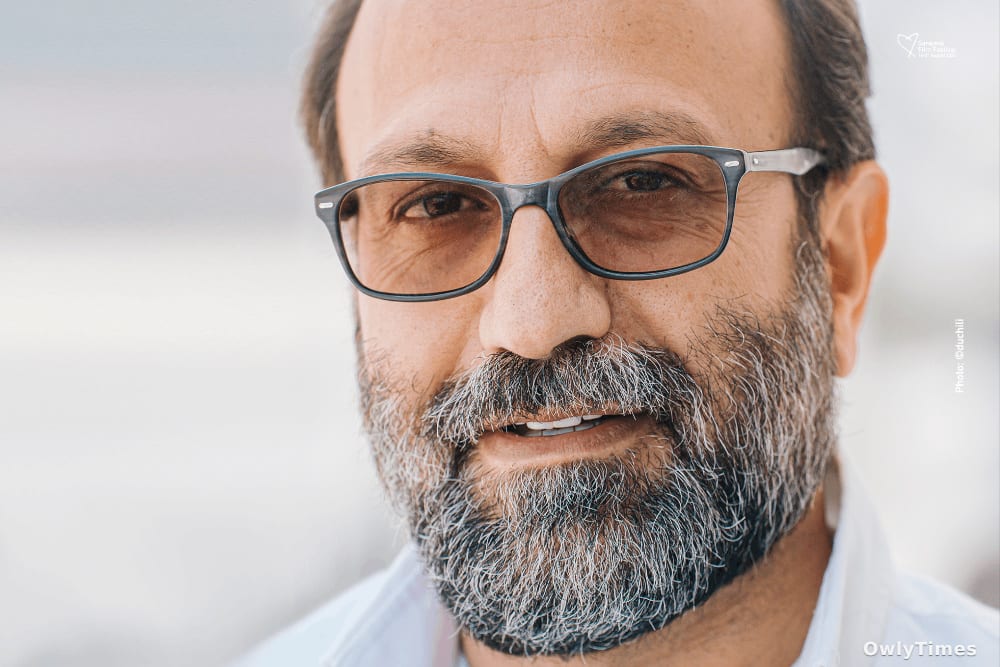

In the quiet, observational power of Asghar Farhadi’s cinema, the most explosive dramas often arrive not with a shout, but with the weight of a long-held silence. It is a fitting tribute, then, that the 32nd Sarajevo Film Festival has announced it will honor the acclaimed Iranian writer-director with its Honorary Heart of Sarajevo. This accolade, intended to recognize his "outstanding contribution to the art of cinema," serves as both a celebration of his past and a testament to his enduring influence on global storytelling.
The festival, which is scheduled to run from Aug. 14 to Aug. 21, 2026, will host the filmmaker in person to accept the award, according to Variety. As part of the proceedings, the festival will present a retrospective of his work under its "Tribute To" program. The Hollywood Reporter adds that Farhadi’s return to Sarajevo marks a significant homecoming, as he previously served as the president of the jury for the feature film competition in 2018.
A Legacy Built on Human Complexity
Farhadi’s journey to becoming a titan of world cinema began long before his international accolades. Born in 1972, he started his filmmaking education as a teenager in 1986, joining the Youth Cinema Society of Esfahan to experiment with 8mm and 16mm formats. Deadline notes that his academic background, including a master’s degree in stage direction from Tehran University, heavily influenced his signature style. His final thesis was dedicated to playwright Harold Pinter, specifically focusing on the power of the "silence and pauses" that would eventually define the tense, domestic friction of his own films.
Since his directorial debut with Dancing in the Dust (2002), Farhadi has navigated the delicate balance between Iranian cultural specificity and universal human experience. His breakthrough came with About Elly (2009), which secured him the Silver Bear for best director at the Berlinale. However, it was A Separation (2011) that catapulted him to global prominence, racking up roughly 70 awards, including both an Academy Award and a César for best foreign film, as reported by Variety.
Bridging Cultures Through Narrative
Farhadi’s career is a masterclass in the fluidity of modern moviemaking, moving seamlessly between Iran and Europe. After A Separation, he filmed The Past (2013) in France, which earned actress Bérénice Bejo a best actress award at the Cannes Film Festival. He later returned to Iran to direct The Salesman (2016), which The Hollywood Reporter identifies as his most successful film to date, netting him his second Academy Award and a best screenplay prize at Cannes.
The festival’s director, Jovan Marjanović, underscored the necessity of this recognition, noting that Farhadi’s films "do not offer easy answers; instead, they invite us to look more closely, listen more carefully and engage with life’s complexities." This philosophy remains central to his latest work, Parallel Tales, which was screened at the 2026 Cannes Film Festival, according to Deadline.
Why This Moment Matters
For the industry, honoring Farhadi in Sarajevo is more than just a celebratory gesture; it is an affirmation of the role of the "outsider" perspective in shaping contemporary global culture. By elevating a director who specializes in the granular, often uncomfortable truths of domestic life, the festival reinforces the idea that cinema’s primary duty is to bridge the gaps between disparate human experiences. As the festival prepares to welcome him back alongside fellow recipient Emily Watson, the focus remains on a filmmaker who has proven that the most profound dramas are those hidden in plain sight.