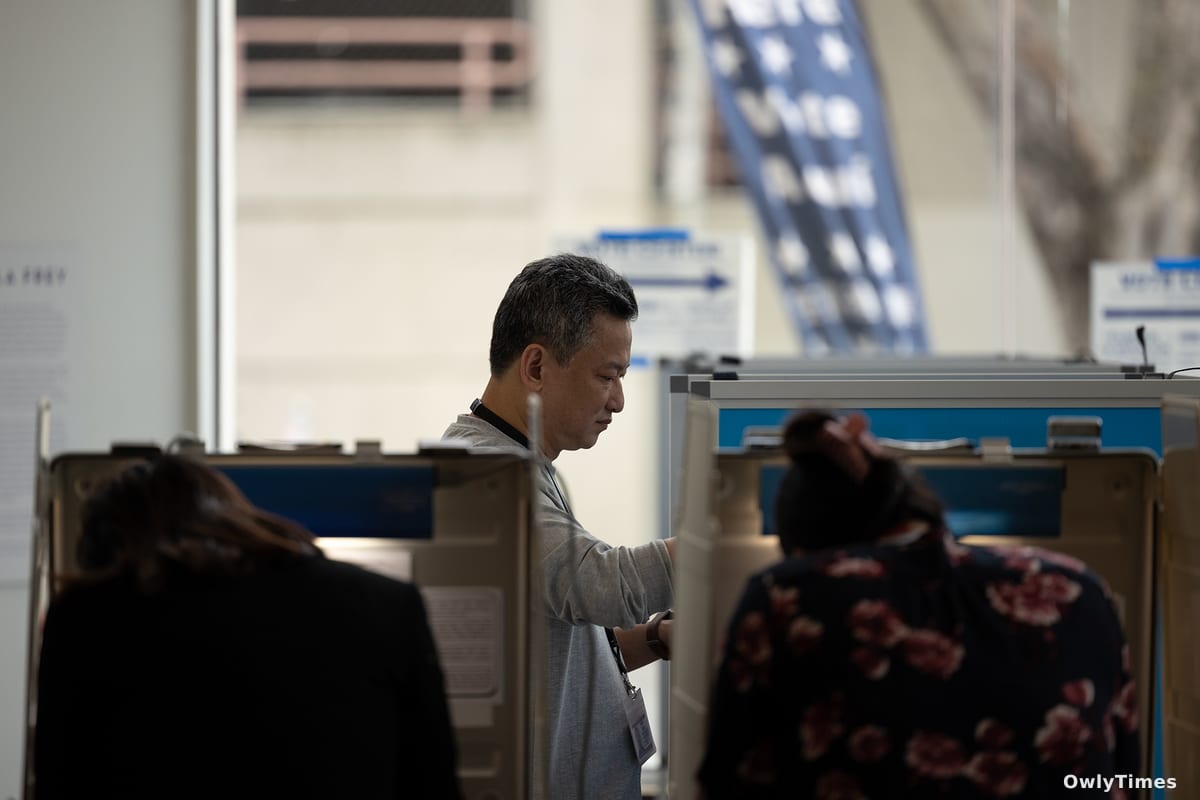

Does the act of casting a ballot fundamentally alter a person’s physical well-being? While the political discourse surrounding the SAVE America Act often centers on the technicalities of election security, a growing body of research suggests that civic participation acts as a profound, albeit overlooked, social determinant of health. By framing the right to vote as a prerequisite for institutional accountability, we can begin to see how legislative barriers to the ballot box are not merely democratic concerns, but potential public health crises.
As public health researchers at San Francisco State University, R. David Rebanal and Shaina Sta. Cruz—a postdoctoral fellow at the Centers for Violence Prevention at the University of California, Davis—have moved beyond broad statistical models to investigate this link directly. Through focus groups conducted with Asian American Californians in the Bay Area, as well as Fresno and Orange counties, the researchers sought to understand how civic engagement influences neighborhood health and access to services. The findings suggest a stark correlation: when communities feel excluded from political life, the resulting lack of representation manifests as tangible gaps in mental health services, language-appropriate clinical care, and broader health infrastructure.
It is vital to distinguish between what these focus groups revealed and the broader, often contentious debate over voter eligibility. The scientific premise here is that political engagement serves as a conduit for resource allocation; communities with higher voter participation historically see greater investment in health infrastructure and Medicaid. For instance, studies of African American populations in racially segregated neighborhoods have shown that higher voter turnout is associated with improved birth outcomes. This is not a matter of political opinion, but of documented social mechanisms: the ballot box is, in effect, a tool for securing the public health interventions a community needs to thrive.
However, current trends in voter behavior suggest that these barriers are already widening. According to a recent University of Southern California report, nearly 21% of Asian Americans who participated in the 2020 election did not return to the polls in 2024, representing the second-highest dropout rate of any racial group. When contextualized against the 2024 general election data—where only 54% of Asian American eligible voters in California cast a ballot, 8 percentage points below the statewide average—the vulnerability of these communities becomes clear. Even lower was the turnout for Latino eligible voters, which sat at just 46%.
Limitations to this research must be acknowledged. While the correlation between civic participation and health outcomes is well-established, establishing a direct causal chain between specific legislative proposals like the SAVE Act and future health declines requires longitudinal tracking of health data that spans multiple election cycles. Furthermore, the focus group methodology provides deep qualitative insight into the lived experience of marginalized groups, but these insights serve as a complement to, not a replacement for, large-scale epidemiological studies. The complexity of these issues means that researchers must be cautious not to attribute all health disparities to a single political cause, even as the data points toward a significant relationship.
The practical impact of documentation requirements also deserves scrutiny. Data shows that approximately 146 million Americans lack a valid passport, with only 21% of individuals earning under $50,000 possessing one, compared to 64% of those earning over $100,000. These financial and bureaucratic hurdles disproportionately affect naturalized citizens who may struggle to access original naturalization papers. History offers a cautionary precedent: when Kansas enacted similar proof-of-citizenship requirements, 31,000 eligible citizens were blocked from registering to vote. In contrast, instances of noncitizen voting remain exceedingly rare, as evidenced by a Utah review of over 2 million registrations that yielded only one confirmed case.
Moving forward, the next reading of voter registration metrics and health access data will show whether these legislative shifts correlate with a measurable decline in community health service utilization. As California’s senators weigh their positions, the central question remains whether policymakers will acknowledge the bridge between the polling station and the clinic. The ongoing debate over the SAVE America Act is not just about the mechanics of a ballot; it is a critical test of whether the systems that govern our democracy will continue to prioritize, or actively dismantle, the foundations of public health.





