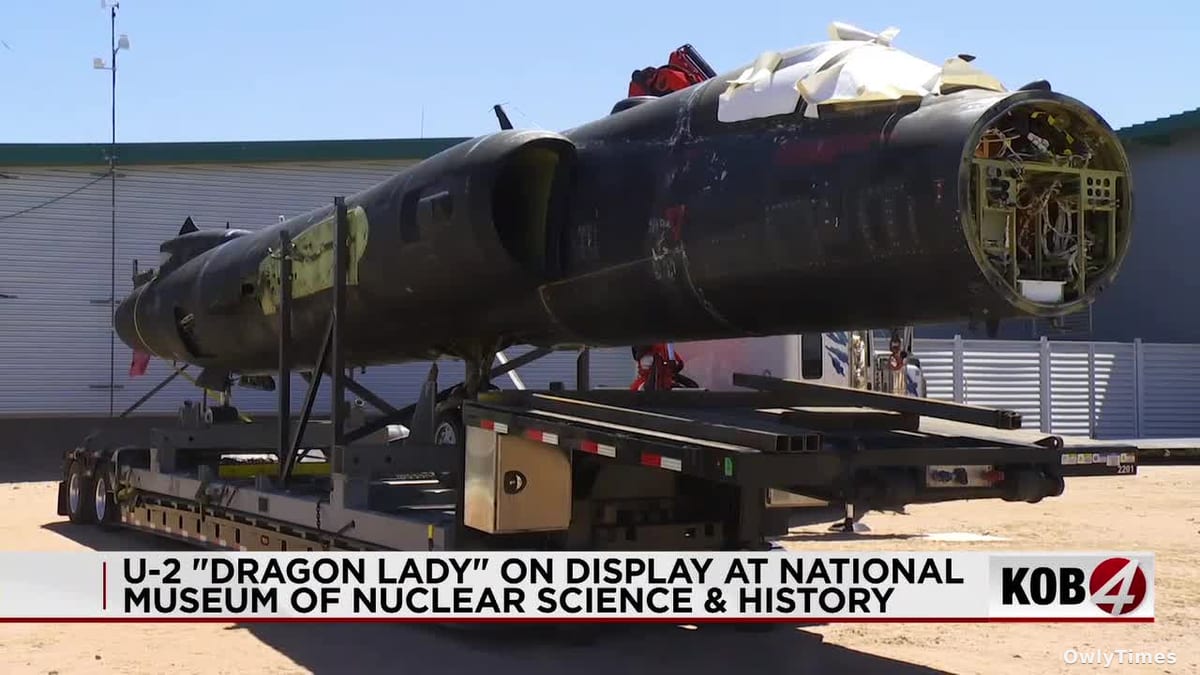

The physical preservation of intelligence-gathering technology offers a rare bridge between abstract historical narratives and the tactile reality of high-stakes diplomacy. At the National Museum of Nuclear Science and History in Albuquerque, a U-2 Dragon Lady spy plane has officially moved from the museum’s long-standing wish list to its permanent exhibition floor. This arrival represents more than just a new artifact; it serves as a tangible reminder of the aerial surveillance capabilities that dictated the geopolitical maneuvering of the mid-20th century.
A Legacy of Surveillance on Public Display
The inclusion of the U-2 in the museum's collection is a milestone for civilian institutions. According to Jennifer Hayden, the museum will be the first civilian organization to receive a U-2 Dragon Lady, a status that underscores the rarity of such decommissioned assets entering the public domain. The aircraft was transported from California to New Mexico, a logistical feat for a machine designed for high-altitude reconnaissance rather than ground-based exhibition.
For museum leadership, this acquisition was a two-decade ambition finally realized. When museum officials state that the plane had been on their wish list for more than 20 years, they are highlighting the difficulty of securing sensitive military hardware for public study. This aircraft is now the ninth such vessel on display at the site, further diversifying a collection that aims to contextualize the scientific and military advancements of the nuclear era.
Connecting Cold War Technology to Diplomatic Outcomes
The significance of the U-2 lies in its specific historical utility during the Cuban Missile Crisis. By providing high-resolution imagery of Soviet nuclear sites, the platform offered the empirical data necessary to navigate the most precarious moments of the conflict. Hayden notes that the plane connects directly to the museum's core mission, as its intelligence-gathering role was a primary factor in shaping the response strategy of President Kennedy.
While headlines may focus on the sheer scale of the aircraft, the scientific reality is that the U-2 was an engineering marvel of its time, designed to operate at altitudes that kept it beyond the reach of conventional interceptors. Its ability to "see" into closed societies allowed for a level of transparency that, while inherently aggressive in a military context, functioned as a tool for de-escalation by providing the clarity required to avoid miscalculation.
Limitations to Consider in Historical Exhibition
Despite the excitement surrounding this addition, the museum faces the inherent challenge of translating complex aeronautical history for a public audience. A static display often obscures the intense, high-stress conditions under which these pilots operated, as well as the fragility of the political intelligence they provided. Visitors viewing the craft from the ground see a finished piece of machinery, but the reality of the U-2 program was defined by constant mechanical updates and the persistent risk of mid-air failure.
The museum’s ability to maintain the structural integrity of this aircraft will be a long-term indicator of its success in preserving this period of history. As the facility continues to integrate the U-2 into its educational programming, the next reading of the museum’s visitor engagement metrics will determine if this specific focus on Cold War intelligence successfully resonates with a younger generation less familiar with the daily anxieties of that era. By grounding the narrative in the physical evidence of the U-2, the institution is attempting to ensure that the mechanics of nuclear deterrence remain a subject of active inquiry rather than a forgotten footnote.