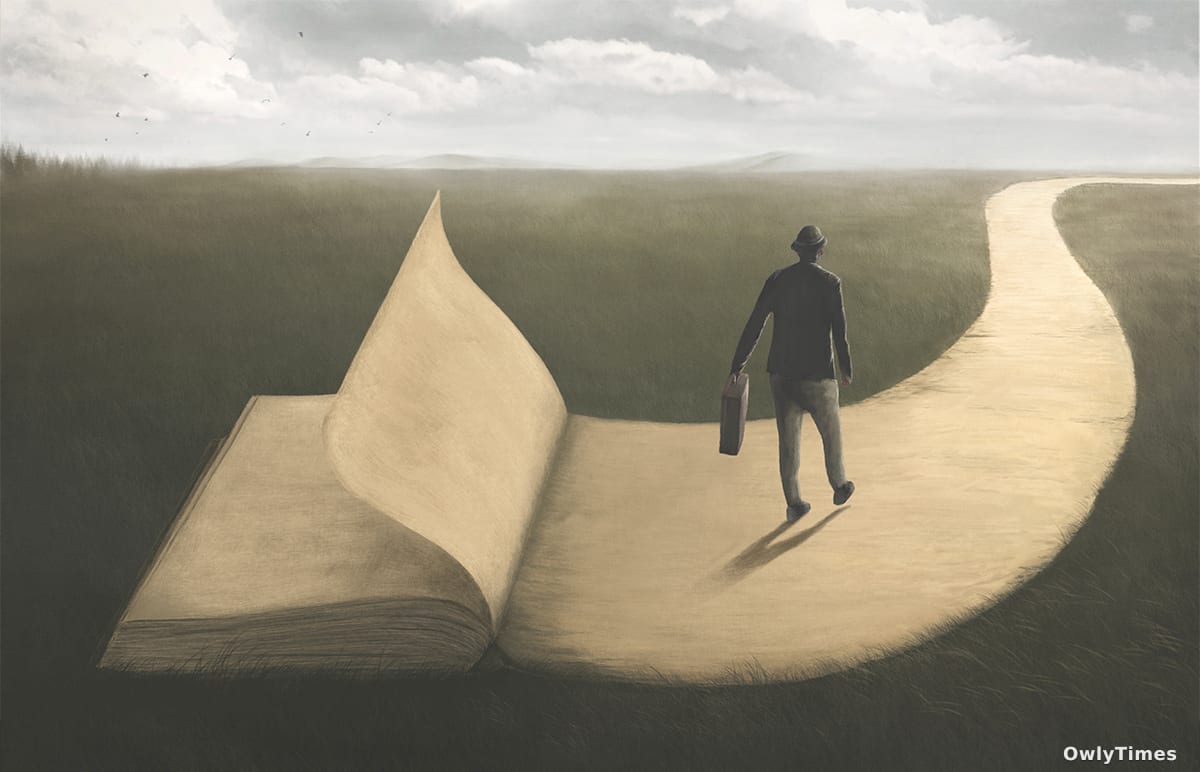

Is time travel possible? The debate, which echoes through the foundational writings of Kurt Godel, Stephen Hawking, and Albert Einstein, rarely reaches a definitive "yes." Yet, there is a tangible form of temporal displacement available to us: the immersive biography. By stepping into the life of a scientist who perceived the world through a unique lens, we effectively walk the streets, share the struggles, and witness the breakthroughs that shaped our modern understanding of reality.
The Intersection of Scientific Rigor and Personal History
What many readers may mistake for a simple historical recap is, in fact, a rigorous examination of the human condition behind the equations. Biographers like Dava Sobel in Galileo’s Daughter (published by Penguin Random House) do more than recount 16th-century astronomical achievements. By highlighting the correspondence between the astronomer and his daughter, Maria Celeste, Sobel provides a rare window into the tender side of a man famously at odds with Catholic doctrine.
Similarly, Janet Browne’s two-volume biography, Charles Darwin: Voyaging and Charles Darwin: The Power of Place (published by Princeton University Press and Penguin Random House), demonstrates that scientific insight is never formed in a vacuum. While reading Darwin’s own works—The Voyage of the Beagle, On the Origin of Species, and The Descent of Man—is essential for grasping the mechanics of evolution, Browne’s narrative context explains the social and cultural pressures that allowed these world-shattering ideas to emerge.
Limitations of the Biographical Lens
While these accounts are invaluable, it is important to distinguish between the lived reality of these figures and the narratives constructed by their biographers. Andrea Wulf’s The Invention of Nature: Alexander von Humboldt’s New World (Penguin Random House) captures the spirit of the 19th-century Prussian explorer, but the reader must remember that such works are interpretations of historical records. Biographers often face the challenge of reconciling a subject's public scientific contributions with their private contradictions, such as Alexander von Humboldt’s tendency toward vanity contrasted with his personal generosity toward struggling scientists.
In the case of Walter Isaacson’s Einstein: His Life and Universe (Simon & Schuster), the author successfully bridges the gap between complex physics and personal history. We learn, for instance, that in 1907, while Einstein was busy upending concepts of space and time and developing his revolutionary quantum theory of light, he was simultaneously considering a career as an electric-device salesman to escape his drudge work at a patent office. This humanizes the icon, showing that even the greatest minds are subject to the same mundane professional frustrations as anyone else.
The Ethics of Discovery
Some biographies transcend the life of a single scientist to critique the scientific apparatus itself. Rebecca Skloot’s The Immortal Life of Henrietta Lacks (Penguin Random House) serves as a stark reminder that scientific progress has historically been decoupled from medical ethics. Henrietta Lacks, who died in 1951 from cervical cancer, had her cells taken without her knowledge or consent—a violation that spurred significant changes in consent laws and bioethical practices.
The value of these works lies in their ability to contextualize the "what" of science with the "who" and the "why." Whether it is James Gleick’s exploration of Richard Feynman’s personal grief in Genius or Evelyn Fox Keller’s account of Barbara McClintock’s life as an academic outcast, these texts provide a roadmap for understanding how scientific identity is formed. The next reading of institutional bioethical guidelines and research consent metrics will serve as a measurable indicator of whether the industry has fully integrated the lessons presented by such biographical accounts.





