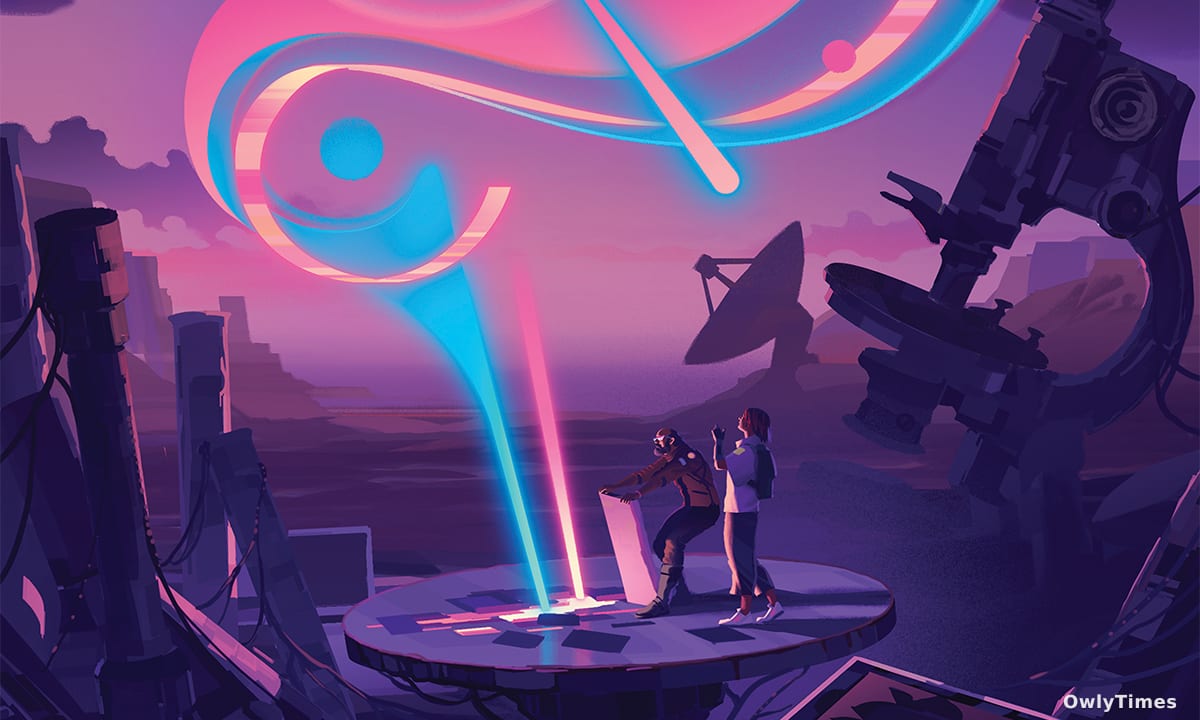

The late 2020s and early 2030s represent a stark warning in the history of science: a period where deliberate attacks on established knowledge – from vaccine efficacy to climate change – nearly crippled the pursuit of understanding itself. But from this “Dark Period,” as historian Anya Aleksandrova terms it, emerged a profound shift in how science is done, a move away from rigid protocols and towards what is now known as “radically exploratory science.” This isn’t simply a story of science rebounding; it’s a story of science fundamentally re-evaluating its own methods, and the implications are still unfolding. The narrative often presented focuses on the political reversal that allowed science to recover, but Aleksandrova’s research, based on interviews with scientists, funders, and policymakers between 2035 and 2042, reveals a deeper, more internal reckoning within the scientific community itself. It wasn’t enough to simply defend science; it needed to evolve.
The crisis of the 2020s exposed a troubling reality: science had, in many ways, become a factory. Aleksandrova recounts how researchers, even as recently as the early 21st century, largely adhered to “well-worn paths,” utilizing standardized methods and building theories within existing disciplinary frameworks. This emphasis on replicability and “objective” knowledge – results independent of context – inadvertently stifled genuine novelty. Dr. Martin Croot, a theoretical physicist, described the existence of a “canon of fundamental questions” that dominated the field, with research outside these boundaries facing intense scrutiny. This wasn’t a conspiracy to limit discovery, but a consequence of a system that prioritized demonstrable progress within established parameters. The pressure to produce predictable deliverables, reinforced by funding practices prioritizing “impact” and “success,” further narrowed the scope of inquiry. The irony is that in striving for certainty, science inadvertently made itself vulnerable to those who would deny its findings – a system built on appearing infallible couldn’t easily accommodate nuance or evolving understanding.
Drawn from nautil.us.
This isn’t to say that standardized methods are inherently flawed. They are crucial for verifying results and building a robust body of knowledge. However, the overemphasis on these methods created a situation where the process of science became more important than the discovery. Elena Katz, a Ph.D. student in psychology, pointed out the arbitrary nature of some of these standards – why test memory retention after two hours instead of three? Why insist on a specific font size? These questions weren’t about undermining rigor, but about recognizing that the chosen standards themselves were often based on convention rather than demonstrable superiority. The focus on replicability within narrowly defined settings came at the expense of understanding how results might generalize to the real world, a crucial failing that fueled public distrust when scientific recommendations inevitably evolved. As Jacob Johnson, a concerned citizen, articulated, the perception of changing conclusions eroded trust, framing revisions as failures rather than as the natural progression of knowledge.
The shift to radically exploratory science, as Aleksandrova documents, wasn’t a sudden revolution but a gradual unfolding. It involved a conscious loosening of the constraints that had defined “good science,” a willingness to embrace uncertainty, and a prioritization of generating more possible explanations rather than converging on a single “correct” answer. Sebahat Öcal, an astrophysicist studying exoplanets, exemplifies this approach, focusing on brainstorming “as many explanations as possible” for her findings, even utilizing AI tools to expand her range of ideas. This isn’t about abandoning rigor, but redefining it. As Öcal explains, true scientific engagement involves grappling with the evidence in its “full richness and complexity,” acknowledging that finite data will always support multiple interpretations. This requires a fundamental shift in mindset, from seeking definitive answers to embracing the inherent ambiguity of the natural world.
However, the transition isn’t without its challenges. Aleksandrova raises a critical question: how novel can a result be before it becomes incomprehensible? How do we balance exploration with the need for understanding? And perhaps most importantly, how much exploration is too much? The risk of becoming lost in a sea of possibilities is real. But the lessons of the Dark Period are clear: a science that clings too tightly to established paradigms, that prioritizes certainty over discovery, is ultimately a fragile science, vulnerable to both internal stagnation and external attacks. The next steps in research must focus on developing effective methods for navigating this new landscape of exploratory science – tools for synthesizing diverse perspectives, for identifying promising avenues of inquiry amidst the chaos, and for communicating the inherent uncertainties of scientific knowledge to the public in a way that fosters trust rather than skepticism. We should be watching for the development of new metrics for evaluating scientific progress that move beyond simple measures of “impact” and “success” and instead reward intellectual risk-taking and the generation of novel hypotheses. The future of science may depend on our ability to embrace the messiness of the unknown.





