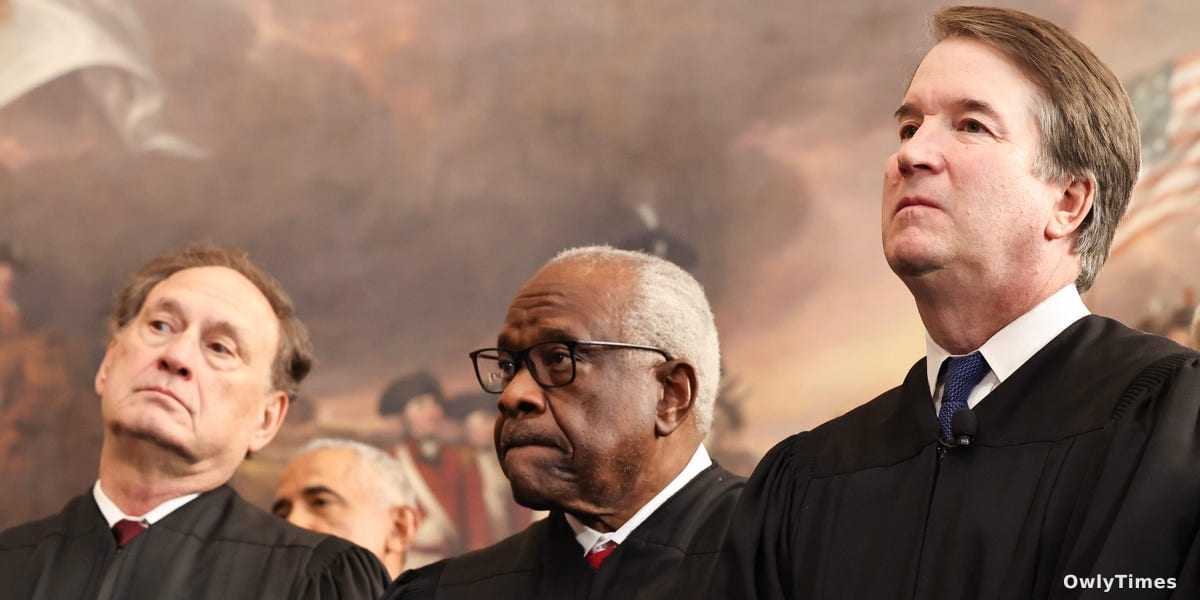

The Supreme Court’s 6-3 decision striking down President Trump’s tariffs wasn’t simply a legal defeat for the former president; it was a calculated risk by the Court’s majority to reassert Congressional authority over trade policy, a power steadily eroded by decades of executive overreach. The immediate impact is the potential unraveling of billions in tariff revenue, but the deeper strategic play is a signal about the boundaries of presidential power – a signal deliberately ignored by a dissenting bloc comprised of Justices Samuel Alito, Jr., Clarence Thomas, and Brett Kavanaugh. Their dissents weren’t merely legal arguments; they were a preemptive defense of expansive executive authority, foreshadowing future battles over the separation of powers.
The core of the dispute centers on the International Emergency Economic Powers Act (IEEPA) of 1970, a law intended to grant the president flexibility in responding to national economic emergencies. President Trump utilized IEEPA to justify tariffs on goods from China and elsewhere, bypassing the traditional Congressional process for setting trade policy. The majority opinion effectively argued that tariffs, while a tool of economic regulation, don’t neatly fit within IEEPA’s emergency powers framework. This isn’t a novel interpretation; historically, Congress has jealously guarded its constitutional authority over tariffs, enshrined in Article I, Section 8. The 1930 Smoot-Hawley Tariff Act, widely blamed for exacerbating the Great Depression, stands as a cautionary tale of unchecked protectionism enacted by Congress, but the principle remains: trade policy is fundamentally a legislative function. The current ruling attempts to restore that balance.
This piece references the Business Insider report.
Who benefits and who loses from this decision is complex. American consumers, who ultimately bear the cost of tariffs through higher prices, stand to benefit from their removal. Domestic industries competing with imported goods may face renewed pressure. But the biggest losers are arguably those who have come to rely on the precedent of expansive executive power in trade. The dissenting justices, in their arguments, explicitly acknowledge the historical precedent of presidents utilizing tariffs to “regulate” imports, citing it as a “traditional and common tool.” Justice Kavanaugh’s dissent, joined by Justices Thomas and Alito, goes further, suggesting numerous other statutes could still be invoked to justify tariffs, effectively rendering the ruling a limited check on presidential power. This isn’t a legal oversight; it’s a deliberate acknowledgement of the existing legal landscape and a signal that the fight isn’t over.
The practical implications of the ruling are immediately thorny. As Justice Kavanaugh himself pointed out, the majority opinion is “silent” on the matter of returning the billions of dollars in tariffs already collected – a “mess,” as acknowledged during oral arguments. Estimates place the collected tariffs at over $18 billion as of late 2023, a sum now legally questionable. The process of refunding these funds will likely be protracted and litigious, potentially requiring Congressional action to authorize the reimbursements. This creates a political vulnerability for the Biden administration, which must now navigate the fallout of a decision it didn’t initiate. The parallel to the aftermath of the 1935 Supreme Court decision striking down the National Industrial Recovery Act (NIRA) is instructive. While intended to bolster the New Deal, the ruling forced President Franklin D. Roosevelt to recalibrate his economic recovery strategy, demonstrating the unpredictable consequences of judicial intervention.
President Trump’s immediate reaction – praising the dissenting justices and denouncing the majority – underscores the political dimension of the ruling. He framed the decision as a betrayal, highlighting the growing polarization within the Court and the weaponization of judicial appointments. This rhetoric isn’t surprising, given his long-standing advocacy for protectionist trade policies. However, the more significant political chess move to watch isn’t Trump’s reaction, but the response from the dissenting justices. Will they continue to champion expansive executive authority in future cases, potentially laying the groundwork for a challenge to the ruling through alternative legal avenues? The alignment of Justices Alito, Thomas, and Kavanaugh on this issue suggests a coordinated strategy, and their next move will reveal the extent to which they intend to push back against what they perceive as judicial overreach.