
$65 Million Profit Slide: Why the Toy Industry’s Relief is Premature
A 65% year-over-year profit decline at Basic Fun isn’t an isolated incident; it’s a symptom of a larger, lingering uncertainty gripping the $38.2 billion US toy industry. While the frenzied tariff announcements from the Trump administration have slowed, the potential for renewed trade conflict – and the financial fallout for toy manufacturers – remains acutely present, as evidenced by the Supreme Court case potentially reaching a decision as early as Friday. This isn’t simply about price increases; it’s about a fundamental disruption to supply chains and a chilling effect on investment, even as official data suggests limited consumer impact.
Drawn from the BBC.
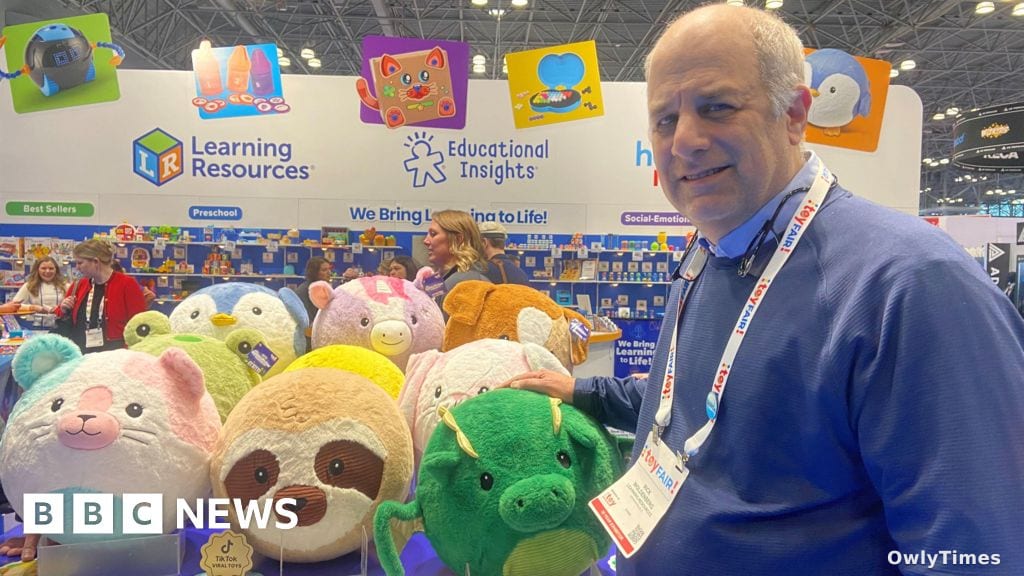
The core of the issue stems from the chaotic tariff implementation of 2023, which at its peak reached a staggering 145% on Chinese goods – a critical source of manufacturing for the vast majority of toys sold in the US. Rick Woldenberg, CEO of Learning Resources, directly challenged these tariffs in court, becoming a de facto standard-bearer for an industry facing escalating costs. While the average tariff on Chinese imports has since settled to around 20%, the damage was done, forcing companies to either absorb losses, raise prices, or attempt to diversify their supply chains – all costly and time-consuming endeavors. The fact that Woldenberg is still receiving “appreciation” from peers at industry events like the recent New York Toy Fair underscores the pervasive anxiety.
However, the narrative of widespread consumer pain doesn’t fully align with the data. Alberto Cavallo, a professor at Harvard Business School, has tracked the impact of tariffs on consumer prices and found that while cheaper toys have seen price increases, the overall impact on toy prices has been “little.” This discrepancy points to a strategic absorption of costs by many companies, a tactic that, while protecting consumers in the short term, demonstrably erodes profitability. Basic Fun’s 65% profit slide, coupled with Glo Pals’ first price increase in six years (a 20% jump to $12.99 for their light-up cubes last April), reveals a clear pattern: companies are quietly bearing the brunt of these trade policies to maintain market share.
The situation is further complicated by the White House’s stated intention to pursue alternative tariff mechanisms should the Supreme Court rule against the current measures. This creates a perverse incentive for companies to prepare for the worst, even as they publicly express hope for stability. Jay Foreman, CEO of Basic Fun, exemplifies this cautious outlook, stating bluntly, “You cannot go to sleep on this president,” and projecting that the current $35 price point for their Tonka truck will hold steady through 2026 – a three-year horizon predicated on continued uncertainty. This long-term price anchoring suggests a willingness to sacrifice short-term gains for the sake of predictability.
The potential for refunds – billions of dollars collected in tariffs – if the Supreme Court rules in Woldenberg’s favor offers a glimmer of hope, but even this is not guaranteed. Tim Hislop, co-founder of UK-based Floss & Rock, acknowledges that recouping previously paid tariffs is unlikely, despite the potential for future cost reductions. His “little prayer every night” encapsulates the precarious position of many international toy manufacturers reliant on the US market, which accounts for over half of his company’s revenue.
What this means for your wallet: Don’t expect significant toy price drops anytime soon, even with a favorable Supreme Court ruling. While manufacturers may eventually pass on some savings, the underlying cost pressures and the lingering threat of renewed tariffs will likely keep prices elevated. More importantly, watch for a slowdown in innovation and product development as companies prioritize cost containment over investment. The real cost of these trade policies isn’t just the few extra dollars on a toy; it’s the potential for a less vibrant and dynamic toy industry in the years to come. The key question now is: will the Supreme Court decision truly resolve the uncertainty, or simply usher in a new era of trade-related volatility?





