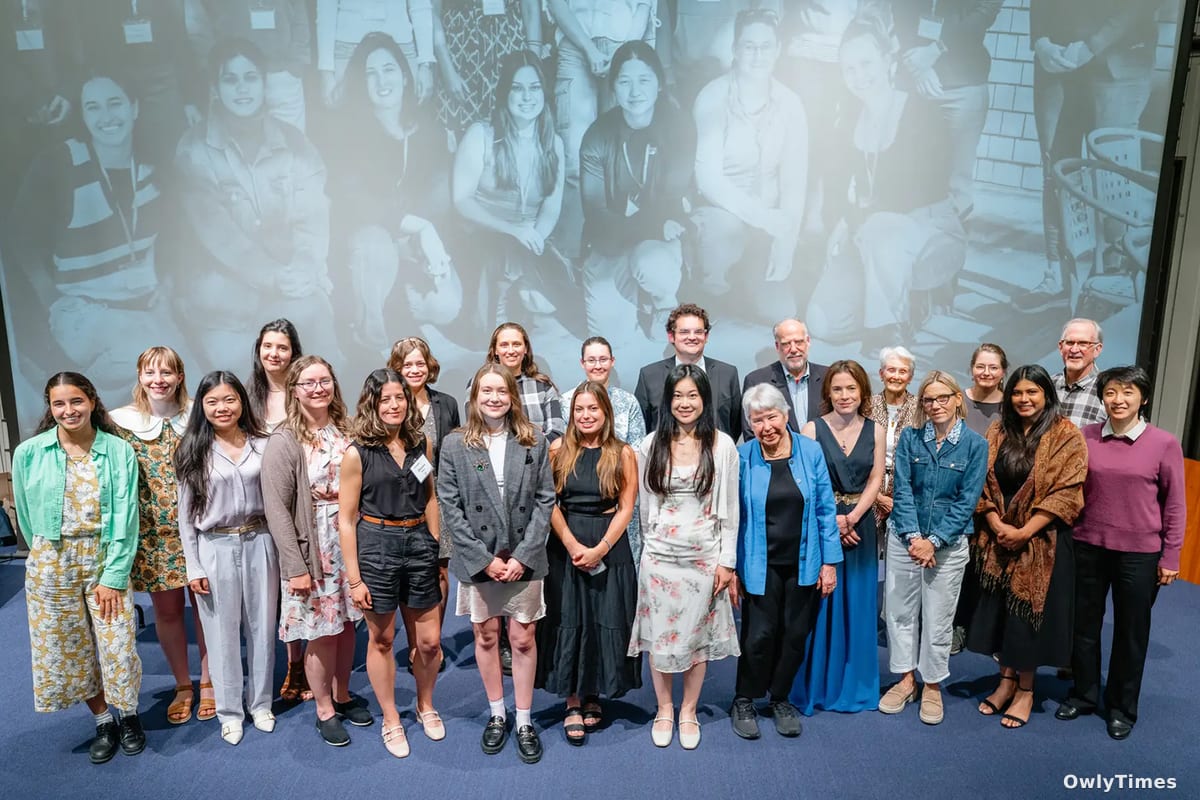

The persistent underrepresentation of women in STEM fields isn’t a pipeline problem—it’s a system problem. While decades of initiatives have focused on encouraging girls to enter scientific careers, fewer have addressed the subtle, yet powerful, forces that hinder their advancement. A new program at the University of California, Berkeley, called Shining Lights, isn’t attempting to simply boost numbers; it’s tackling the systemic barriers to success, and early results suggest a focused approach to professional development and community building can yield significant gains in confidence and career trajectory. The program’s success isn’t about fixing women, but about fixing the environments they navigate.
Beyond Recruitment: Addressing the Retention Crisis
For years, the narrative around gender disparity in STEM has centered on recruitment. Efforts to spark interest in science among young girls have undoubtedly been valuable, but they often fail to account for the attrition rates observed at each subsequent stage of academic and professional life. A 2023 study by the National Science Foundation revealed that while women earn roughly half of all bachelor’s degrees in science and engineering, they comprise only 28% of the STEM workforce. This gap isn’t due to a lack of initial interest or aptitude, but rather to a complex interplay of factors including implicit bias, lack of mentorship, and the challenges of balancing career and family. Gigi Coe and Michael Garland’s generous gift, which launched Shining Lights in January 2025 with an inaugural cohort of 16 participants, directly responds to this retention crisis by providing targeted support for those already committed to a STEM career. The program’s very existence acknowledges that simply getting women into the field isn’t enough.
The Core Components of a Confidence Boost
Shining Lights distinguishes itself from other professional development programs through its intensive, small-group format and holistic approach. Unlike broad-stroke workshops, the program offers focused sessions on leadership, public speaking, networking, and work-life balance, coupled with a significant benefit: six months of unlimited executive coaching. This sustained, individualized support is a key differentiator. Gabriel Orebi Gann, the program’s director and a physics professor, notes that applicants consistently cite three primary motivations for joining: developing professional skills, building self-confidence, and establishing a support network. This isn’t surprising; the program isn’t simply teaching skills, it’s actively fostering a sense of belonging and empowerment. Dresselhaus, a participant in the inaugural cohort, articulated this powerfully, stating, “I found exactly what I had hoped for and more…I feel that we really became a team — supporting each other, cheering each other on, and celebrating hard-earned successes together.” This emphasis on community is crucial, as research consistently demonstrates the positive impact of peer support on women’s career advancement.
Drawn from ls.berkeley.edu.
What the Data Doesn’t Say, and Why That Matters
While anecdotal evidence from participants like Dresselhaus is compelling, it’s important to acknowledge that Shining Lights is still in its early stages. The program has now entered its second year, having retooled its offerings based on feedback from the first cohort. Currently, the program is open to Ph.D. candidates and postdoctoral scholars at UC Berkeley who demonstrate an interest in improving gender representation, though it welcomes applicants of all genders. It’s tempting to interpret this as a program solely “for women,” but that would be a mischaracterization. The program’s aim is to address systemic issues, and recognizing the role of allies in dismantling those systems is vital. However, it’s also crucial to note that the program directly addresses challenges disproportionately faced by women. What the program doesn’t yet offer is longitudinal data tracking the long-term career outcomes of its fellows. We don’t yet know if participation in Shining Lights translates to increased representation in leadership positions, higher publication rates, or greater job satisfaction.
Looking Ahead: Measuring Impact and Expanding Reach
The next critical step for Shining Lights is establishing a robust system for tracking the career trajectories of its participants. This will require a commitment to long-term data collection and analysis, potentially involving surveys, interviews, and access to publicly available data on publications and promotions. Beyond tracking outcomes, future research should explore the specific mechanisms through which the program fosters confidence and skill development. Are certain workshop components more effective than others? Does the executive coaching have a measurable impact on participants’ negotiation skills or leadership style? Furthermore, the program’s model could be adapted and scaled to other institutions, but only if its core principles – intensive support, community building, and a focus on systemic change – are preserved. The question now isn’t simply whether programs like Shining Lights can make a difference, but whether the broader scientific community will invest in the kind of sustained, targeted interventions needed to truly level the playing field. Will universities prioritize funding for these types of initiatives, or will they continue to rely on recruitment efforts that address only one piece of a much larger puzzle?