
Does anyone truly believe the future of photography is about chasing ever-higher megapixel counts and computational wizardry that smooths every imperfection into oblivion? Or is the real battleground now about how we feel when we take a picture, and the creative control we’re given over that feeling? Google, it seems, has quietly decided it’s the latter, launching a significant update to its Snapseed iOS app that redefines what a mobile photo editor can be.
After a soft-launch period in December, Snapseed for iOS is officially rolling out a new integrated camera that positions the app as far more than just a post-processing tool. Previously, accessing the “Snapseed camera” was a somewhat clunky affair, relegated to a Lock Screen widget, Control Center, or Camera Control. Now, a dedicated camera icon sits prominently in the top-right corner of the app, signaling a deliberate shift in its identity. This isn't just about convenience; it's about making Snapseed a primary capture device, subtly challenging the dominance of native camera apps.
Beyond the Filter: A Pro Mode for the Masses
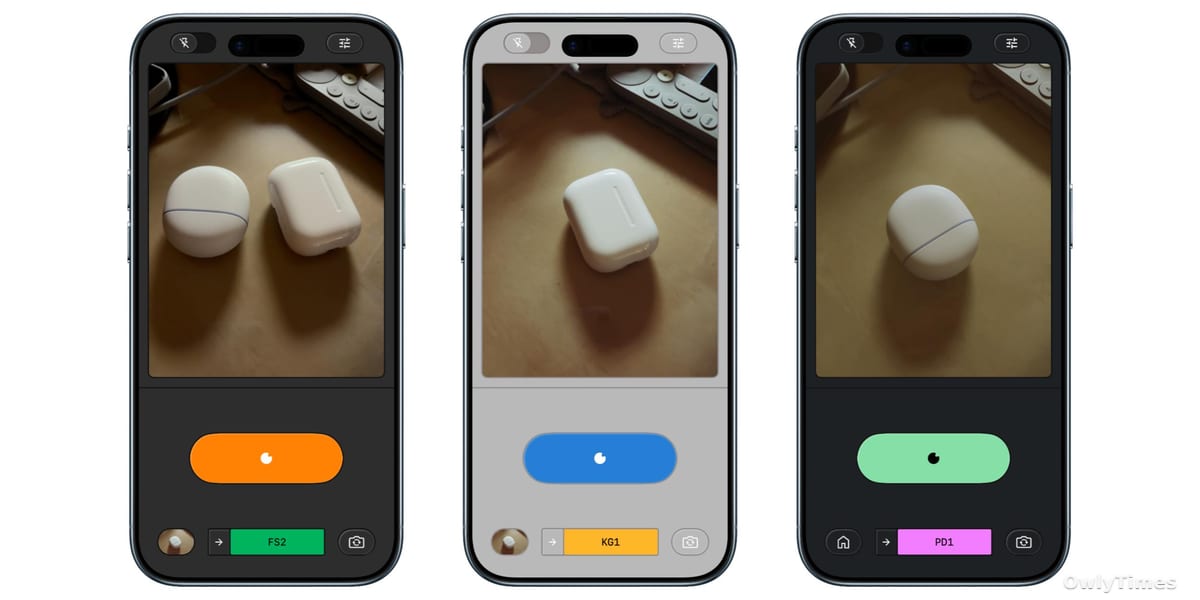
The most compelling addition for those who demand more than a point-and-shoot experience is the new "PRO" mode. Enabled via a top-left toggle, this feature introduces manual adjustments that were previously limited to exposure and focus. Users now gain control over three critical parameters: ISO, Shutter Speed, and Focus, accessible via new buttons at the bottom of the viewfinder. A charmingly skeuomorphic dial allows for fine-tuning these settings, moving away from simple auto modes. While the flash has been relocated to the bottom-left and zoom to the opposite side, the true power lies in this granular control, offering a taste of DSLR-like precision without the bulk. For the average user, this means less reliance on algorithms and more on personal photographic vision, transforming a casual snap into a deliberate capture.
See the original 9to5Google story for the full account.
The Nostalgia Play: Why Old Films are New Again
Perhaps the most culturally resonant aspect of this update is the real-time "film emulation." Beyond simply applying custom saved looks, Snapseed’s camera now offers a curated selection of styles inspired by legendary film stocks. We’re talking about KP1 (Kodak Portra 400), KP2 (Kodak Portra 160), KG1 (Kodak Gold 200), KE1 (Kodak E200), FS1 (Fuji Superia 200), FS2 (Fuji Superia 800), FP1 (Fuji Pro 400h), AG1 (Agfa Optima 200), AS1 (Agfa Scala 200), PD1 (Polaroid 600), and even TC1 (Technicolor). The skeuomorphism isn't just for show; a delightful rewind button animation accompanies each film switch, tapping directly into the romanticized nostalgia for analog photography.
The real story here isn't just about adding new filters — it’s about democratizing the nuanced aesthetics of classic film for a generation that may have never loaded a roll of Kodak Portra. Google isn't just giving users tools; it’s providing a curated artistic palette, complete with the assurance that "every photo you take includes a full editing stack." This means the creative choices made at capture aren’t permanent; they can be changed, fine-tuned, or completely reverted even after the photo is saved. This blend of instant gratification and non-destructive editing is a powerful draw for anyone who's ever regretted a filter choice. Furthermore, the ability to set different Color Themes for the viewfinder — Editor, Dusk, Negative, Steel, Haze, and Depth — allows users to pre-visualize their final image with impressive fidelity, truly making the phone a creative instrument.
Google's Quiet Gambit in the Mobile Photo War
What does it mean when a major tech player like Google pours significant development into a completely free app like Snapseed 3.15.0? It’s more than just a goodwill gesture. It's a strategic move in the ongoing battle for mobile imaging supremacy. By integrating a powerful, creatively rich camera directly into a robust editor, Google is attempting to own the entire photographic workflow for users, from capture to final polish. They’re not just competing with other photo editors; they're subtly encroaching on the territory of Apple's native Camera app and even dedicated third-party camera apps.
This isn't just a feature dump; it’s a philosophical statement. It signals that Google understands that the future of mobile photography isn't solely about computational photography fixing our mistakes, but about empowering users with the tools to express themselves with intention. Expect other app developers, and perhaps even device manufacturers, to take note. The next frontier won't just be about "better" photos, but about more personal ones, and Snapseed’s new camera is a clear shot across the bow in that direction.