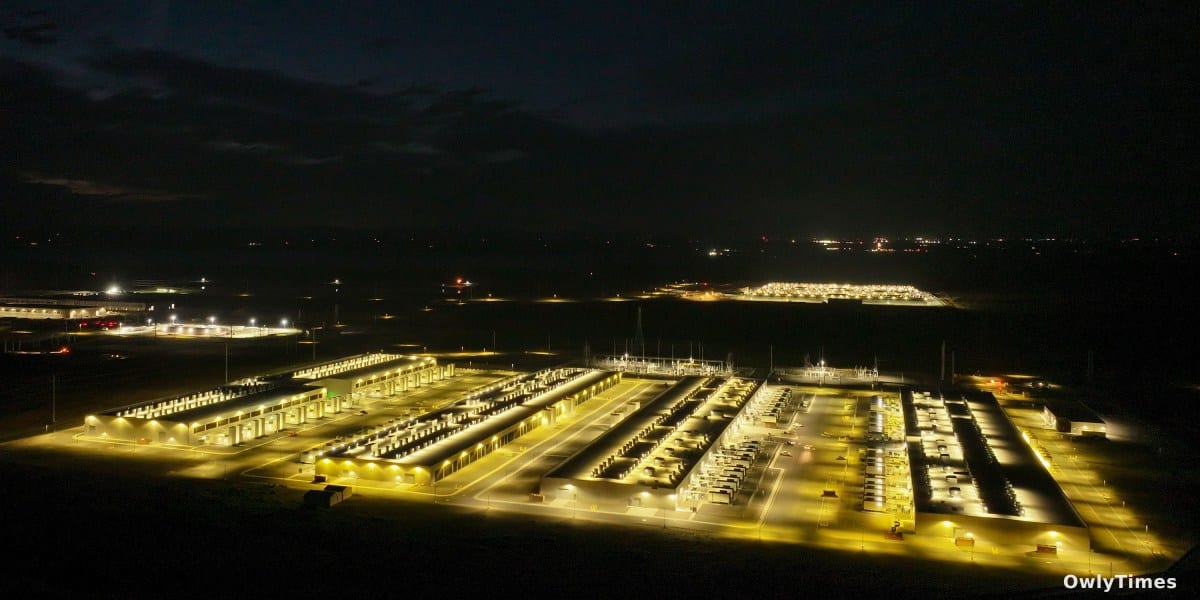

Is the future of artificial intelligence literally…above us? While Silicon Valley is busy boasting about the next generation of AI models, a far more radical proposition is gaining traction: moving the entire computational load into space. The real story here isn't just about faster algorithms or bigger datasets – it’s about a desperate search for sustainable infrastructure to support a technology rapidly outgrowing our planet’s resources. Elon Musk’s SpaceX recently filed an application with the FCC to launch up to one million data centers into Earth’s orbit, a move that sounds like science fiction but is increasingly framed as a pragmatic solution to an impending energy and water crisis.
Last year, Jeff Bezos predicted a shift towards large-scale computing in space, and Google is already planning a test constellation of 80 data-crunching satellites. This isn’t a fringe idea anymore; it’s a full-blown land grab – or rather, a space grab – for the future of processing power. The impetus is simple: AI is hungry. Current data centers are straining energy grids and guzzling water for cooling, sparking local backlash as communities face rising resource costs. Proponents argue that space offers a solution – uninterrupted solar power and the effortless expulsion of heat into the vacuum. But the leap from theoretical benefit to functional reality is riddled with challenges, and the hype often obscures the sheer scale of what needs to happen.
Source material: technologyreview.com.
One of the most immediate hurdles is heat dissipation. It seems counterintuitive, but space isn’t a simple radiator. A space-based data center needs constant sunlight to power its 24/7 operations, meaning it must orbit pole-to-pole, never entering Earth’s shadow. This constant illumination also means the equipment will perpetually operate above 80°C – far too hot for conventional electronics. Lilly Eichinger, CEO of Austrian space tech startup Satellives, succinctly puts it: “Thermal management and cooling in space is generally a huge problem.” On Earth, convection handles heat dissipation; in space, it’s a far less efficient process of radiation, requiring massive radiative surfaces and adding to the satellite’s bulk. However, Yves Durand, former director of technology at Thales Alenia Space, points to existing technology – refrigerant fluid systems used in large telecommunications satellites – as a potential solution, envisioning gigawatt-scale data centers in orbit by 2050, dwarfing even the largest terrestrial facilities.
Beyond heat, the harsh radiation environment of space poses a significant threat. Unlike Earth, where our atmosphere and magnetosphere provide shielding, satellites are bombarded by cosmic particles that can corrupt data, degrade performance, and even cause permanent damage to computer chips. Traditionally, space-bound computers underwent years of rigorous testing and were built with expensive, specialized “space-hardened” electronics. But Nvidia is now touting the “inherent radiation resilience” of its commercial-off-the-shelf chips, coupled with shielding, error-detection software, and hybrid architectures. Chen Su, Nvidia’s head of edge AI marketing, claims they’re achieving resilience “at the system level rather than through radiation‑hardened silicon alone.” But Ken Mai, a principal systems scientist at Carnegie Mellon University, cautions that chips are only one piece of the puzzle. Memory and storage devices are equally vulnerable, and the ability to perform in-orbit maintenance and repairs – potentially with robots or astronaut missions – remains a major unknown.
The logistical nightmare doesn’t end there. Even if we can build and protect these orbital data centers, we need a plan to avoid turning Earth orbit into a junkyard. The space around our planet is already crowded, with Starlink satellites alone performing hundreds of thousands of collision avoidance maneuvers annually. Adding a million more satellites, as SpaceX proposes, exponentially increases the risk of catastrophic collisions and the creation of dangerous debris. Greg Vialle, founder of orbital recycling startup Lunexus Space, argues that a network of interconnected satellites is crucial for safe maneuvering, but even then, limitations exist. He estimates a maximum capacity of around 240,000 satellites in low Earth orbit, requiring significant spacing for safe operation and de-orbiting. The prospect of regularly replacing a million satellites every five years, and the resulting influx of reentering debris, raises concerns about ozone layer damage and alterations to Earth’s thermal balance.
Finally, there’s the economic reality. Launch costs are decreasing, thanks to rockets like SpaceX’s Starship, but assembling massive data centers in orbit will require advanced robotic systems that don’t yet exist. The initial focus, as Durand suggests, will likely be on smaller-scale facilities processing data from Earth-observing satellites directly in space, alleviating bandwidth constraints and accelerating insights. But this won’t significantly offset the strain on terrestrial resources. The vision of a fully space-based computing infrastructure remains decades away, and may never fully materialize.
Don’t expect to see a mass exodus of data centers to orbit anytime soon. But watch closely for the development of in-orbit assembly and servicing capabilities over the next five years. If companies can demonstrate a viable path to building and maintaining these complex structures in space, then the conversation will shift from “if” to “when.” The real question isn’t whether we can put data centers in space, but whether we can do so responsibly – and whether the cost, both financial and environmental, will ultimately outweigh the benefits.