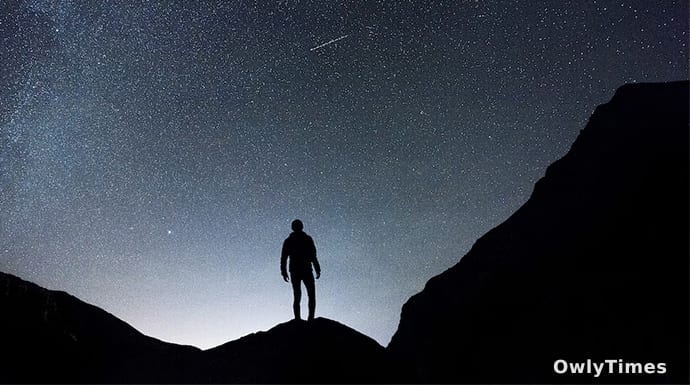

When we look at the night sky or peer into the microscopic architecture of a cell, we are often asking the same fundamental questions that have preoccupied human inquiry for millennia: Is there a purpose to our existence, or are we merely the byproduct of blind, impersonal processes? These queries sit at the intersection of empirical observation and metaphysical reflection, a space where science and philosophy frequently collide. A new documentary, The Story of Everything, attempts to bridge this gap by framing scientific discovery not as an opponent to faith, but as a lens through which to examine the possibility of design.
Directed by Brian Bird and Lee Strobel, the film is currently screening as a limited-time Fathom Event through May 6. It seeks to guide viewers through a two-thousand-year intellectual timeline, utilizing archival footage and writings from figures ranging from Aristotle and Isaac Newton to Albert Einstein, Stephen Hawking, and Richard Dawkins. The project relies heavily on the work of philosopher Stephen C. Meyer, PhD, specifically his book Return of the God Hypothesis. The central premise posits that the presence of information within DNA and RNA—the digital-like code at the foundation of life—serves as evidence of an intelligence that predates biological complexity.
It is important to distinguish the film’s narrative goals from standard scientific documentaries. While traditional scientific media typically focuses on mechanism—how a process works—The Story of Everything focuses on inference. The film argues that the "fine-tuning" of the universe, a concept explored by Jay Richards, PhD, vice president of social and domestic policy at the Heritage Foundation, points toward a deliberate arrangement of physical laws. Richards, who co-authored The Privileged Planet with Guillermo Gonzalez, argues that the precise positioning of Earth, its atmospheric composition, and its geological features are too ordered to be mere coincidence.
However, readers should consider the limitations of this framing. The film functions as an interpretive synthesis of historical scientific milestones, aimed at supporting a specific philosophical hypothesis. While it utilizes legitimate historical figures and recognized biological concepts like the double-helix model of DNA—which Francis Crick and James Watson famously marveled at for its aesthetic beauty—the leap from scientific observation to theological conclusion remains a matter of philosophical debate rather than empirical consensus. The documentary presents a challenging intellectual journey, but it is one that requires the viewer to engage with the distinction between the "what" of science and the "why" of metaphysics.
The significance of this release lies in its timing and its target audience. Richards suggests that the "New Atheism" movement, which gained traction in the early 2000s, has waned, leaving a cultural opening for a renewed discussion on design. By linking the scientific exploration of the universe to the foundational rhetoric of the American founding—specifically the invocation of a "Creator" in the nation’s founding documents—the filmmakers hope to foster a dialogue that reconciles natural reason with religious conviction.
As the theatrical run concludes, the next stage of this discourse will be measured by the reaction of the public and the scientific community to these specific claims. The ongoing conversation regarding the origins of biological information in DNA and the fine-tuning of the cosmos will serve as the primary indicator of whether these arguments gain traction in broader academic and cultural spheres. The next reading of this debate will likely occur as scholars continue to analyze whether the "fingerprints" of a creator are a valid scientific inference or a separate category of inquiry altogether.





