
The White House Ballroom: A Test of Executive Authority
The $400 million White House ballroom renovation isn’t about aesthetics; it’s a deliberate attempt by the Trump administration to expand the boundaries of executive power, and a federal judge is now poised to push back. Tuesday’s hearing before Judge Richard Leon wasn’t a debate over architectural choices, but a strategic confrontation over the limits of presidential authority, specifically the power to unilaterally commit substantial federal funds to projects without congressional oversight. The administration’s increasingly convoluted legal arguments reveal a calculated gamble: to establish a precedent allowing future presidents to bypass legislative checks on White House infrastructure projects.
This article draws on reporting from CNN.
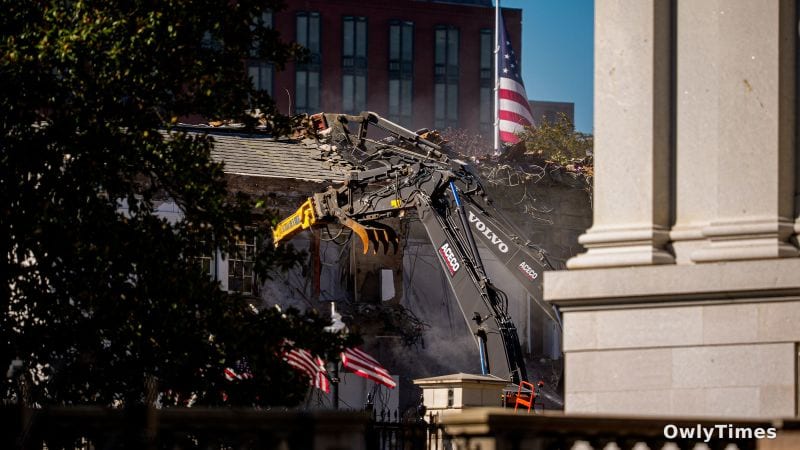
The core of the dispute centers on interpreting the law granting the President authority to make “alteration” and “improvement” to the White House. Judge Leon, a George W. Bush appointee, repeatedly challenged the Justice Department’s assertion that demolishing the East Wing and constructing a ballroom nearly 60% larger than the Executive Mansion itself constitutes a mere “alteration.” His pointed question – “Who is directing this project?” – cuts to the heart of the matter. The administration’s shifting explanations, first claiming White House control via a little-known office, then pivoting to emphasize the National Park Service’s role, are not about clarifying facts, but about finding a legal framework that shields the project from judicial review. This tactic, as Judge Leon observed, smacks of seeking “an escape hatch” through procedural maneuvers.
This isn’t an isolated incident. The pursuit of this project echoes historical precedents where presidents have tested the limits of their authority during periods of perceived crisis or political advantage. Abraham Lincoln’s suspension of habeas corpus during the Civil War, while ultimately upheld, sparked intense debate about executive overreach. Similarly, Franklin D. Roosevelt’s New Deal programs, though addressing a national emergency, faced legal challenges questioning the scope of presidential power. In both cases, the courts served as a crucial check on executive action, a role Judge Leon appears ready to fulfill. The difference here is the absence of a clear emergency; the ballroom project is driven by Trump’s personal interest and a desire to leave a lasting physical legacy.
Who benefits and who loses from this legal battle? The immediate beneficiaries of a presidential victory would be future administrations, gaining greater latitude in managing White House infrastructure. The National Trust for Historic Preservation, the plaintiff in this case, stands to lose its ability to safeguard historically significant sites from potentially damaging presidential projects. More broadly, Congress stands to lose its constitutional power of the purse, a fundamental check on executive power. The public, meanwhile, loses transparency and accountability in the allocation of $400 million in taxpayer funds. The administration’s claim that the project will be completed by 2028, well beyond Trump’s potential second term, further underscores the long-term strategic implications of this case.
The administration’s insistence on the National Park Service’s involvement is particularly revealing. By framing the project as falling under the Park Service’s purview, they attempt to invoke federal rulemaking laws, theoretically opening the project to public comment and judicial review. However, Judge Leon rightly questioned this maneuver, recognizing it as a belated attempt to create a legal justification where none existed previously. Yaakov Roth, the Justice Department lawyer, attempting to maintain that the White House is “directing 100%” of the project while simultaneously highlighting the Park Service’s funding role, only deepened the judge’s skepticism. This contradiction highlights the administration’s desperation to find a legally defensible position.
The political chess move to watch next isn’t simply Judge Leon’s ruling, expected by the end of March, but the administration’s response should they lose. Will they appeal, potentially escalating the conflict to the Supreme Court? Or will they attempt to circumvent the ruling through alternative funding mechanisms or legal interpretations? The answer will reveal the extent to which the Trump administration is willing to push the boundaries of executive power, and whether they view this ballroom as merely a renovation project, or a crucial battleground in a larger war over the balance of power in Washington.





