
The strategic calculation is clear: President Trump isn’t merely seeking legal redress for past grievances; he’s establishing a precedent for leveraging executive power for personal financial gain, and testing the limits of conflict of interest within the Justice Department. The filing of claims totaling billions of dollars against the U.S. government – for investigations conducted during and before his presidency, and even for the leak of his tax returns – isn’t about winning in court, but about reshaping the relationship between the executive branch and its own leader. Who benefits and who loses here isn’t simply the President versus the taxpayers, but a broader recalibration of power dynamics where the line between personal and public funds becomes deliberately blurred.
This tactic isn’t novel for Trump. Throughout his career, litigation has been a primary tool – not for achieving legal outcomes, but for projecting strength, intimidating opponents, and dominating the narrative. As a White House official, speaking on background, stated, these claims represent “unfinished business” for the President, a lingering need to settle scores and publicly reframe past controversies. The impromptu digression during a December speech in North Carolina, detailing the Mar-a-Lago search as an “attack” perpetrated by “animals,” exemplifies this pattern. The subsequent $230 million claim, coupled with the earlier suit regarding the Russia investigation, isn’t a measured legal response, but a performative act of defiance.
The sheer scale of the financial demands – $230 million for the investigations, $10 billion for the tax return leak – dwarfs any previous administrative settlements under the Federal Tort Claims Act. Rupa Bhattacharyya, a former Justice Department lawyer, notes that even cases involving the aftermath of 9/11 rarely exceeded $10 million. This isn’t a pursuit of reasonable compensation; it’s a demonstration of power, a deliberate attempt to overwhelm the system and force a negotiation where the President dictates the terms. The parallel to historical precedents is striking: consider the Roman emperors who used the imperial treasury to fund personal projects and solidify their authority, blurring the lines between state and personal wealth. While not a direct analogue, the underlying principle – the use of public resources to enhance the leader’s position – resonates.
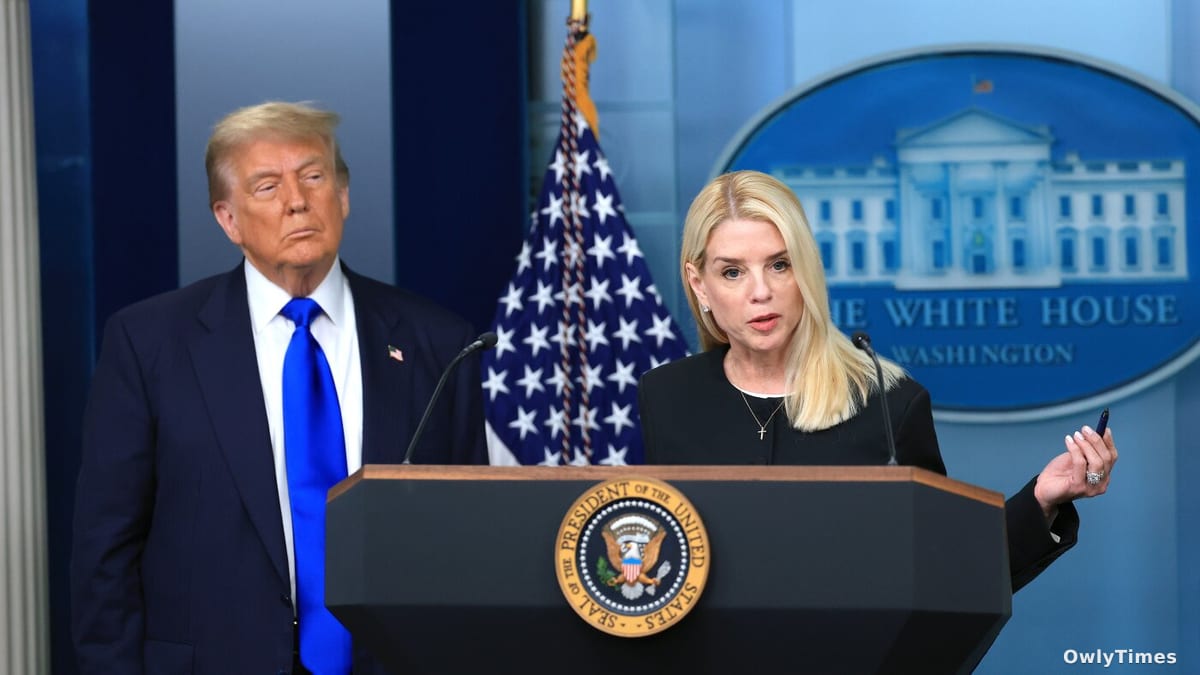
The most troubling aspect of this situation is the inherent conflict of interest. Attorney General Pam Bondi and her deputy, Todd Blanche, previously served as Trump’s personal attorneys. The third-ranking official at Justice, Stanley Woodward, represented a key figure in the Mar-a-Lago case. This concentration of loyalists within the Department raises serious questions about the impartiality of the review process. Edward Whelan, a former DOJ lawyer and conservative legal scholar, bluntly calls it “outrageous” that Trump and his appointees are deciding how the government responds to these “extravagant claims.” The fear, as Whelan articulates, is that the Justice Department will simply defer to Trump’s demands, effectively funneling taxpayer money to the President himself.
Drawn from NPR.
Trump’s recent pronouncements only reinforce this concern. His suggestion that he would “negotiate with myself” and donate any settlement to charity – a claim unsupported by any concrete details regarding the charities involved or the source of the $40 billion figure he cited – feels less like a philanthropic gesture and more like a calculated attempt to deflect criticism. The $10 billion lawsuit over the tax return leak, despite apparent statute of limitations issues and the fact that the leak occurred during his first term, further underscores the President’s willingness to pursue legally dubious claims to achieve a desired outcome. Congressional Democrats have raised concerns, but their inquiries have been met with stonewalling from Bondi and a reliance on vague assurances about adherence to ethics guidelines – assurances undermined by Bondi’s recent firing of the Justice Department’s top ethics lawyer.
The potential outcome isn’t simply about the financial cost to taxpayers, though that is significant. It’s about the precedent it sets for future presidents. If Trump succeeds in securing a substantial settlement, it could embolden future executives to weaponize the Justice Department for personal enrichment. The judgment fund, the source of these potential payouts, would become a personal piggy bank for the President, eroding public trust and further politicizing the legal system. The question to watch now isn’t if the Justice Department will settle, but how – and specifically, whether Trump will be allowed to effectively dictate the terms of the settlement, and whether the career ethics officials within the department will be allowed to function independently. The next political chess move will be the appointment (or non-appointment) of a special counsel to oversee these claims, a move that would signal whether the administration is genuinely committed to addressing the conflict of interest or intends to proceed with a process heavily influenced by presidential loyalists.