
The invocation of Bill Clinton’s deposition by House Democrats isn’t a matter of seeking equal treatment under the law, but a calculated attempt to weaponize procedural precedent in a deeply polarized environment. The argument – that a former president compelled to testify sets a binding standard for all, including current presidents – isn’t about legal consistency, but about escalating the stakes in the ongoing battle for narrative control surrounding investigations into both the Clinton and Trump presidencies. This isn’t a novel tactic; it’s a classic example of turning the tables, using an opponent’s past actions against them, and the current push reflects a broader strategy of mirroring Republican tactics while simultaneously framing them as uniquely aggressive.
The Precedent Play and Its Limits
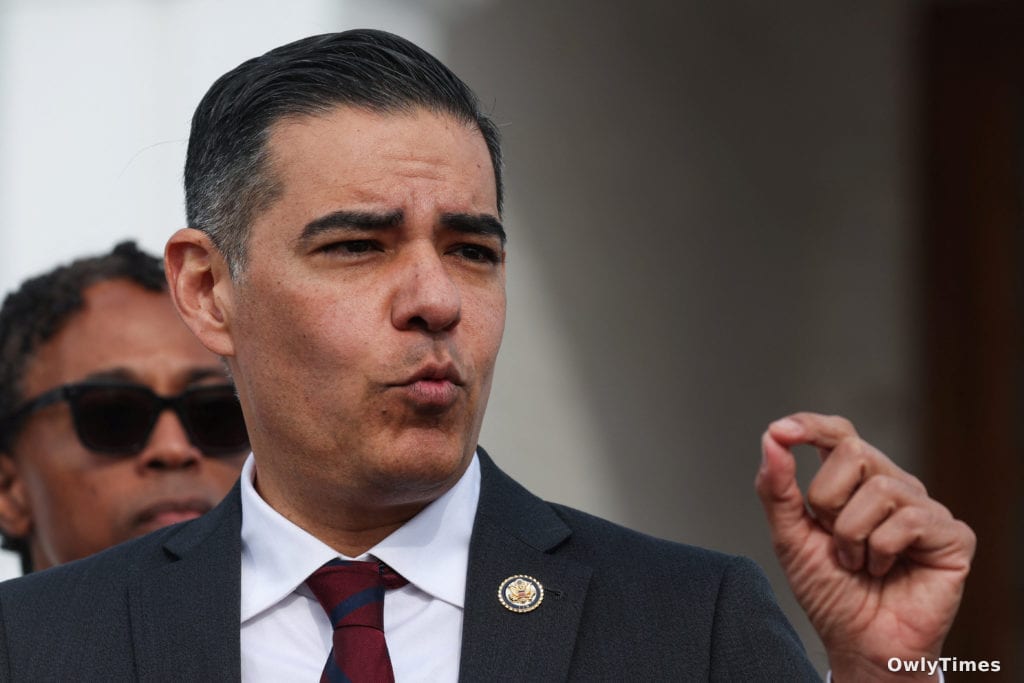
Representative Robert Garcia, the ranking Democrat on the House Oversight Committee, succinctly articulated the demand: “Let's get President Trump in front of our committee to answer the questions that are being asked across this country from survivors.” The phrasing is deliberate, appealing to emotional resonance – “survivors” – while simultaneously positioning Trump as evasive. However, the core of the argument hinges on the precedent established by Clinton’s recent deposition. The problem for Democrats is that the precedent isn’t as solid as they claim. James Comer, the Republican chair of the committee, has already stated the committee cannot deposition a sitting president, a position rooted in long-standing legal interpretations regarding executive privilege and the separation of powers. This isn’t simply obstruction; it’s a reflection of the inherent limitations of congressional investigatory power when confronting the executive branch. The Democrats are attempting to circumvent this established boundary by framing the issue as one of fairness, rather than constitutional constraint.
Historical Echoes of Congressional Confrontation
This dynamic – a majority party attempting to expand investigatory powers by invoking the actions of a previous administration – isn’t new. During the Nixon era, Democrats on the House Judiciary Committee similarly sought to establish precedents for presidential accountability, ultimately leading to impeachment proceedings. However, the context was vastly different: a sitting president facing demonstrable evidence of criminal wrongdoing, not a former president and a current president engaged in reciprocal accusations of political malfeasance. The parallel to the Clinton impeachment proceedings is also striking. Republicans, then in the majority, aggressively pursued allegations against Clinton, establishing a standard for presidential scrutiny that Democrats are now attempting to leverage. The irony is palpable, and likely intentional. This is a game of tit-for-tat, where each side justifies its actions by pointing to the transgressions – real or perceived – of the other.
This piece references the PBS report.
The Epstein Angle and Shifting Focus
The backdrop of this procedural battle is the House Oversight Committee’s investigation into Jeffrey Epstein and his associates. Comer has indicated the committee may question Kenneth Lutnick, CEO of Cantor Fitzgerald, regarding his ties to Epstein, suggesting a broadening scope beyond the initial focus on the Clinton family. This shift is strategically significant. By expanding the investigation, Republicans can deflect criticism that they are engaged in a partisan witch hunt and demonstrate a commitment to uncovering a wider network of potential wrongdoing. It also introduces a new layer of complexity, potentially diverting attention from the Democrats’ efforts to compel Trump’s testimony. The investigation into Epstein is a political minefield, and both parties are carefully navigating the potential fallout. The fact that both the Clinton and Trump orbits have connections to Epstein creates a uniquely challenging dynamic, where any revelation could be used to damage the opposing side.
Who Benefits and Who Loses?
The immediate beneficiaries of this escalating conflict are those who thrive on political polarization – media outlets, partisan activists, and fundraising organizations. The constant cycle of accusation and counter-accusation generates engagement and fuels the outrage economy. Trump, despite expressing regret over the Clintons’ depositions, arguably benefits from the narrative of being unfairly targeted, reinforcing his image as a victim of a “deep state” conspiracy. Clinton, while facing unwelcome scrutiny, has already weathered numerous investigations and may be less vulnerable to reputational damage. The biggest losers are the American public, who are increasingly cynical about the political process and distrustful of institutions. The constant focus on partisan battles distracts from pressing policy challenges and erodes faith in the ability of government to address real problems.
The political chess move to watch next isn’t whether Trump will testify, but whether Comer will aggressively pursue the Epstein connections of individuals beyond those directly linked to the Clinton family. If he does, it will signal a willingness to broaden the scope of the investigation and potentially expose vulnerabilities on both sides of the aisle. The question is whether the committee will prioritize uncovering the truth about Epstein’s network, or simply use the investigation as a tool to score political points.





