
$15 Billion at Risk: The Tariff Confusion Threatening Global Trade
A staggering $15 billion in transatlantic trade is now hanging in the balance as confusion mounts over the implementation of President Donald Trump’s newly announced 15% tariffs. While the US trade representative Jamieson Greer insists existing deals remain intact, signals from the UK and EU suggest a potentially immediate impact, exposing a critical disconnect between Washington’s assurances and the realities facing international businesses. This isn’t simply a trade dispute; it’s a demonstration of how rapidly shifting policy, coupled with legal ambiguity, can inject systemic risk into the global economy.
The source of the turmoil stems from a weekend announcement of blanket tariffs justified under Section 122 of the Trade Act of 1974, citing a “balance of payments” crisis. This move followed a Supreme Court ruling against tariffs previously levied under the International Emergency Economic Powers Act (IEEPA). The immediate effect has been a scramble for clarity, with the new president of the British Chambers of Commerce, Andy Haldane, publicly stating he believes the 15% tariffs will apply tomorrow unless the UK government receives confirmation otherwise. This represents a 50% increase from the existing 10% rate, potentially pushing the UK to the “bottom of the league table” in terms of countries negatively impacted. The calculation is straightforward: a 5% tariff increase translates to a significant cost burden for UK exporters, eroding competitiveness and potentially leading to reduced sales.
Drawn from The Guardian.
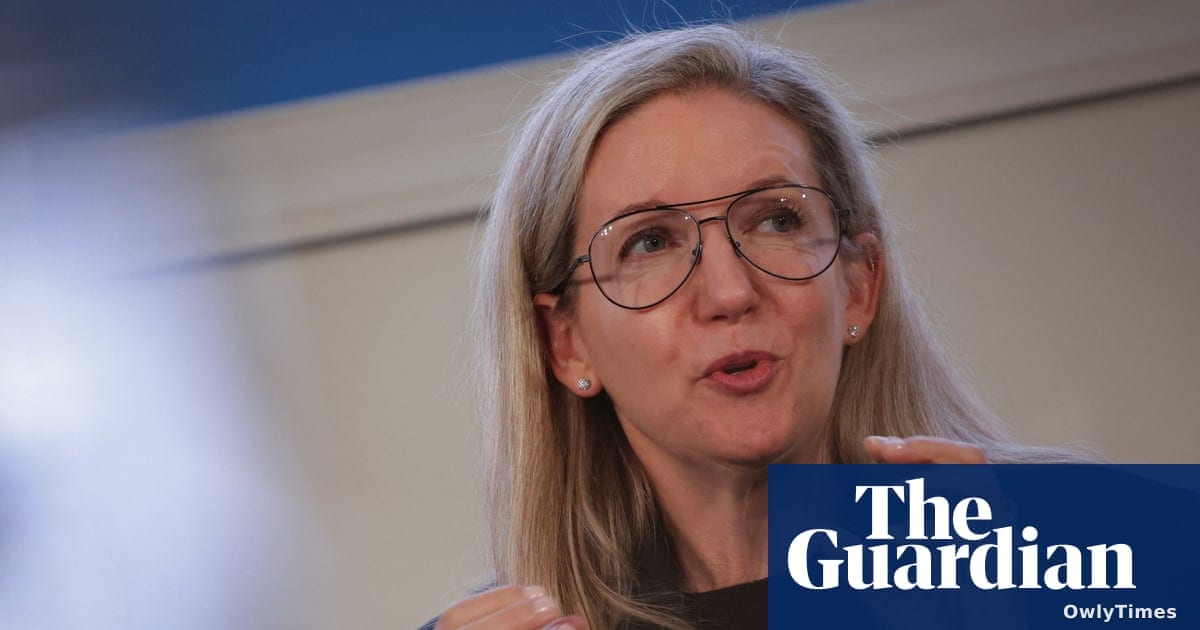
The legal foundation for these new tariffs is itself under scrutiny. Economists like Gita Gopinath, former first deputy managing director of the International Monetary Fund, have publicly questioned the validity of invoking Section 122 given the current global financial landscape. Gopinath argues that, with ample demand for US debt and equities, the US doesn’t demonstrably face a “fundamental international payments problem” – a prerequisite for utilizing this trade authority. This raises the specter of further legal challenges, adding another layer of uncertainty for businesses attempting to navigate the evolving trade landscape. Atakan Bakiskan of Berenberg Bank further highlights the accounting anomaly: under a flexible exchange rate regime, a balance of payments should always equal zero, making the justification for these tariffs questionable.
European markets reacted negatively to the news, with German and French stock indices falling today. The German confederation of businesses, BDI, led by president Peter Leibinger, has urgently called on the EU to seek clarification from the US, emphasizing the need for “planning certainty and reliable trading conditions.” This isn’t merely about stock market fluctuations; it’s about the disruption to established supply chains and the potential for retaliatory measures. The BDI’s call for dialogue underscores the escalating tension and the risk of a full-blown trade war. The EU’s own response, stating “a deal is a deal,” is a firm stance, but its effectiveness hinges on the US honoring its commitments – a proposition increasingly in doubt.
While Asia is projected to benefit from the removal of IEEPA tariffs, with countries like China, India, and Vietnam poised to gain, the overall impact is a net negative for global trade stability. Deepali Bhargava at ING notes that Vietnam could be the region’s biggest winner, becoming an even more attractive production base for US-bound goods. However, this shift in production isn’t seamless and will require significant adjustments to global supply chains. The Bank of England’s Alan Taylor has warned that these tariffs are “here to stay at some kind of number that is a lot – an order of magnitude – bigger than it was two years ago,” suggesting this isn’t a temporary blip but a fundamental shift in US trade policy. This long-term perspective is crucial: businesses need to prepare for a sustained period of higher trade costs and increased volatility.
What this means for your wallet: Expect increased prices on imported goods, particularly from the UK and EU, as businesses pass on the cost of these tariffs to consumers. More importantly, watch for a potential escalation of trade tensions in the coming weeks. The key indicator will be whether the US follows through on the 15% tariff implementation and how quickly the EU and other trading partners respond. The question isn’t if supply chains will be disrupted, but how severely – and whether businesses can adapt quickly enough to mitigate the damage.