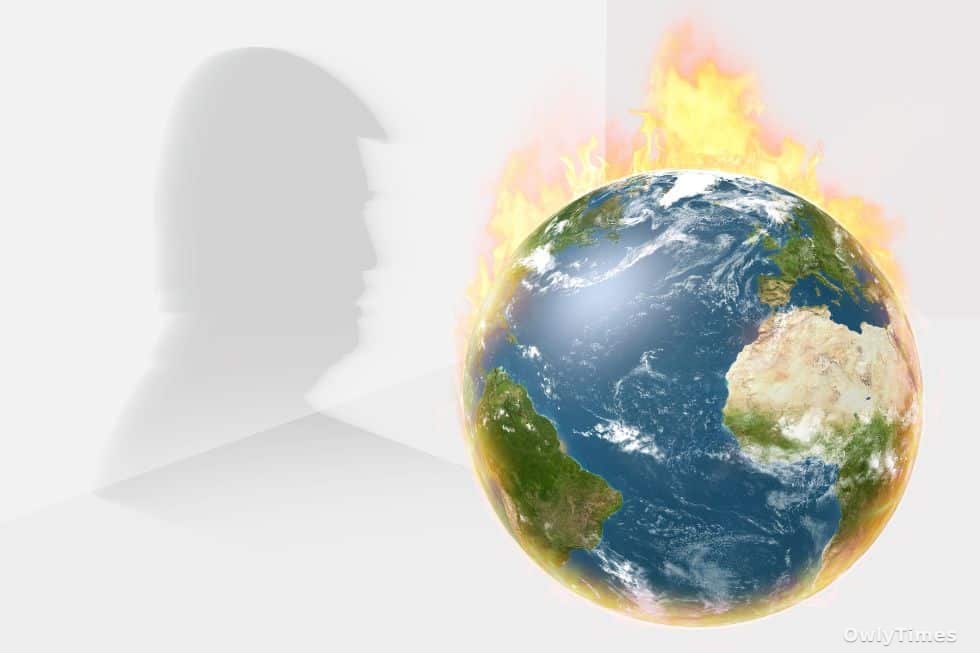

The intersection of geopolitical volatility and environmental stability has long been a subject of rigorous study, but we are currently witnessing a convergence that defies standard predictive models. When we analyze the carbon footprint of modern conflict, we are not merely discussing political posturing; we are quantifying the release of greenhouse gases from the world’s most significant institutional emitter: the United States military. As a health and science writer, my concern lies in how the current administration’s shift toward intensified military engagement—most notably in the Middle East—directly conflicts with the urgent, data-driven necessity of climate mitigation.
The scientific question at hand is whether a nation can simultaneously pursue an aggressive, war-focused foreign policy and meet the carbon reduction targets required to stabilize a warming planet. The data suggests an increasingly negative correlation. According to reports from Nina Lakhani of The Guardian, the U.S. military remains the single largest institutional greenhouse gas emitter globally. While political headlines often focus on the tactical outcomes of strikes in regions like Iran, the systemic environmental cost of these operations is rarely integrated into the public discourse on national security.
It is vital to distinguish between what these events signify versus how they are framed. Headlines often categorize the current U.S. stance as a traditional exercise of power, but the methodology of this administration—prioritizing the expansion of fossil-fuel extraction under the "drill, baby, drill" platform—creates a feedback loop. By rejecting climate science as a "con job" while simultaneously increasing the carbon-intensive activities inherent in modern warfare, the administration is effectively accelerating the very environmental stressors that threaten public health.
There are significant limitations to consider when evaluating this trajectory. We must look at the influence of private capital on public policy; the fossil-fuel industry’s contribution of at least $96 million to the 2024 reelection campaign of Donald Trump, and an estimated $445 million toward broader election influence, represents a massive conflict of interest. These figures provide necessary context for the policy decisions we see today, such as the active attempts to impede solar and wind energy projects. When public health policy is steered by individuals like Robert F. Kennedy Jr., whose skepticism regarding established vaccine science has already necessitated judicial intervention—such as the recent ruling by a Massachusetts district judge to block certain vaccine-related policy shifts—the margin for error in managing national crises shrinks significantly.
We must also be cautious not to overstate the efficacy of current global responses. While China has captured the electric vehicle market and leads in the production of green energy components, the country still accounts for an estimated 35% of global greenhouse gas emissions, primarily due to coal reliance. This highlights a global tension: even the most robust green-tech transitions are currently struggling to offset the sheer volume of fossil-fuel combustion.
Looking forward, the next critical indicator will be the impact of the El Niño weather pattern. Current projections suggest this pattern will drive global temperatures to unprecedented records in 2026 and 2027. The significance of these upcoming years cannot be overstated; they will serve as a measurable metric of whether current climate-mitigation strategies are sufficient to protect the one-third of the world's population already living in areas where heat severely limits daily activity. As we monitor these rising temperature readings, the data will clarify whether the current political path remains sustainable or if we are indeed, as the evidence suggests, on a trajectory toward a systemic environmental collapse.





