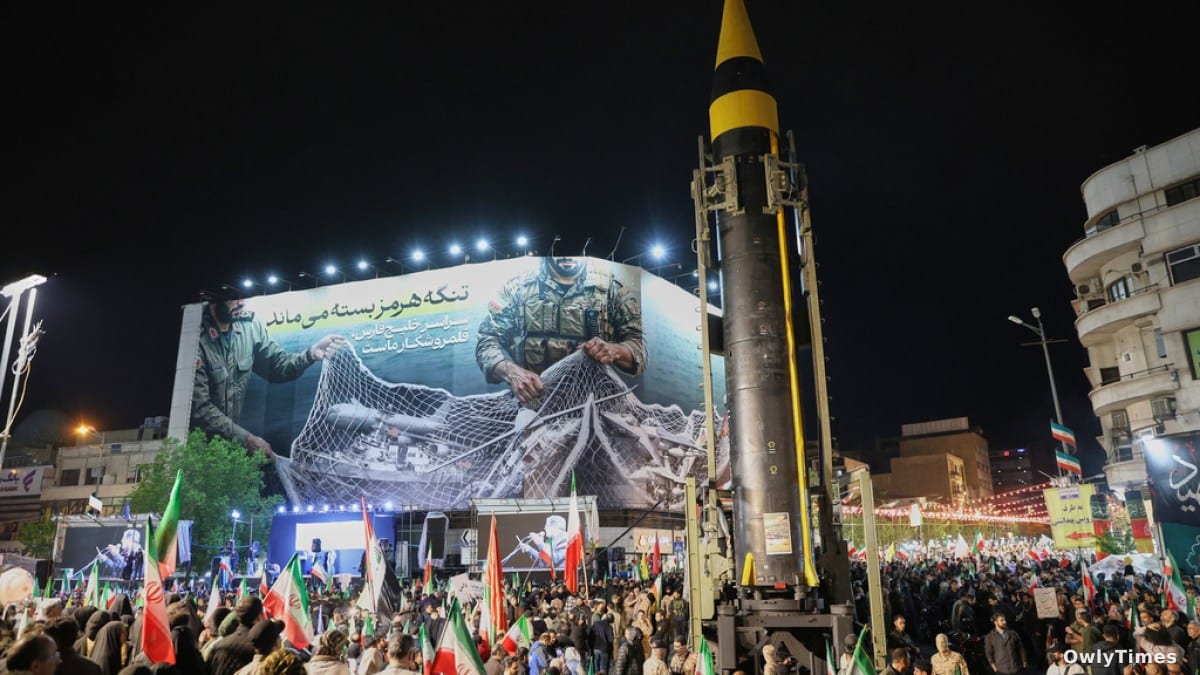

The Strait of Hormuz remains effectively shuttered, creating a volatility floor for global energy markets that persists even as the initial two-week ceasefire window closed on Wednesday. While the diplomatic rhetoric remains fluid, the tangible economic reality is defined by a rigid US naval blockade that continues to choke Iranian port activity, leaving international shipping lanes in a state of suspended animation.
The Cost of Economic Siege
Follow the money: The primary friction point in the current impasse is the direct contradiction between the ceasefire agreement and the ongoing maritime restrictions. Parliament Speaker Mohammad Bagher Ghalibaf has explicitly linked the reopening of the Strait—a vital artery for global oil supply—to the cessation of what he terms a "hostage-taking of the world’s economy." For businesses and investors, the math is binary: as long as the US naval presence remains, the primary transit route for a significant portion of global oil remains closed, regardless of whether formal combat operations are active.
White House spokesperson Karoline Leavitt confirmed that the administration views the blockade as a strategic asset rather than a temporary military tactic. By characterizing Iran as being in a "very weak position" and asserting that the "cards are in President Trump’s hand," the administration has signaled that the blockade is not a bargaining chip to be traded for peace, but the primary mechanism for enforcing compliance. This stance creates a "no war, no peace" environment in Tehran, where, as reported by Al Jazeera, commercial planning for the coming weeks remains impossible.
Assessing the Defense Industrial Base
The narrative of containment extends beyond the maritime domain into the physical destruction of Iran’s military infrastructure. Leavitt stated that Iran’s defense industrial base has been "almost completely destroyed," specifically citing that the country’s capacity to stockpile ballistic missiles and long-range drones has been set back by years.
This assertion contrasts sharply with the operational reality observed since the conflict began on February 28. Despite claims of industrial degradation, Iran maintained a tempo of daily missile and drone strikes against Israel throughout the active phase of the war. Investors should note the discrepancy between the White House’s assessment of a dismantled defense sector and the documented resilience of Iranian strike capabilities. The market, which saw oil prices surge following the initial closure of the Strait, remains sensitive to any indication that this "destroyed" capacity could be reactivated.
Tactical Maneuvers and Diplomatic Leverage
The current deadlock is further complicated by the use of individual human rights cases as a barometer for diplomatic progress. President Donald Trump noted on Wednesday that he "appreciates" the stay of execution for eight female dissidents, claiming that four would be released and four sentenced to one month in prison. While this suggests a back-channel sensitivity to US pressure, it has not yet translated into the broader de-escalation required to move commercial vessels through the Strait.
Amir-Saeid Iravani, Iran’s ambassador to the United Nations, maintains that the removal of the siege is the non-negotiable condition for any substantive movement toward a political solution. With no new date set for talks, the situation remains in a state of high-stakes attrition.
For your wallet, the signal to watch is the operational status of the Strait of Hormuz. While the ceasefire holds in name, the continuation of the naval blockade acts as a de facto tax on energy prices. Any shift in the volume of commercial traffic through the waterway will serve as the most accurate indicator of whether the current "no war, no peace" status is transitioning toward a resolution or a return to broader regional kinetic activity.