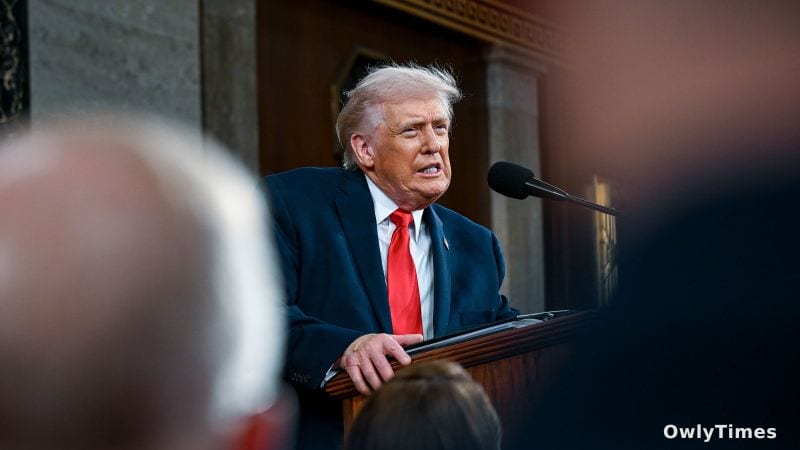

The question of presidential fitness for office isn’t new, but its resurgence in the context of Donald Trump’s second term carries a unique weight. While concerns about age and mental acuity initially propelled Joe Biden from the 2024 race, a growing body of polling data suggests similar anxieties are now surfacing regarding the 79-year-old Trump. This isn’t simply a reflection of overall disapproval ratings; the data reveals a specific and increasing unease about Trump’s cognitive state, even among his own supporters, a nuance often lost in headline summaries. Understanding the methodology behind these polls – and what they don’t tell us – is crucial to interpreting the current political landscape.
A Shift in Public Perception, Measured Across Multiple Polls
Recent surveys paint a consistent, if concerning, picture. A Reuters-Ipsos poll released this week found that 61% of Americans believe Trump has “become erratic with age.” This figure is particularly striking when contrasted with previous assessments; while polling following the January 6th, 2021 attack on the US Capitol showed nearly 50% questioning Trump’s “mental stability,” it never reached a majority. The shift to “erratic” – while not synonymous with “unstable” – signals a broadening concern beyond isolated incidents. Simultaneously, the same poll revealed a decline in the percentage of Americans who view Trump as “mentally sharp and able to deal with challenges,” dropping from 54% in September 2023 to 45% today. It’s important to note that these aren’t abstract feelings; they’re quantifiable shifts in public opinion, tracked through rigorous statistical sampling.
Further corroboration comes from other sources. A Washington Post-ABC News-Ipsos poll last week showed majorities expressing doubts about Trump’s mental sharpness (56%) and physical health (51%), representing increases of 13 and 23 percentage points, respectively, since May 2023. A Pew Research Center survey echoes this trend, with confidence in Trump’s mental and physical fitness declining among the general public – and, crucially, within his own party. Specifically, the percentage of Republicans “very confident” in Trump’s mental fitness has fallen from 75% to 66% in the past year. This internal erosion of confidence is a significant development, suggesting that concerns aren’t solely driven by partisan opposition.
Reporting from CNN informs this analysis.
Comparing Trump to Biden: A Matter of Degree, Not Kind
While the numbers are alarming, context is paramount. It’s easy to draw direct parallels to Joe Biden’s situation, but the data reveals important distinctions. Throughout much of Biden’s final year in office, polling consistently showed significantly lower levels of confidence in his mental and physical capabilities – often in the 20s and 30s. In July 2024, the month he withdrew from the race, only around one-quarter of Americans believed Biden was mentally sharp. Trump, currently at 46% on the same metric, maintains a considerably higher, though declining, level of support. However, the trend lines are converging. In February 2022, Biden registered 54% approval on mental sharpness – a figure now mirrored by Trump’s current standing. This isn’t to diminish the concerns surrounding Trump, but to highlight that the trajectory is worrisome, even if he isn’t yet at the same point as his predecessor.
Beyond the Numbers: Scrutiny and Observable Behaviors
The decline in positive polling isn’t occurring in a vacuum. Increased scrutiny of Trump’s public appearances is likely contributing to the shifting narrative. Instances of verbal missteps – such as repeatedly confusing Iceland and Greenland – are receiving wider attention. Similarly, reports of bruises on Trump’s hands, speculation about instances of falling asleep during public events, and the White House’s initially cautious disclosures regarding his medical testing are fueling speculation. It’s reasonable to hypothesize that these observable behaviors, amplified by media coverage, are influencing public perception. It’s also plausible that declining overall approval ratings are simply making voters more critical of Trump’s public persona. Disentangling these factors is a complex methodological challenge for pollsters and political scientists.
Limitations to Consider and Future Research
It’s crucial to acknowledge the limitations inherent in polling data. Surveys rely on self-reported opinions, which can be influenced by a variety of factors, including media bias and social desirability. The phrasing of questions can also significantly impact results. Furthermore, correlation does not equal causation. While polls demonstrate a relationship between perceived mental acuity and public approval, they cannot definitively prove that one causes the other. Future research should focus on longitudinal studies tracking cognitive performance over time, coupled with detailed analyses of public statements and behaviors. Specifically, researchers could employ natural language processing techniques to objectively assess changes in Trump’s speech patterns and cognitive complexity. The question now isn’t simply if these concerns will continue to grow, but how they will shape the remainder of his term and, crucially, the narrative surrounding his potential re-election bid. Will increased scrutiny of his public appearances and health disclosures further erode public confidence, or will his supporters remain steadfast in their support? That’s the critical dynamic to watch in the coming months.





