
The escalating conflict with Iran isn’t simply a geopolitical crisis; it’s forcing a reckoning with the very capacity of the U.S. presidency to withstand immense pressure – and whether that pressure is manifesting in ways that compromise rational decision-making. While much of the immediate concern centers on President Trump’s increasingly bellicose rhetoric and threats of widespread infrastructure destruction, the underlying question is whether a leader facing wartime stress, coupled with advanced age, can reliably execute the duties of office. This isn’t a novel concern in the history of the presidency, but the confluence of factors – a volatile international situation, a history of unconventional communication, and a recent outburst widely perceived as erratic – has triggered a level of anxiety not seen in decades.
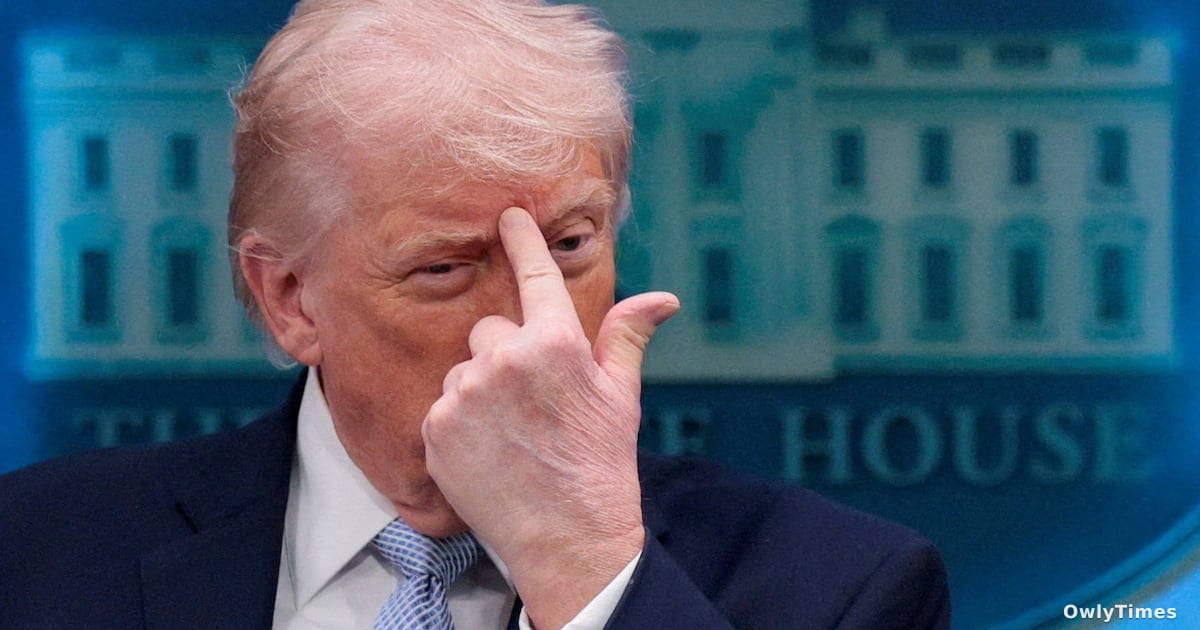
The catalyst for this renewed scrutiny was a profanity-laced post on President Trump’s Truth Social account on Easter Sunday. The message, directed at Iran, threatened the “decimation” of their infrastructure if they did not reopen the Strait of Hormuz, employing explicitly vulgar language. While the White House attempted to frame the outburst as merely a forceful articulation of policy – with President Trump stating he used the language “only to make my point” – the reaction was swift and multifaceted. It wasn’t simply the language itself, but the context: a holiday traditionally associated with renewal and peace, juxtaposed with threats of utter destruction. This dissonance fueled speculation about the President’s mental state, prompting calls, notably from Democrat Senator Chris Murphy, to consider invoking the 25th Amendment. Murphy’s statement – “If I were in Trump’s Cabinet, I would spend Easter calling constitutional lawyers about the 25th Amendment” – underscores the gravity of the situation as perceived by some within the political establishment.
The immediate impact extended beyond political commentary. Financial markets reacted, with prediction platforms like Kalshi experiencing a surge in trading volume as users began betting on the possibility of Cabinet-level intervention. This isn’t merely idle speculation; Kalshi operates as a regulated exchange, meaning the trading activity reflects a quantifiable assessment of risk. More significantly, JPMorgan Chase CEO Jamie Dimon warned that continued disruption to the Strait of Hormuz could drive Brent crude oil prices to “overshoot toward $150 per barrel,” potentially triggering the largest oil supply shock in modern history. This economic dimension highlights how concerns about presidential stability are rapidly translating into tangible global consequences. The rescue of two U.S. pilots – one after hours of evasion in Iranian territory – served as the backdrop for the press conference where these concerns came to a head. President Trump described the operation as “central casting,” while Defense Secretary Pete Hegseth drew a controversial parallel to the resurrection of Jesus, framing the pilot’s extraction on Easter Sunday as a “rebirth.”
However, it’s crucial to distinguish between legitimate concern and opportunistic political maneuvering. The invocation of the 25th Amendment is a serious matter, requiring a determination that the President is unable to discharge the powers and duties of his office. The standard for this determination is high, and the process is fraught with political risk. Furthermore, attributing erratic behavior solely to mental health ignores the immense pressures inherent in wartime leadership. President Trump, at 79, is also the oldest president in U.S. history, and age-related cognitive decline is a factor that cannot be dismissed. But the study of cognitive function in aging leaders is complex, and attributing specific behaviors to age alone is often speculative. The President’s response to questions about his mental health – “I haven’t heard that…But if that’s the case, you’re going to need more people like me” – was characteristically dismissive, offering little reassurance.
Original reporting: thedailybeast.com.
Limitations to consider are significant. Assessing a leader’s mental state from afar is inherently subjective, relying on interpretations of public statements and behaviors. The 25th Amendment process is deliberately difficult to initiate, designed to prevent its misuse for political gain. Moreover, the current crisis is unfolding rapidly, and the situation on the ground is constantly evolving, making it challenging to draw definitive conclusions about the President’s decision-making capacity. The focus on individual mental health also risks obscuring the broader systemic factors contributing to the crisis, such as long-standing geopolitical tensions and the influence of hawkish advisors.
The next critical step is observing how the administration navigates the coming days. Will President Trump’s rhetoric moderate, or will the threats against Iran continue to escalate? More importantly, will key members of the Cabinet – including Secretary Hegseth – publicly reaffirm their confidence in the President’s ability to lead, or will subtle signals of dissent emerge? The world is watching not just what the U.S. does in Iran, but how the U.S. leadership functions under extraordinary strain. The question isn’t simply whether the Strait of Hormuz will reopen, but whether the mechanisms of American governance can withstand a crisis that tests them to their very limits.