
The strategic calculus governing the current US-Iran impasse has shifted from a search for a diplomatic off-ramp to a contest of endurance. By canceling the mission of envoys Steve Witkoff and Jared Kushner to Pakistan, Donald Trump is attempting to use the optics of indifference to force a concession, betting that Tehran’s economic vulnerability—exacerbated by a total shipping blockade—will eventually fracture its internal resolve. However, this move creates a high-stakes paradox: by rejecting the Iranian proposal as inadequate only to receive a “better” one minutes later, the administration risks signaling that its diplomatic threshold is fluid, potentially encouraging Iran to continue its strategy of incremental, tactical shifts rather than fundamental capitulation.
The Geography of Economic Leverage
Who benefits from the current stalemate? Tehran is counting on the global economic impact of the Strait of Hormuz closure to turn the tide. With the strait normally carrying one-fifth of the world’s oil and liquid natural gas, the resulting price spikes place immediate political pressure on the White House ahead of the November midterm elections. Iran’s proposal to impose a $2 million toll on tankers is not merely a revenue-generating measure; it is a structural attempt to institutionalize their leverage. The Islamic Revolutionary Guard Corps (IRGC) has made it clear that maintaining the "shadow of its deterrent effects" over the US is their primary strategic objective, effectively turning the waterway into a permanent chokehold.
Conversely, the US strategy hinges on the assumption that the IRGC cannot sustain the economic isolation resulting from the blockade. While the US has successfully sunk much of Iran's conventional navy, the reliance on small, fast-attack boats keeps the risk of asymmetric warfare high. The contradiction remains that while the US demands the handover of 440kg of highly enriched uranium as a prerequisite for progress, it has yet to offer a pathway for Iran to stabilize its economy without losing the very deterrent capabilities that currently keep the US from pursuing a large-scale ground operation.
Diplomatic Circuits and Power Brokers
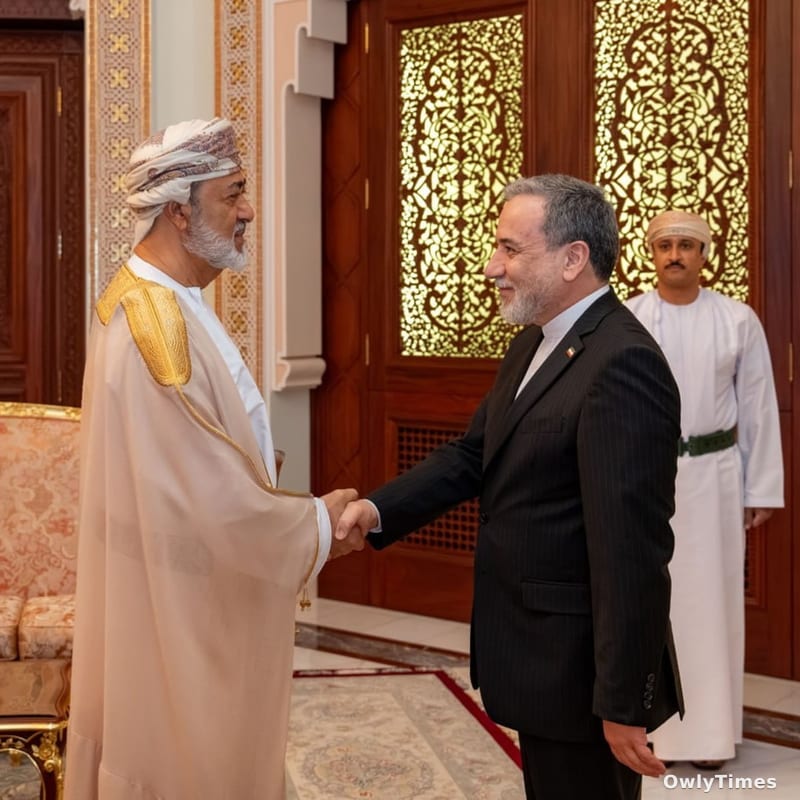
The movement of Abbas Araghchi, Iran’s foreign minister, through Pakistan and Oman, underscores a desperate search for a mediator who can bridge the gap between Washington’s maximalist demands and Tehran’s survivalist requirements. Araghchi’s impending meeting with Vladimir Putin signals that Iran is preparing to deepen its reliance on Russia, a move that complicates any potential US-brokered deal. This mirrors the historic volatility of Cold War-era regional conflicts, where local actors successfully leveraged superpower rivalries to delay domestic concessions.
The failure of the 21-hour session in Islamabad, led by Vice-President JD Vance and Iranian parliamentary speaker Mohammad Bagher Ghalibaf, demonstrated that both sides are currently operating within a zero-sum framework. The collapse of those talks over nuclear enrichment and regional militant support highlights that the "wide gaps" identified by observers are not merely technical disagreements, but fundamental disputes over regional hegemony.
The Fragility of the Ceasefire
The human cost of this deadlock is mounting, with casualties reaching at least 3,375 in Iran, 2,500 in Lebanon, and significant losses among US and Israeli personnel. As the conflict expands from the Indian Ocean to the Lebanese border, the "fragile ceasefire" Trump extended last week acts as the only barrier to an even broader regional conflagration.
Whether this diplomatic stagnation persists will be dictated by the next reading of global oil and liquid natural gas prices. Should the market signal that the global economy can no longer absorb the cost of the blockade, the political pressure on the White House to either escalate to a kinetic operation or finalize a "bridging agreement" will reach a breaking point. Until then, the state of the negotiations will be measured by the status of the shipping lanes through the Strait of Hormuz.