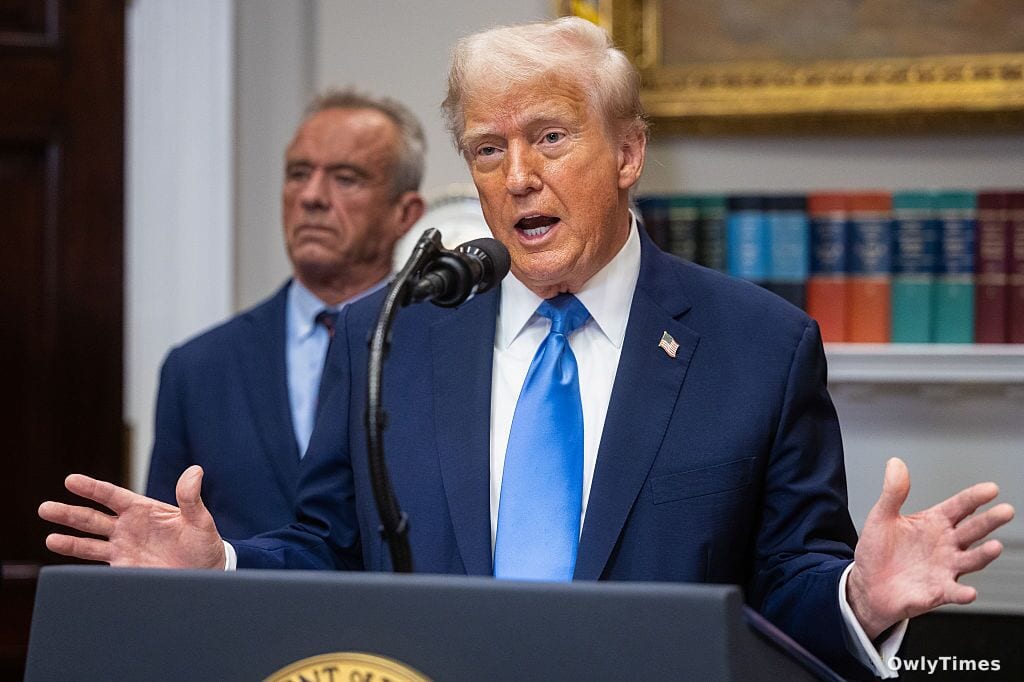

The Power of Presidential Pronouncements: How Trump’s Tylenol Warning Reshaped Emergency Care
The 10% drop in Tylenol prescriptions for pregnant women following President Trump’s September 2025 warning about a link to autism wasn’t a public health victory born of new scientific consensus – it was a demonstration of raw presidential influence over immediate medical practice. The study published in The Lancet, led by Dr. Jeremy Faust of Brigham and Women’s Hospital, isn’t about the science of acetaminophen and autism; it’s about the speed and scale at which a single, unsubstantiated claim from the highest office can alter clinical behavior, even in the face of widespread medical disagreement. This isn’t simply a case of “words matter,” as Dr. Caleb Alexander of Johns Hopkins Bloomberg School of Public Health observed; it’s a case study in how presidential authority functions as a disruptive force within established systems of medical knowledge and practice.
This article draws on reporting from NPR.
The immediate impact – “happening overnight,” according to Dr. Faust – is the most striking element. The study, analyzing data from over 1,600 hospitals, found no corresponding decrease in acetaminophen orders for non-pregnant women, isolating the effect to those potentially impacted by the president’s specific warning. This wasn’t a gradual shift in medical opinion; it was a direct response to a presidential statement. The ambiguity of how this shift occurred – whether patients declined the medication or doctors preemptively withheld it – is less important than the fact that it did occur. Thousands of pregnant women were potentially denied effective pain and fever management based on a claim unsupported by evidence. The fact that Tylenol consumption “improved” by December, as reported by manufacturer Kenvue to investors, doesn’t negate the initial disruption; it suggests a return to baseline, not a correction of a misinformed decision.
This episode echoes historical precedents where political leaders have directly intervened in public health messaging, often with unintended consequences. Consider President Nixon’s “War on Cancer” launched in 1971. While motivated by a genuine desire to combat the disease, the massive influx of funding into specific research areas – often dictated by political considerations rather than scientific merit – arguably distorted the landscape of cancer research for decades. Similarly, the early AIDS crisis saw initial political inaction and misinformation contribute to the rapid spread of the virus. In both cases, the political context shaped the public health response, sometimes to detrimental effect. President Trump’s Tylenol warning, while less systemic than these historical examples, operates on the same principle: the power to shape perception and behavior through the authority of the office.
The parallel case of leucovorin prescriptions, which didn’t return to normal by December following President Trump’s suggestion it could treat autism, is particularly concerning. Unlike acetaminophen, where some level of established medical understanding existed, the promotion of leucovorin – lacking substantial clinical trial data – represents a more direct endorsement of an unproven remedy. This highlights a pattern: the president’s pronouncements aren’t simply influencing existing practices; they’re actively creating new ones, potentially diverting resources and attention towards interventions with questionable efficacy. Kenvue’s statement affirming “no credible data” linking acetaminophen to autism underscores the disconnect between the president’s claim and the scientific consensus, further emphasizing the precariousness of relying on political statements for medical guidance.
The political chess move to watch next isn’t whether President Trump will issue a retraction or correction – the political calculus suggests that’s unlikely. Instead, the key question is whether his administration will follow through on discussions about updating Tylenol’s label. A label change, even framed as a precautionary measure, would effectively legitimize the initial warning, solidifying its impact and potentially creating a self-fulfilling prophecy of reduced acetaminophen use during pregnancy. This would be a strategic maneuver to transform a potentially damaging gaffe into a lasting policy outcome, demonstrating the power of the presidency to reshape not just public opinion, but the very foundations of medical practice.