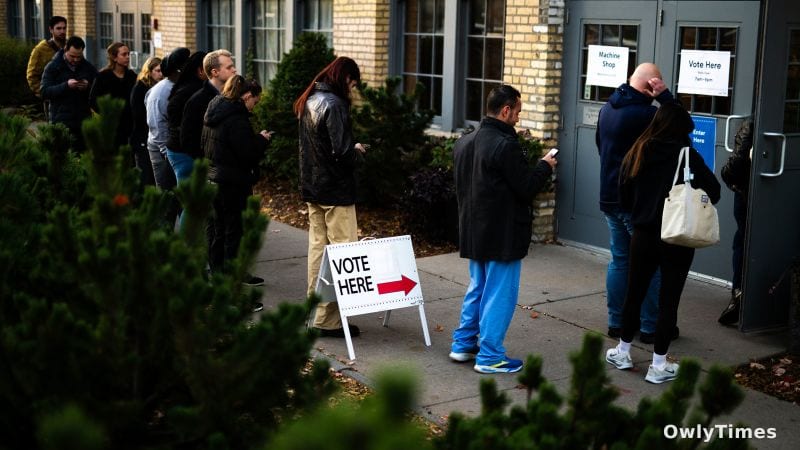

The demand from President Trump for Senate Majority Leader John Thune to deliver a voter ID bill isn’t a policy imperative so much as a test of control. The current impasse isn’t about whether the “SAVE America Act” will pass – it demonstrably won’t, given the current Senate composition – but about establishing who dictates the legislative agenda on Capitol Hill. Trump’s public pressure on Thune is a direct challenge to the traditional power dynamic between the executive and legislative branches, and a signal to the Republican base that he intends to remain a central force even outside the White House.
The predicament reveals the razor-thin margin of power Republicans hold, despite controlling both Congress and the presidency. The 60-vote threshold for most legislation in the Senate immediately complicates the situation, requiring bipartisan support that, in this case, is nonexistent. Democrats are uniformly opposed to the “SAVE America Act,” which mandates voter ID and proof of citizenship, and even within the GOP, resistance exists. Senator Lisa Murkowski of Alaska, for example, cites practical concerns about implementation in rural areas and the potential for disenfranchisement, a position that echoes historical debates over voting restrictions. This isn’t a new argument; the Voting Rights Act of 1965 was, in large part, a response to state-level voter ID laws used to suppress Black voters in the South.
The core of the disagreement isn’t about preventing illegal voting – a phenomenon experts consistently demonstrate is exceedingly rare – but about shaping the electorate. The “SAVE America Act” would disproportionately impact marginalized communities, students, and the elderly, groups less likely to possess readily available documentation. This echoes the “poll tax” era following Reconstruction, where fees and documentation requirements were strategically used to limit the voting rights of newly enfranchised African Americans. Trump’s repeated claims of “rampant” voter fraud, despite lacking evidence, serve to justify these restrictions, framing them not as barriers to participation but as safeguards against a fabricated threat. The number of documented instances of non-citizen voting remains consistently below 0.0001% of votes cast, according to studies by academics like Justin Levitt at the Brennan Center for Justice.
The proposed solutions to overcome the filibuster – namely, a “talking filibuster” championed by Senator Mike Lee of Utah – are less about genuine legislative strategy and more about internal Republican maneuvering. Lee’s proposal, requiring Democrats to continuously hold the floor to block the bill, is designed to expose them to public pressure and potentially force concessions. However, even Lee acknowledges they are “a few votes shy” of consensus within the Republican conference. Senator John Thune’s reluctance to pursue this path isn’t simply procedural; it’s a calculation that a prolonged and ultimately unsuccessful battle over the filibuster would further fracture the party and damage its ability to govern. The historical precedent here is the 2013 “nuclear option” deployed by Senator Harry Reid, then-Majority Leader, to eliminate the filibuster for judicial and executive nominations. While it allowed Democrats to confirm appointments, it also set a precedent for future escalation, ultimately leading to further erosion of Senate norms.
This article draws on reporting from CNN.
The internal divisions within the GOP are further highlighted by the contrasting positions of senators facing different political pressures. Senator John Cornyn of Texas, embroiled in a competitive primary, avoids taking a firm stance on altering the filibuster, recognizing the potential backlash from both the conservative base and more moderate voters. Meanwhile, Senator Josh Hawley of Missouri actively advocates for a “talking filibuster,” signaling his alignment with the more populist wing of the party. Even seemingly unrelated events, like Senator Thom Tillis’s annual dog costume parade, become flashpoints, drawing criticism from right-wing accounts who accuse him of prioritizing frivolous activities over legislative priorities. This illustrates the increasingly fragmented nature of the Republican coalition and the difficulty of maintaining unity in the face of external pressure and internal ideological clashes.
The political chess move to watch next isn’t whether the “SAVE America Act” passes – it won’t. It’s whether Donald Trump will escalate his public attacks on John Thune, potentially endorsing a primary challenger in 2026. This would be a clear signal that loyalty to Trump trumps adherence to Senate tradition, and a further indication that the former president intends to remain a kingmaker within the Republican Party, even from outside office. The question is whether Thune will yield to the pressure, or whether he will risk Trump’s wrath to defend the institutional norms of the Senate.





