
The Calculus of Fear: How Trump’s Policies Are Remapping a Texas Battlefield
The strategic realignment unfolding in South Texas isn’t about policy preferences; it’s about a shifting risk assessment. Donald Trump’s political operation banked on sustained Latino support, particularly among working-class voters responsive to economic nationalism. But a confluence of factors – aggressive ICE enforcement, economic anxieties exacerbated by inflation, and a growing sense of cultural alienation – is turning a district deliberately engineered for a Republican pickup into a potential Democratic hold, and a bellwether for the broader midterm landscape. The story of Daisy Alcazar, a Brownsville shop owner, isn’t an isolated case; it’s a symptom of a deeper fracture in the coalition that propelled Trump to victory in 2024.
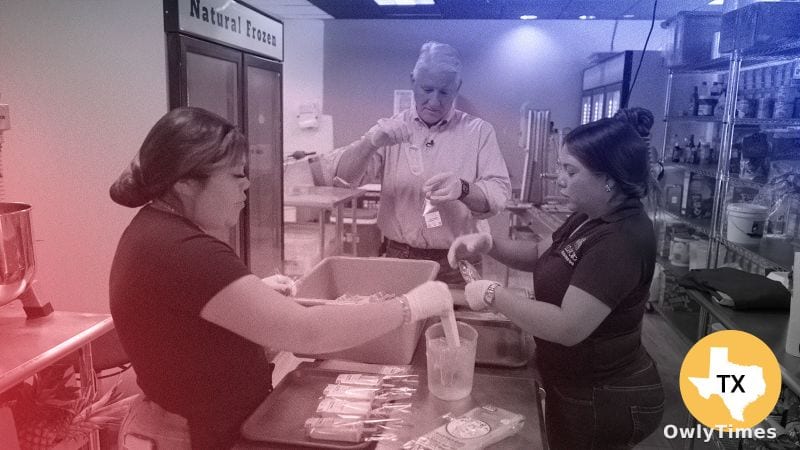
Alcazar, owner of La Pale, a traditional Mexican ice cream and fruit bar, embodies the anxieties gripping many Hispanic business owners in the region. Her business has seen walk-in sales plummet by 50%, initially due to inflation eroding disposable income, but increasingly due to fear. “I don’t think we are going to survive if we don’t speak up this election,” Alcazar stated to CNN, articulating a sentiment echoed by several small business owners who report Hispanic families are avoiding patronizing Latino-owned establishments for fear of attracting the attention of US Immigration and Customs Enforcement. This isn’t simply economic hardship; it’s a palpable sense of being targeted, a feeling that transcends legal status. The strategic implication is clear: Trump’s hardline immigration stance, once seen as a core strength, is actively eroding his support base in a crucial swing region.
The 34th Congressional District, a key target in Texas Republicans’ redistricting efforts, illustrates the high stakes. Designed to capitalize on demographic shifts and solidify GOP control, the new map would have given Trump a 10-point advantage in a district he narrowly carried by just over 4 points in 2024. Yet, despite the engineered advantage, the district is now considered a toss-up. This reversal isn’t merely a polling anomaly; it reflects a fundamental shift in the political calculus of voters. The historical parallel is striking: the backlash against overtly discriminatory policies often galvanizes the targeted communities, transforming fear into political action. Consider the Chinese Exclusion Act of 1882, which, while initially enjoying broad support, ultimately fueled a decades-long struggle for civil rights and integration.
Original reporting: CNN.
The situation is further complicated by the economic realities on the ground. While illegal crossings at the border have decreased – a talking point the Trump campaign intends to leverage – the economic benefits haven’t materialized as expected. Milton Reyna, a Corpus Christi bar owner, acknowledges the security improvements but stresses the need for “empathy,” a sentiment resonating with many Hispanic voters. The contradiction is stark: a president touting border security while simultaneously fostering an environment of fear within the communities he claims to protect. This dissonance is particularly acute in areas like Corpus Christi, which were initially expected to benefit from the redrawn district lines but are now showing signs of wavering support for the GOP.
The demographic reshaping of the 34th district – reducing the number of voting-age Hispanic residents by 63,000 – is a calculated gamble by Texas Republicans. The assumption was that shifting the district’s center of gravity towards the more conservative Corpus Christi area would offset any potential losses in the heavily Hispanic Rio Grande Valley. However, this strategy overlooks the nuanced political landscape within Nueces County. Interviews with voters at Reyna’s bar reveal a complex mix of support for Trump, coupled with reservations about his methods and concerns about ICE’s aggressive tactics. Ramon Herrera, a Kamala Harris voter in the group, succinctly captured the sentiment: “It’s a little bit too extreme.” Even among Trump voters, there’s a growing sense of unease, with some expressing openness to supporting a Democrat in November.
The undercurrent of economic anxiety adds another layer of complexity. Steve Martinez, an associate pastor in Kingsville, highlights the struggles faced by his predominantly Hispanic congregation, with many grappling with job losses and inflation. The long lines at the church food bank serve as a stark reminder of the economic hardships facing the community. This economic vulnerability, coupled with the fear of deportation, creates a potent cocktail of discontent that could further erode Trump’s support. The situation echoes the economic anxieties that fueled the rise of populism in the 1930s, demonstrating how economic insecurity can amplify existing social and political tensions.
Alcazar’s frustration – “I don’t know if they thought they were excluded from the brown color that we have” – cuts to the heart of the matter. The perceived betrayal by a president who once courted the Latino vote is fueling a sense of disillusionment and a renewed commitment to political engagement. Her call to action – “Our voice matters. We can make a change” – encapsulates the emerging narrative in South Texas. The question now isn’t whether Democrats can hold the 34th district, but whether this shift represents a broader realignment of Latino voters, and whether the Republican party can recalibrate its strategy to address the concerns of this increasingly influential demographic. The political chess move to watch next is the outcome of the Republican primary in the 34th: will the nominee double down on Trump’s rhetoric, or attempt to moderate their stance and appeal to a broader electorate? The answer will reveal whether the GOP has learned from the lessons unfolding in South Texas, or is destined to repeat them.





