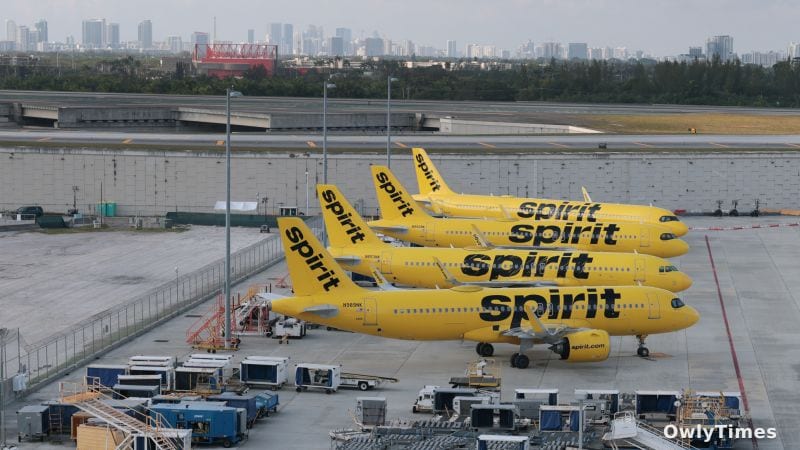

The strategic calculus behind the Trump administration’s eleventh-hour attempt to rescue Spirit Airlines was rooted in a familiar brand of economic populism: projecting the image of a dealmaker willing to bend federal machinery to protect working-class jobs. When the bargain carrier collapsed into its second bankruptcy in August 2025, wracked by rising fuel costs from the conflict with Iran, it presented a unique political theater. By floating a $500 million bailout package that would have handed the federal government a majority stake in the airline, the administration sought to position itself as a bulwark against corporate liquidation. However, the move exposed a deep ideological chasm within the administration, pitting populist optics against fiscal pragmatism and statutory limits.
Inside the White House Struggle Over Executive Power
The internal debate over the proposed bailout revealed a stark division among key advisers, mapping out a classic struggle between political marketers and institutional realists. Commerce Secretary Howard Lutnick emerged as the primary champion of the rescue package, arguing behind closed doors that saving the discount carrier would secure a major political victory for the administration. On the other side of the ledger, a formidable coalition of officials urged restraint, pointing to the financial risk of injecting half a billion dollars of taxpayer money into an enterprise with a chronically weak balance sheet. Transportation Secretary Sean Duffy, Deputy Chief of Staff Stephen Miller, National Economic Council Director Kevin Hassett, and representatives from the White House counsel’s office all raised serious reservations about the transaction.
This policy friction intensified when officials sought legal mechanisms to execute the rescue without congressional intervention. The administration went so far as to explore invoking the Defense Production Act, a cold-war era emergency statute, to assert federal control over the airline's industrial assets. However, this aggressive maneuver was flatly rejected by the Department of Defense, leaving the administration without a viable legal or financial vehicle to secure the funding. Ultimately, the political will of the presidency could not overcome the stubborn reality that no federal account held an unallocated $500 million to execute the purchase.
Who Benefits and Who Loses in the Aviation Fallout
To understand the political stakes of the Spirit collapse, one must analyze the raw ledger of who benefits and who loses from the federal government’s ultimate retreat.
On the winning side of this ledger are the institutional fiscal conservatives within the Republican coalition and Spirit’s legacy competitors. By avoiding a unilateral bailout, the administration dodged a precedent-shattering intervention that had drawn sharp rebukes from both industry executives and congressional Republicans, who argued against picking winners and losers in a deregulated market.
Conversely, the clear losers of this political impasse are the 14,000 employees of Spirit Airlines and the millions of low-income travelers who relied on the carrier's ultra-low-cost model. The sudden elimination of Spirit’s capacity leaves stranded passengers scrambling and permanently reduces competition in the budget travel sector. As one administration source observed, the airline's demise represents a direct blow to working-class consumers who are now left with significantly fewer affordable transit options.
Breaking with Decades of Federal Aviation Precedent
The proposed intervention departed sharply from historical precedents governing federal aviation rescues. Traditionally, federal bailouts have been system-wide responses to catastrophic, industry-paralyzing events rather than targeted lifelines for individual, struggling corporations. The rescue packages enacted after the September 11 terrorist attacks or during the COVID-19 pandemic were designed to preserve the entire national transportation infrastructure during demand shocks, not to salvage a single operator suffering from structural losses and rising fuel costs.
While President Donald Trump publicly mused that the government could acquire Spirit's aircraft and assets at the "right price" and sell them for a profit once oil prices dropped, his advisers quickly realized this was far more complex than previous pressure campaigns. Unlike efforts to influence corporate decisions at domestic manufacturing giants, salvaging a heavily indebted airline required the consent of private creditors who held the final veto over any restructuring deal. When those creditors refused to agree to terms with the federal government, the administration's populist leverage evaporated.
Shifting Blame as the Market Adjusts
With the airline officially initiating an orderly wind-down of operations, the political battle has rapidly transitioned into a blame-shifting campaign. Trump administration allies, including outside adviser Alex Bruesewitz, immediately sought to redirect public anger toward the Biden administration and Democratic Senator Elizabeth Warren. They pointed to the federal court ruling in January 2024 that blocked JetBlue’s proposed acquisition of Spirit on antitrust grounds, arguing that the regulatory intervention killed the airline's last viable private lifeline.
Warren quickly pushed back against this narrative, attributing Spirit's collapse to the spiking fuel prices driven by geopolitical conflict and noting that a Reagan-appointed judge had ruled the JetBlue merger illegal under existing antitrust law. Duffy also joined the fray, publicly declaring at a press conference at Newark Liberty International Airport that history would judge the blocking of the merger as a massive policy mistake by their predecessors.
The next critical signal to monitor will be the pricing behavior of competitor airlines as they absorb Spirit’s displaced customer base. While carriers like Frontier Airlines have offered temporary relief, such as a 50 percent discount on base fares running until May 10, the long-term metric to watch is whether legacy carriers maintain their promised price caps or if the sudden contraction of budget capacity triggers a sustained spike in average domestic airfares.