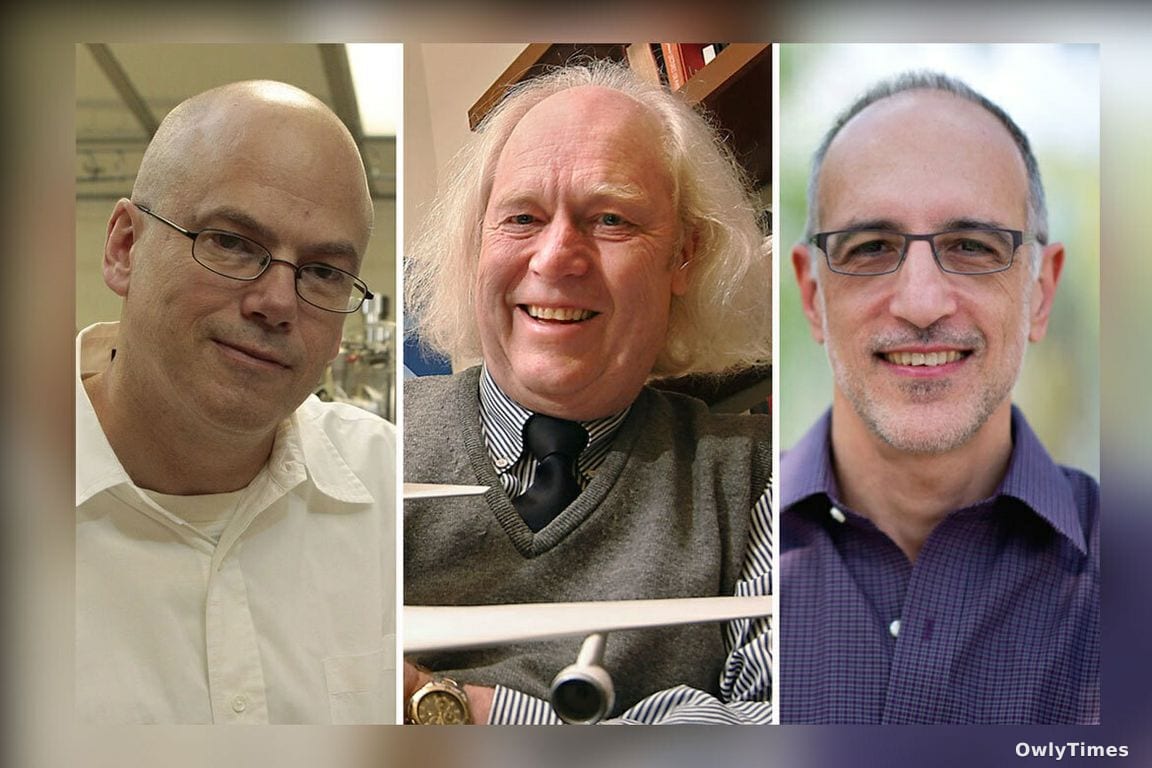

How do we quantify the intellectual reach of a university? While metrics like citation counts and grant funding offer a glimpse, the most profound measure remains the peer-driven recognition of a scholar’s lifetime contributions to human understanding. The recent election of three UCLA professors—Eric Becklin, Martin Gilens, and Craig Manning—to the National Academy of Sciences (NAS) serves as a tangible benchmark for this excellence.
Expanding the Frontiers of the Known Universe
The NAS, established in 1863 under a congressional charter signed by President Abraham Lincoln, serves as a critical advisory body to the federal government. With more than 2,700 active members, the institution is designed to bridge the gap between rigorous academic inquiry and public policy. Being elected to this body is widely considered one of the highest honors a U.S. scholar can achieve, as it requires an affirmative vote from one’s own peers. The three UCLA professors are part of a new cohort of 120 domestic members and 30 international members, a select group tasked with guiding the nation’s future in science and technology.
For Eric Becklin, professor emeritus of physics and astronomy, this honor recognizes a career spent peering through the veil of cosmic dust. An experimental astrophysicist, Becklin was instrumental in the maturation of infrared astronomy, moving the field from its nascent state in the 1960s to its current role as a fundamental pillar of modern research. By developing instruments capable of detecting heat radiation rather than visible light, he fundamentally changed how we map our galaxy. His landmark work includes the first observation of the Milky Way’s core, the identification of high-mass protostars in the Orion Nebula, and the early detection of brown dwarfs. His leadership at the NASA Infrared Telescope Facility in Mauna Kea and his role as chief science advisor for the Stratospheric Observatory for Infrared Astronomy underscore the transition from theoretical discovery to institutional leadership.
Mapping the Mechanics of Society and Earth
While Becklin looks toward the stars, Martin Gilens, a professor of public policy, political science, and social welfare at the UCLA Luskin School of Public Affairs, examines the complex dynamics of human governance. Gilens has spent his career analyzing the friction between democratic ideals and actual policy outcomes. His research into inequality and democratic responsiveness provides a rigorous framework for understanding how the preferences of different socioeconomic groups are—or are not—reflected in legislative action. His findings are documented in influential works such as Affluence and Influence: Economic Inequality and Political Power in America (2012) and Democracy in America? What Has Gone Wrong and What We Can Do About It (2017), which challenge the public perception of political representation.
Conversely, the work of Craig Manning, a distinguished professor of Earth, planetary, and space sciences, reminds us that the most transformative processes often occur beneath our feet. Manning’s expertise in experimental petrology and geochemistry focuses on the extreme conditions of the Earth’s crust and mantle. His research into how fluids move under intense heat and pressure provides vital context for how continents are shaped and how earthquakes are triggered. By studying these processes from the Himalayas to Greenland, Manning has refined our understanding of the Earth’s carbon cycle over geologic time scales.
The Path Forward for Peer-Reviewed Science
It is important to note that while these accolades highlight individual achievement, the true impact of the NAS lies in its future potential. These members are not merely honored for their past publications; they are effectively drafted into a service role, ready to provide scientific guidance on complex social and technological issues. The limitation, of course, is that the translation of academic research into federal policy is rarely linear. While these scholars have established clear evidence regarding planetary dynamics, political representation, and infrared radiation, the political will to act on such findings remains a distinct variable. The next reading of federal engagement with the academy—specifically how these new members are integrated into advisory committees—will indicate whether these insights will influence the next cycle of national policy development.





