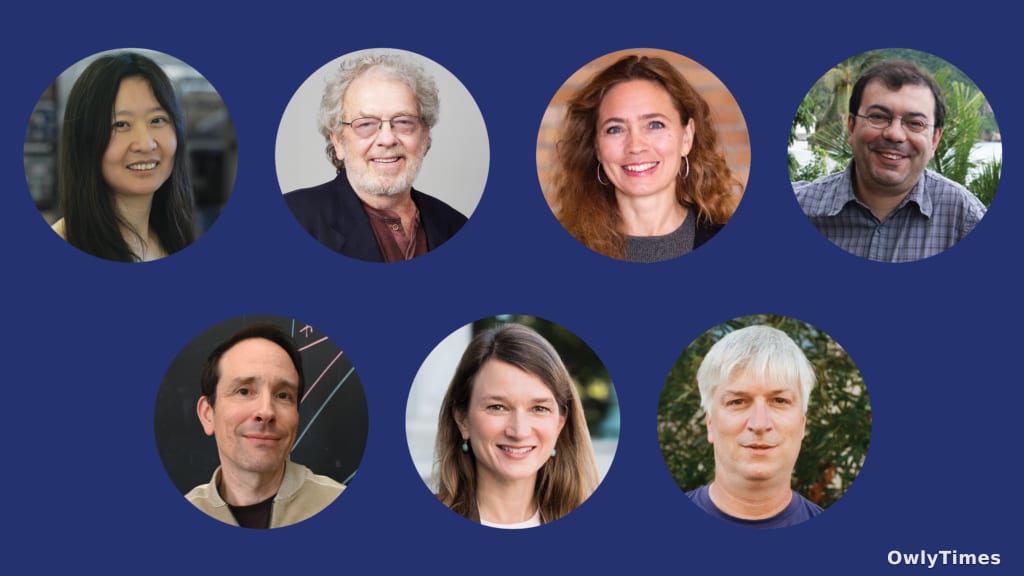

How do we measure the impact of academic excellence on the broader trajectory of our society? While the public often views universities as silos of specialized research, institutions like the American Academy of Arts and Sciences serve a different function: they act as a bridge between high-level intellectual labor and the practical, often urgent, needs of the nation. The election of seven UC Berkeley faculty members to this body this week highlights a specific model of public scholarship, one that prioritizes cross-disciplinary collaboration as a tool for national problem-solving.
A Legacy of Institutional Recognition
Founded in 1780, the Academy has spent nearly two and a half centuries curating a membership designed to address the "greatest challenges facing the U.S." This mandate is rarely about individual accolades in a vacuum; it is about mobilizing a cohort of leaders across journalism, policy, industry, and the sciences. The inclusion of Doris Tsao, Raphael Bousso, P. David Pearson, Sarah Anzia, Kristin Persson, Michael Hutchings, and Paolo Mancosu into this cohort suggests that the Academy is currently prioritizing a diverse intellectual portfolio that spans from the philosophy of mathematics to the intricacies of molecular biology.
When headlines highlight an induction class of 252 new members, it is easy to view the list as a mere popularity contest for the elite. However, the true significance lies in the structural intent of the organization. As Academy President Laurie Patton noted, the current intake is framed as a "fitting commemoration of the nation’s 250th anniversary." By grouping academic researchers alongside figures like Jodie Foster and Barbara Kingsolver, the Academy is attempting to synthesize public influence with rigorous empirical study, a task that remains difficult in an era of intense media fragmentation.
Bridging the Gap Between Research and Policy
The challenge for these newly elected members will be moving their expertise from the university lab into the public sphere. For researchers in fields like material science or political science, the "Academy" title is not just a capstone to a career; it is a credential that provides a platform to influence policy. The limitation here is that academic prestige does not automatically translate into policy success. Being recognized for excellence in a specific discipline does not inherently grant a researcher the political or social capital required to influence legislation or public opinion.
The effectiveness of this group will ultimately depend on how the Academy facilitates the interaction between these new members and the legislative bodies they are meant to inform. Critics often point out that such honorary societies risk becoming echo chambers for the already established, potentially overlooking younger, disruptive voices who may not yet hold traditional academic rank. The value of this specific class will be measured by whether they can move beyond the ceremonial nature of the appointment and effectively translate their diverse research findings into actionable public discourse.
The Path Toward October 2026
The transition from nomination to active participation is a process governed by the Academy’s internal scheduling. While this week’s announcement formalizes the recognition of the seven Berkeley professors, their formal integration into the organization’s ongoing projects will wait until the induction ceremonies in Cambridge, Massachusetts, in October 2026. The next reading of the Academy’s project reports following these ceremonies will indicate whether this specific class of inductees is being utilized to pivot the organization toward new, concrete policy initiatives, or if the focus will remain on the broader, traditional goals established in the late 18th century.





