
What happens when the Silicon Valley ideal of "move fast and break things" collides head-on with the grinding, industrial reality of a sovereign war? Over the last forty-eight hours, we have witnessed a stark answer play out across the skies and shipping lanes of Eastern Europe. In a massive weekend escalation, Ukraine launched hundreds of long-range drones deep into Russian territory, while Moscow responded with heavy ballistic missiles aimed at Kyiv and the vital port of Odesa.
The real story here isn't the sheer volume of explosives traded over the weekend—it's the profound philosophical split over how modern technology should be deployed in conflict, and who gets to control the joystick.
The Cheap Drone Swarm Meets the Million-Dollar Missile
Think of long-range drones as the open-source software of modern warfare: cheap, easily modified, and highly distributed. Ballistic missiles, by contrast, are legacy mainframes—incredibly powerful, prohibitively expensive, and difficult to replace. According to reporting by ABC News, Ukrainian forces sent more than 400 drones toward the Russian capital between late Sunday and early Monday, marking one of the largest aerial assaults on Moscow since the war began. Moscow Mayor Sergei Sobyanin claimed most were downed far from the city, though 85 were intercepted near the capital.
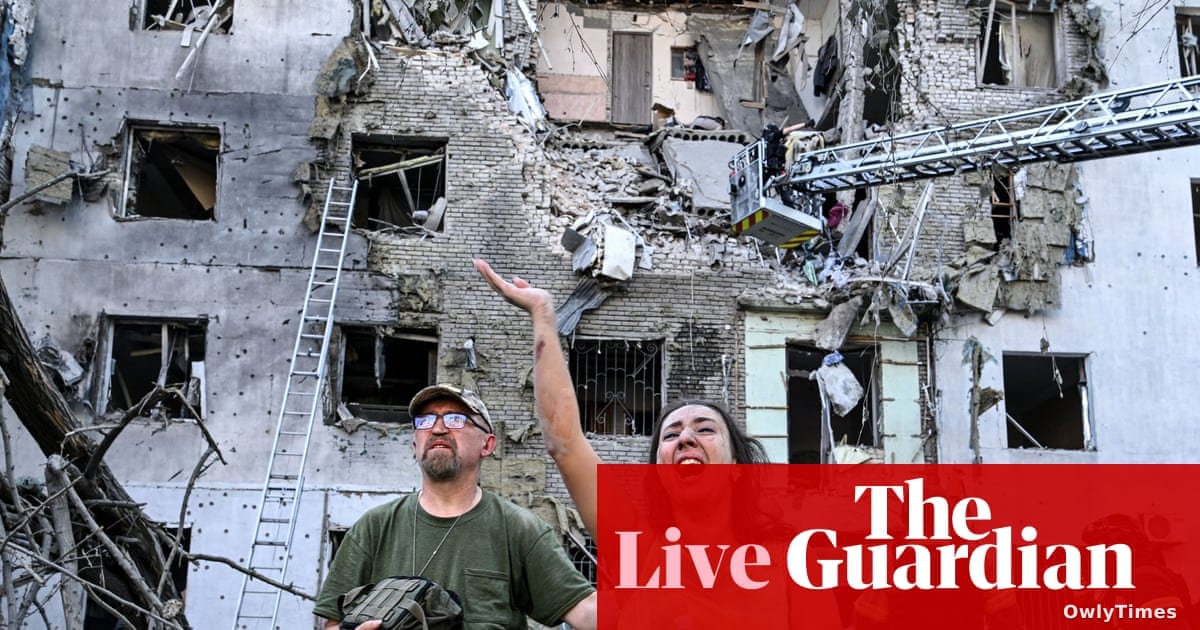
While Russia boasts of its air defenses, the sheer volume of cheap, distributed drone tech acts like a distributed denial-of-service (DDoS) attack on physical airspace. ABC News reports that the drone blitz injured 10 people in the Moscow region, according to regional head Andrei Vorobyov, and ignited a fire at the Yuzhnye Vrata industrial park in Domodedovo, a detail confirmed by local official Yevgeniya Khrustaleva. Additionally, the independent outlet Astra reported a fire at an oil depot in Podolsk, though official confirmation was withheld. Russia, meanwhile, is dipping into its finite stockpiles of expensive ballistic missiles. As noted by the Washington-based Institute for the Study of War (ISW), Russia has launched more ballistic missiles in July than it reportedly produces in a month, sacrificing long-term inventory for short-term, high-success-rate impacts.
Silicon Valley Innovation Versus Soviet-Era Command
This technological divergence has triggered an acute political crisis within Ukraine’s leadership, exposing a deep rift between young tech innovators and the military’s old guard. The real story here isn't a simple disagreement over battlefield tactics—it's a battle for the soul of Ukraine’s defense infrastructure. President Volodymyr Zelenskyy recently ousted his 35-year-old defense minister, Mykhailo Fedorov, a champion of rapid digital innovation and drone technology, while retaining 60-year-old Soviet-trained General Oleksandr Syrskyi as armed forces chief.
This decision has alienated many citizens and soldiers who see Fedorov as the architect of Ukraine’s asymmetric drone successes. As ABC News reports, the reshuffle sparked days of street protests in favor of Fedorov and against Syrskyi. Zelenskyy now faces the daunting task of reassuring a skeptical public that abandoning a tech-forward leadership model won't stall their defense. This internal friction comes at a terrible time, as external allies watch closely. As The Guardian reported, the European Union has pledged to continue working with Kyiv on crucial drone and energy reforms, even as Britain's newly appointed Prime Minister, Andy Burnham, takes office promising a "circuit breaker" of continued support.
The Human Cost of Maritime Supply Chain Warfare
For ordinary citizens worldwide, this tech-driven war isn't confined to a distant map; it directly impacts global supply chains and civilian lives. While Russia’s defense ministry claimed its forces targeted fuel tanks in Odesa, the reality on the ground was far more devastating for global merchant shipping. On Sunday evening, Russian cruise missiles struck the MV Golden Leo, a Guinea-Bissau-flagged, Turkish-owned cargo ship carrying grain as it departed Odesa's maritime corridor.
The details of the tragedy highlight the vulnerability of civilian infrastructure. While The Guardian initially reported a broad toll of 10 dead near Odesa, The Independent provided crucial, tragic specifics: four Indian nationals were among the dead, including Akhil Joyan, a 26-year-old seafarer from Kerala who held a world record for rope pull-ups. The Ukrainian navy reported that three cruise missiles struck the vessel's starboard side, igniting a massive fire that rescue teams fought through the night. India’s foreign ministry strongly condemned the attack, calling the targeting of commercial shipping and innocent civilian crew members "deplorable." Ukraine’s acting foreign minister, Andrii Sybiha, characterized the strike as a continuation of Moscow’s "campaign of terror."
What happens next? The critical signal to watch is Zelenskyy's scheduled "key talks" on Monday, aimed at defusing the domestic political crisis. If Zelenskyy cannot broker a compromise that keeps Ukraine's decentralized, tech-driven innovators aligned with Syrskyi's traditional military command, expect a chilling effect on the country's domestic drone pipeline. Without that rapid innovation loop, Ukraine will struggle to maintain the asymmetric drone swarms that currently serve as its only viable counterweight to Russia's heavy missile stockpiles.