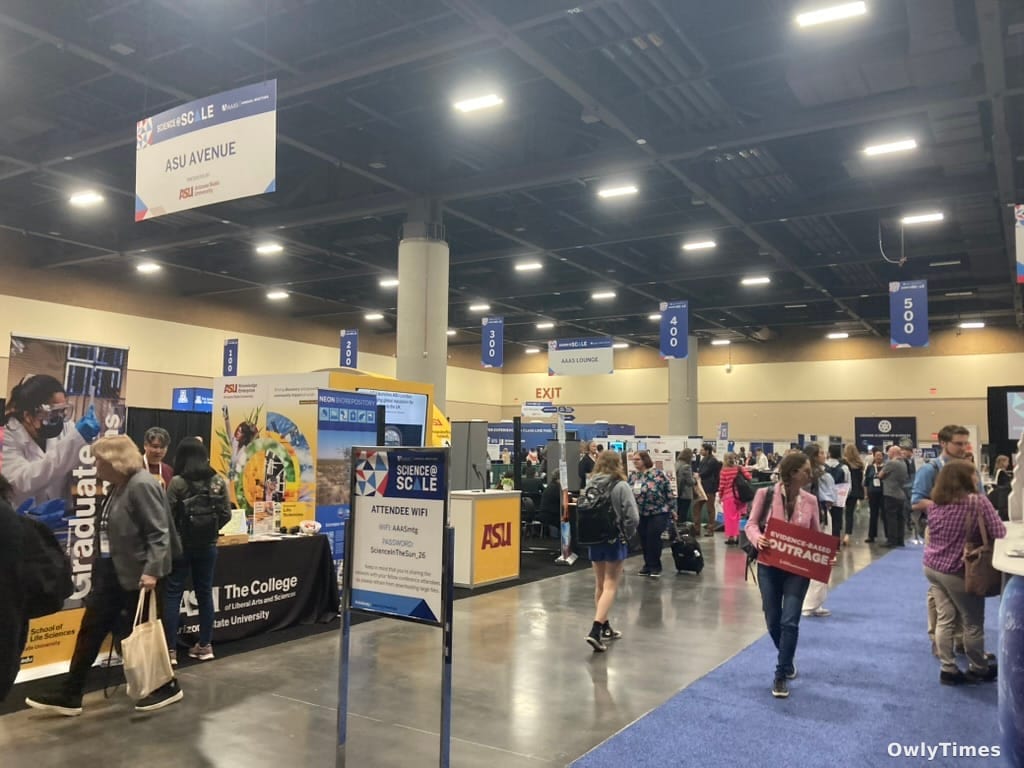

The narrative surrounding American science right now often feels apocalyptic – headlines scream of funding cuts and a “war on science.” But the reality, as illuminated at this year’s American Association for the Advancement of Science (AAAS) meeting in Phoenix from February 12-14, is far more nuanced. While the damage inflicted by the recent return of the Trump administration – 7,800 research grants terminated or frozen, 25,000 scientists laid off, and proposed $32 billion in cuts to federal funding, according to Nature – is undeniably severe, the meeting wasn’t solely a lament. Instead, it was a forum for strategizing resilience, highlighting localized solutions, and acknowledging a fundamental shift in how science operates and is perceived in the United States. The core question being addressed wasn’t simply how bad things are, but how do we adapt when the traditional structures of scientific support are actively undermined?
Founded in 1848, the AAAS, with its 120,000+ members, remains a vital hub for the scientific community. This year’s meeting underscored a growing recognition that the response to federal instability must be multi-pronged, with a significant emphasis on bolstering science at the state and local levels. Andrew Zwicker, a New Jersey state senator and physicist at the Princeton Plasma Physics Laboratory, articulated a sentiment echoed throughout the conference: action at the state level is often “smoother” due to a relative absence of the “hyper-partisanship” prevalent in Washington D.C. This isn’t to suggest state-level politics are devoid of conflict, but rather that the scale and intensity of ideological battles are often diminished, allowing for more pragmatic engagement with scientific issues. Zwicker also noted a promising trend – increased interest from younger constituents, particularly regarding climate change, which they perceive as “an existential threat to their own future.” This generational engagement offers a potential pathway for sustained advocacy.
However, the experience isn’t universal. Roger Hanshaw, Speaker of the West Virginia House of Delegates, represents a starkly different constituency. His district, with a population of just 17,500, lacks even basic amenities like stoplights or chain stores. Hanshaw, with a background in environmental law, emphasized the importance of consistent citizen engagement with representatives, not just during periods of crisis. This divergence highlights a critical challenge: how to build broad-based support for science across diverse communities with vastly different priorities and levels of access. The success of localized initiatives hinges on understanding and addressing these disparities. It’s not enough to simply do science locally; it must be science that is demonstrably relevant and beneficial to the specific needs of each community.
Reporting from 404media.co informs this analysis.
Beyond localized efforts, the meeting also explored the future of the scientific enterprise itself. Arthur Daemmrich and Mahmud Farooque of Arizona State University’s Consortium for Science, Policy and Outcomes (CSPO) presented a sobering assessment of how the U.S. relinquished its global science leadership, attributing it to deliberate attacks on academic institutions and the erosion of scientific expertise. Daemmrich characterized this as “a very concerted attack” and “a historical transition.” CSPO is now launching a public engagement project, including forums in Arizona, West Virginia, and Massachusetts, to gather input on the future of American science policy. Notably, Farooque emphasized the importance of collecting “national-level baseline data” while also tailoring questions to the specific interests of each state. This approach acknowledges the need for both broad consensus and localized relevance, a delicate balance that will be crucial for rebuilding public trust. The intention to collect data on community “hopes and concerns” before delving into the complexities of science funding is particularly astute, recognizing that effective communication begins with understanding the audience’s existing worldview.
Combating misinformation, a pervasive challenge in the current climate, also took center stage. The editors-in-chief of major scientific journals discussed strategies for navigating a landscape increasingly saturated with unreliable information. Holden Thorpe, editor-in-chief of Science, offered a surprisingly pragmatic perspective on competing with figures like Joe Rogan, who frequently platform misinformation. He argued that the most effective communicators aren’t necessarily scientists themselves, but rather trusted professionals like primary care physicians, nurses, and teachers – individuals with established personal relationships with the public. While acknowledging the burden placed on these professionals, Thorpe’s point underscores a fundamental truth: science communication is most effective when it’s embedded in existing social networks and delivered by trusted voices.
It’s important to note the limitations of these observations. The AAAS meeting, while representative, is not a perfectly randomized sample of the entire scientific community or the American public. The perspectives shared were largely those of individuals actively engaged in science policy and communication, potentially skewing the analysis towards more optimistic or proactive viewpoints. Furthermore, the long-term impact of the proposed federal cuts remains uncertain, and the full extent of the damage may not be apparent for years to come. The success of state-level initiatives will also depend on sustained funding and political will, factors that are not guaranteed.
Looking ahead, the next crucial step is to translate the conversations at the AAAS meeting into concrete action. The CSPO’s public forums represent a promising start, but their success will depend on attracting diverse participation and genuinely incorporating public input into policy recommendations. More broadly, the scientific community must prioritize building stronger relationships with local communities, investing in science education at all levels, and actively engaging in public discourse. The question now isn’t just whether we can weather this storm, but whether we can emerge from it with a more resilient, equitable, and publicly engaged scientific enterprise. Will we see a sustained effort to cultivate “science literacy” not as a body of knowledge, but as a skillset – the ability to critically evaluate information and engage in informed decision-making – across all demographics? That’s the metric to watch in the coming years.





