
Is Silicon Valley selling us snake oil again? We’re drowning in buzzwords like “AI-powered” and “digital twins,” but the real story here isn’t the hype – it’s the quiet, decade-long build happening at institutions like The University of Texas at Austin, where genuinely groundbreaking work is transforming prediction from a hopeful aspiration into a demonstrable reality. While tech giants promise metaverse fantasies, UT researchers are building “mirror worlds” that can forecast tsunamis in fractions of a second, optimize cancer treatments, and even accelerate the development of next-generation nuclear energy – and they just won what’s essentially the Nobel Prize of supercomputing for it.
On February 27, 2026, the University of Texas at Austin solidified its position as a national leader in digital twin research, a field poised to reshape everything from disaster preparedness to personalized medicine. The achievement? A tsunami forecasting system, developed by a UT-led team in collaboration with Scripps Institution of Oceanography and Lawrence Livermore National Laboratory, that’s 10 billion times faster than conventional methods. This isn’t incremental improvement; it’s a paradigm shift, reducing a 50-year computational task to a matter of moments. The breakthrough earned them the 2025 Association for Computing Machinery (ACM) Gordon Bell Prize, a testament to the rigor and impact of their work. But the prize itself is almost secondary to what it represents: a deliberate, sustained investment in the foundational science underpinning this technology.
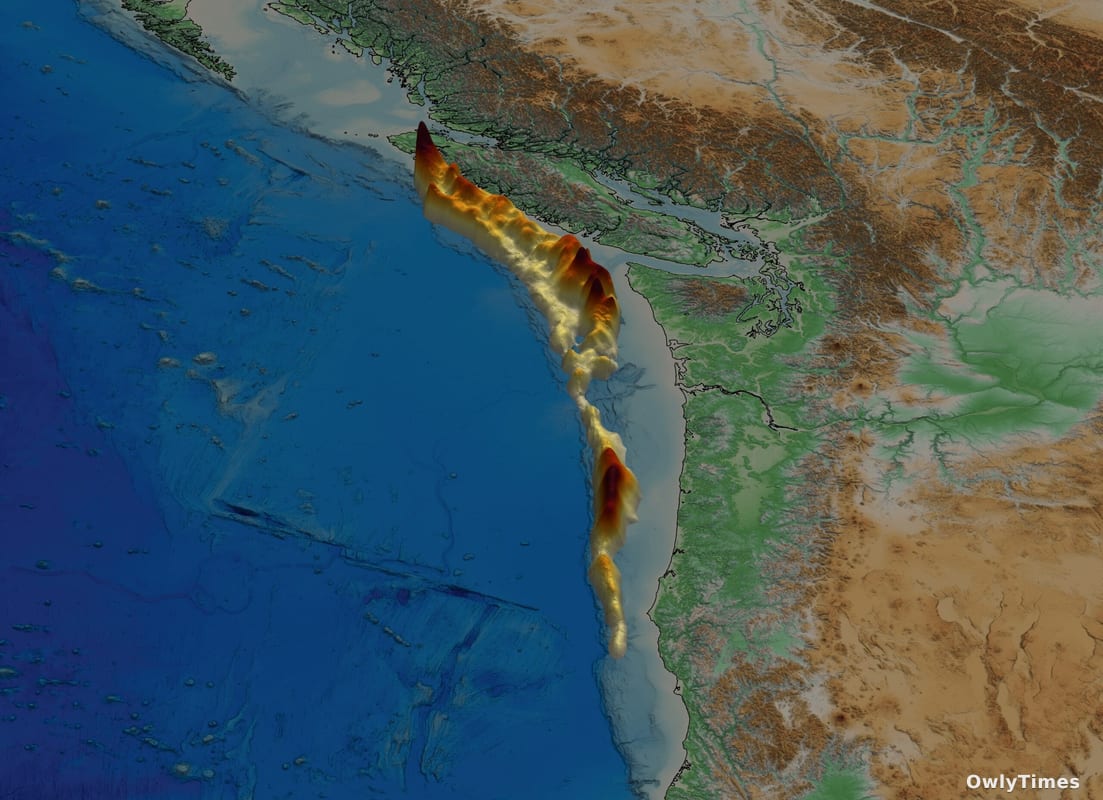
The Cascadia Subduction Zone, a 700-mile fault line off the Pacific Northwest coast, looms large in the minds of geologists – and now, increasingly, computer scientists. With a nearly 40% probability of a major earthquake in the coming decades, the region is a high-stakes testing ground for predictive technologies. Traditional tsunami forecasting relies on complex simulations that, frankly, take too long to be useful in a crisis. Omar Ghattas, director of the Department of Energy Multifaceted Mathematics Integrated Capability Center (MMICC) on Multifaceted Mathematics for Predictive Digital Twins (M2dt) at UT, and his team bypassed this bottleneck by combining seafloor pressure data with physics-based models and leveraging the immense processing power of supercomputers like Frontera, El Capitan, and Perlmutter. The result isn’t just faster forecasting; it’s a system that can quantify uncertainty, providing a level of trust crucial for life-or-death decisions.
Drawn from news.utexas.edu.
This isn’t a case of simply throwing AI at a problem and hoping for the best. As Ghattas points out, “AI for Science differs from commercial AI because it does more than just find patterns; it reflects the laws of nature.” The UT approach emphasizes “physics-informed” machine learning, meaning the AI isn’t just learning from data, it’s learning within the constraints of established physical laws. This is critical. A purely data-driven model might identify correlations, but it can’t reliably predict behavior in novel scenarios. A physics-informed model, grounded in fundamental principles, can. This distinction is why UT’s work is attracting attention from the Department of Defense, the Department of Energy, and industry partners like AMD, who see the potential for accelerating innovation in areas like semiconductor manufacturing. Mark Papermaster, CTO of AMD, highlighted the potential for “faster co-optimization” and bringing next-generation compute platforms to reality more quickly through this collaboration.
The Oden Institute for Computational Engineering and Sciences is the engine driving much of this innovation. Under the leadership of Karen Willcox, the institute is establishing the mathematical foundations for these predictive digital twins, integrating scientific machine learning and reduced-order modeling to ensure real-time updates with rigorous uncertainty quantification. This isn’t about building flashy interfaces; it’s about building trustworthy systems. Simultaneously, researchers are applying this technology to diverse challenges, from optimizing cancer treatments at the Center for Computational Oncology, led by Thomas Yankeelov, to predicting hurricane storm surges under the direction of Clint Dawson. The common thread is a commitment to building dynamic, virtual replicas of physical systems that evolve alongside their real-world counterparts.
But the true power unlock will come with the arrival of Horizon, the U.S. National Science Foundation Leadership-Class Computing Facility, hosted at TACC. Boasting 10 times the simulation power and 100 times the AI performance of TACC’s current flagship supercomputer, Horizon will usher in a new era of digital twin research. This isn’t just about faster processing; it’s about enabling more accurate predictions, better characterized uncertainties, and optimized decisions for increasingly complex systems. Consider the work being done with nuclear reactors, where Kevin Clarno and Derek Haas are using an $18 million grant to analyze operational data and build a digital twin to accelerate the safety and licensing of advanced nuclear technology. The goal isn’t just to improve existing reactors, but to fundamentally change the pace of innovation in an industry historically constrained by lengthy and expensive physical testing.
The success of UT’s digital twin initiative isn’t accidental. It’s the result of a deliberate strategy to foster interdisciplinary collaboration, invest in foundational mathematics, and build world-class computational infrastructure. Fernanda Leite, interim vice president for research, emphasizes that UT offers “full-stack capabilities” that have “accelerated discovery and transformed critical infrastructure.” This isn’t just academic boasting; it’s a reflection of a research ecosystem that seamlessly integrates theory, computation, and real-world implementation.
So, what happens next? Don’t expect flying cars or fully immersive metaverses. The real impact of digital twins will be far more subtle, but far more profound. Watch for the increasing integration of these technologies into critical infrastructure – not as replacements for human expertise, but as powerful tools to augment it. Specifically, keep an eye on the development of digital twins for the power grid. As we transition to renewable energy sources, maintaining grid stability will become increasingly challenging. Digital twins, capable of predicting and mitigating potential disruptions, will be essential for ensuring a reliable and resilient energy supply. The question isn’t if digital twins will transform our world, but how quickly they will become invisible, yet indispensable, components of our daily lives.