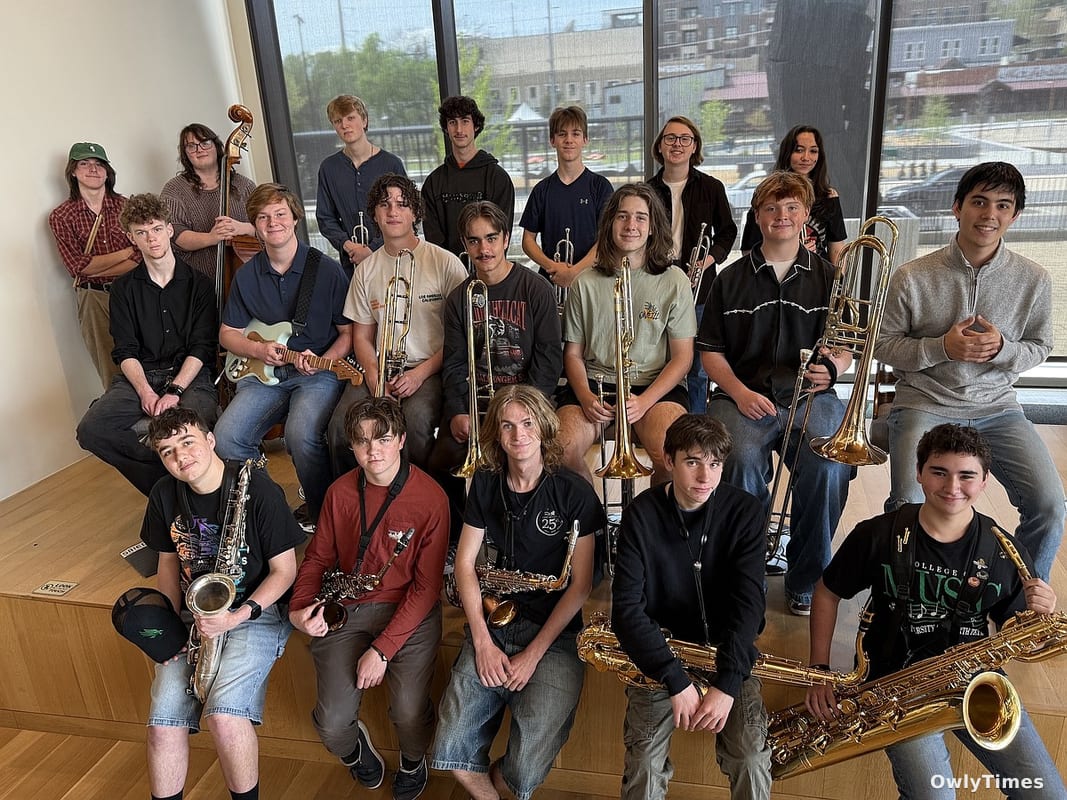

The stage lights at the Walton Arts Center are set to dim this Wednesday, but the real performance isn’t just about the notes on the page. When the Northwest Arkansas Jazz Society’s All-Star Youth Ensemble takes the stage for their 10th-season debut, they are signaling a shift in how we cultivate artistic excellence. Comprised of 20 high school students from seven different regional schools, this group isn’t just playing music; they are navigating the rigorous, high-stakes discipline of jazz big band repertoire under the mentorship of industry professionals like Adam Larson, Rick Salonen of the University of Arkansas, and Ryan Yumang of the University of North Texas. It is a reminder that the future of the arts isn't found in a textbook, but in the collaborative friction between emerging talent and established masters.
Bridging Generations Through Movement and Clay
This week’s cultural calendar across Arkansas highlights a recurring theme: the preservation and evolution of traditional craft and performance. In Fort Smith, the Western Arkansas Ballet is pushing the boundaries of classical storytelling by pairing the dark, foundational lore of the Grimm Brothers with the whimsical complexity of William Shakespeare. Under the guidance of Artistic Director Jared A. Mesa, the company is staging Snow White & A Midsummer Night’s Dream at the ArcBest Corp. Performing Arts Center. With professional dancer Nicholas C. Mesa anchoring a cast of local students, the production underscores a vital industry truth: professional-grade art relies on a pipeline that invites the next generation into the spotlight early.
Meanwhile, in Fayetteville, the Community Creative Center is preparing for the fifth Arkansas Pottery Festival. Running from Friday through May 3, the event serves as a tactile counterweight to our increasingly digital existence. By featuring live demonstrations from ceramicists Sean O’Connell and Catherine Lemaire Lozier, the festival moves beyond a simple market. It acts as an educational hub, complete with an exhibition of historic pottery from the Arkansas Archeological Survey. With sponsors like the Willard and Pat Walker Charitable Foundation, First Horizon Bank, and Sherrill Mudtools backing the effort, the festival proves that there is still a robust, tangible demand for the physical labor of the arts in a region looking to anchor its cultural identity.
Documenting the Legacy of Modernism
While performers and potters occupy the present, the University of Arkansas Libraries’ Special Collections Division is busy securing the past. The launch of the digital exhibition The Fine Arts Center: The First Years marks a significant pivot in how academic institutions share their history. Curated by archivist Catherine Wallack and co-coordinated with John Blakinger, the collection archives the development of the Fine Arts Center—a structure designed by the famed Edward Durell Stone. Opened in 1951, the building was a visionary experiment in interdisciplinary design, bringing art, architecture, music, theater, and dance under one roof.
As the center celebrates its 75th anniversary and a recent $38 million restoration, this digital archive serves as more than a historical footnote. It provides a blueprint for how institutions can leverage their own architectural heritage to influence contemporary practice. Whether it is the upcoming genealogy workshop at the Southwest Arkansas Regional Archives on May 9 or the ongoing commitment to youth ensemble jazz, these efforts represent a concerted push to keep Arkansas’ creative history from fading into the background. The next reading of participation numbers for these regional festivals and digital archives will indicate whether this surge in institutional storytelling is resonating with a broader, younger audience.