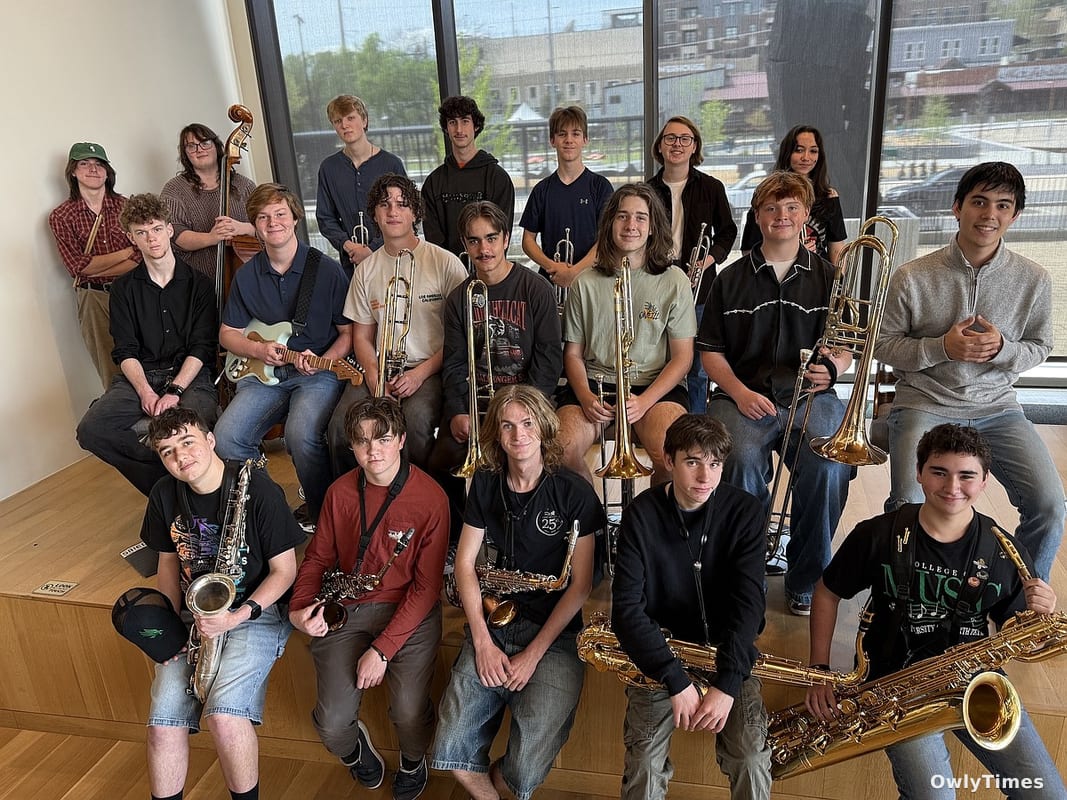

The stage lights at the Walton Arts Center are set to dim this Wednesday at 6:30 p.m., but the real story isn't just in the performance—it’s in the decade-long evolution of the Northwest Arkansas Jazz Society’s All-Star Youth Ensemble. For 20 high school students representing seven different regional schools, this 10th-season debut is the culmination of a grueling, weekly masterclass curriculum. Guided by jazz saxophonist Adam Larson, along with Rick Salonen from the University of Arkansas and Ryan Yumang from the University of North Texas, these teenagers are navigating the technical complexities of improvisation and ensemble dynamics. At a time when arts education often fights for space in the curriculum, seeing a dedicated big band sustain its momentum for a full decade serves as a quiet rebuke to the idea that youth interest in traditional jazz is fading.
Balancing Tradition and Fairy Tales
The arts landscape in Arkansas is currently defined by a push to bridge the gap between classical structures and modern accessibility. While the youth ensemble tackles the sophisticated syncopation of big band repertoire in Fayetteville, the Western Arkansas Ballet is taking a more whimsical, yet equally disciplined, approach in Fort Smith. Their upcoming production at the ArcBest Corp. Performing Arts Center features an ambitious dual-bill: an adaptation of the Grimm Brothers’ “Snow White” and an interpretation of William Shakespeare’s “A Midsummer Night’s Dream.”
Artistic Director Jared A. Mesa is pulling from a heavy historical well here, using a score by Felix Mendelssohn to ground the performance. The presence of professional dancer Nicholas C. Mesa, who is traveling from Yuma, Ariz., to perform alongside local children, highlights a recurring trend in regional arts: the reliance on professional mentorship to elevate community-level productions. With tickets priced at $35 for adults and $20 for students, the production makes a clear play for multi-generational engagement, proving that the appetite for high-brow, classical narrative remains steady in the regional market.
Preserving the Architecture of Creativity
The commitment to artistic legacy isn't limited to the stage. The University of Arkansas Libraries’ Special Collections Division has just launched a digital exhibition, “The Fine Arts Center: The First Years,” marking the 75th anniversary of the Fine Arts Center at 340 N. Garland Ave. Curated by archivist Catherine Wallack and co-coordinated by John Blakinger, the project documents the 1951 opening of a building designed by Fayetteville native and architect Edward Durell Stone.
This is more than a historical deep dive; it is a celebration of a $38 million restoration project that has breathed new life into one of the country's first buildings designed to house music, theater, and dance under one roof. By digitizing correspondence, photographs, and catalogs, the university is contextualizing the center’s role in mid-century modernism for a new generation. It underscores a broader trend of institutions investing heavily in the physical and digital preservation of their cultural infrastructure to justify their ongoing relevance.
The Intersection of Craft and Community
As the Community Creative Center in Fayetteville prepares for the fifth Arkansas Pottery Festival from Friday through May 3, the focus shifts to the tangible nature of art. Featuring over 50 potters and exhibitions from the Arkansas Archeological Survey, the event highlights a robust, grassroots economy centered on craft. Supported by sponsors including the Willard and Pat Walker Charitable Foundation, First Horizon Bank, and Sherrill Mudtools, the festival underscores the region’s commitment to making art accessible. Whether through the lens of a jazz performance or a pottery demonstration, the success of these events will be measured by the participation numbers at the upcoming sessions. The public’s response to these diverse offerings—from the $23 jazz tickets at the Walton Arts Center to the free admission at the pottery festival—will offer a clear reading on the region's cultural health as it moves into the summer season.