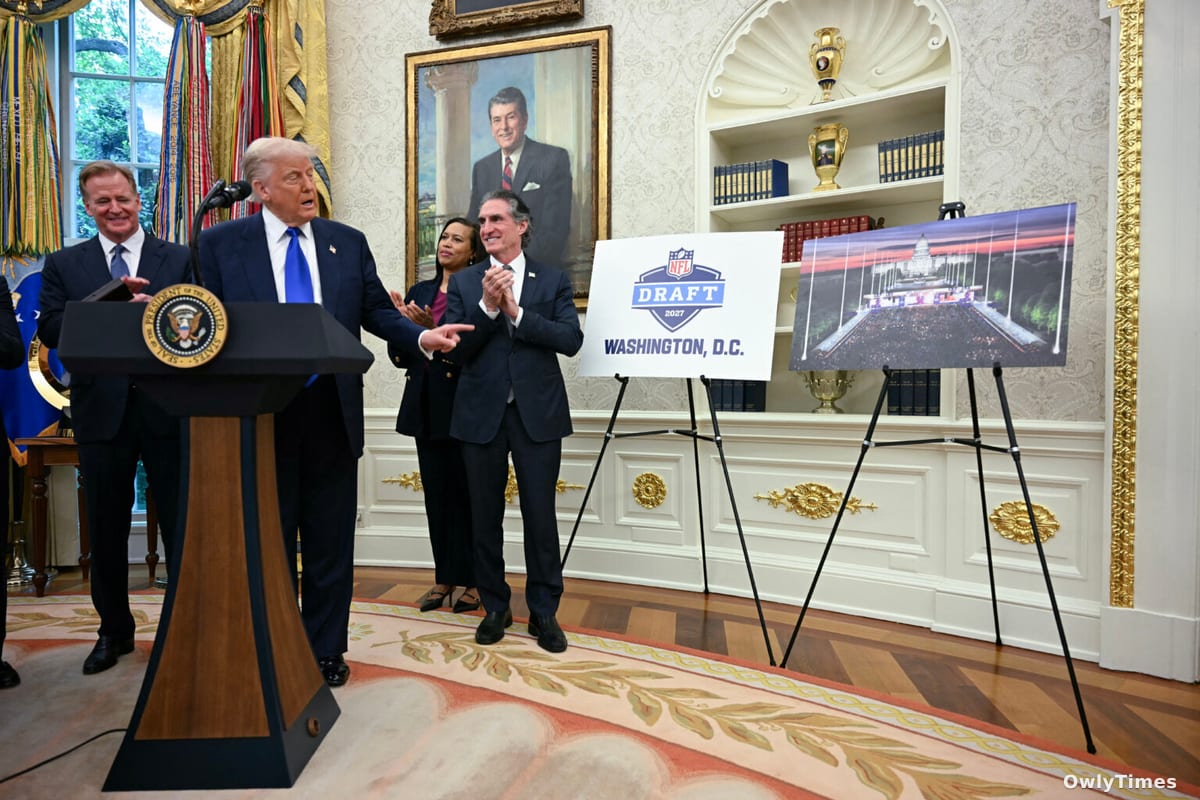

The scent of cherry blossoms is still weeks away, but a different kind of spring fever is taking hold in Washington, D.C. – one fueled not by nature’s renewal, but by the promise of a $250 million economic surge. The announcement last Thursday of the 2027 NFL Draft Source Program isn’t just about football; it’s a calculated gamble on inclusive growth, a bid to ensure the massive influx of cash doesn’t bypass the very communities it’s supposed to benefit. Standing at the podium alongside NFL and Events D.C. officials, Chanelle Reynolds, who heads diversity, equity and inclusion for the Washington Commanders, framed the Draft not as a sporting event, but as “access, visibility and real economic opportunity.” It’s a powerful message, especially in a city still grappling with the uneven recovery from the pandemic and persistent economic disparities.
Beyond the Game Day: A Supplier Development Play
The NFL Draft is, undeniably, a spectacle. Last year’s event in Detroit generated an estimated $749.5 million in economic impact for the state of Michigan, according to a study by the Rockport Analytics firm – a figure D.C. hopes to approach, if not exceed. But the launch of the Draft Source Program signals a shift in how these mega-events approach local economic engagement. This isn’t simply about selling tickets and hotel rooms; it’s about building a pipeline for “small and underrepresented” businesses to actually benefit from the event’s footprint. As Myisha Boyce, NFL Source Lead, explained, the program is “essentially a supplier development program,” offering networking, capacity-building, and crucially, direct access to NFL buyers. This is a departure from the traditional model where large corporations often scoop up the majority of event-related contracts, leaving local businesses on the sidelines.
This piece references the wtop.com report.
The Promise – and Limits – of Access
The program’s structure is deceptively simple: a 15-minute online application, a directory of vetted suppliers, and a promise of access. But the devil, as always, is in the details. Belynda Gardner, senior director of inclusion and development for the NFL, was careful to state that participation doesn’t guarantee contracts. This is a critical caveat. While access is valuable, it doesn’t level the playing field entirely. Small businesses often lack the bandwidth, resources, and established relationships to compete with larger, more experienced firms. The program’s success will hinge on whether the NFL and Events D.C. provide meaningful support beyond simply opening doors – things like assistance with bidding processes, financial literacy workshops, or even micro-loans to help businesses scale up to meet the demands of a large-scale event. The NFL has committed to similar initiatives in the past, but the results have been mixed, often falling short of ambitious diversity goals.
A Million Visitors and a Local Ecosystem
The sheer scale of the projected impact is staggering. Lawrence Hamm, vice president of business development for Events D.C., anticipates “a million people in D.C.” during the Draft festivities. That’s a population surge that will require everything from laundry services and golf carts to large-format printing and floral arrangements – the very services the Draft Source Program is targeting. This isn’t just about the immediate economic boost; it’s about fostering a more resilient local ecosystem. The program’s focus on D.C.-region businesses – encompassing the broader DMV area – is a smart move, recognizing that economic benefits shouldn’t be confined to city limits. Reynolds emphasized this point, stating that “when local businesses succeed, our communities succeed, and that’s a win for all of us.” But will this success be broadly shared, or will it concentrate wealth in the hands of a select few?
The Unseen Scoreboard: Measuring True Impact
The March 31 application deadline is fast approaching, and the NFL is actively “looking for the undiscovered talent,” according to Boyce. But beyond the number of applications received, the real measure of success won’t be apparent for months, even years. Will the program demonstrably increase the revenue and capacity of participating businesses? Will it lead to lasting partnerships between local suppliers and the NFL? And perhaps most importantly, will it serve as a model for other major events seeking to maximize their positive economic impact on host communities? The 2027 NFL Draft in D.C. is more than just a football game; it’s a test case for a new approach to event-driven economic development. The question now is whether the league is truly committed to rewriting the playbook, or if this is just another feel-good initiative that ultimately falls short of its promise.