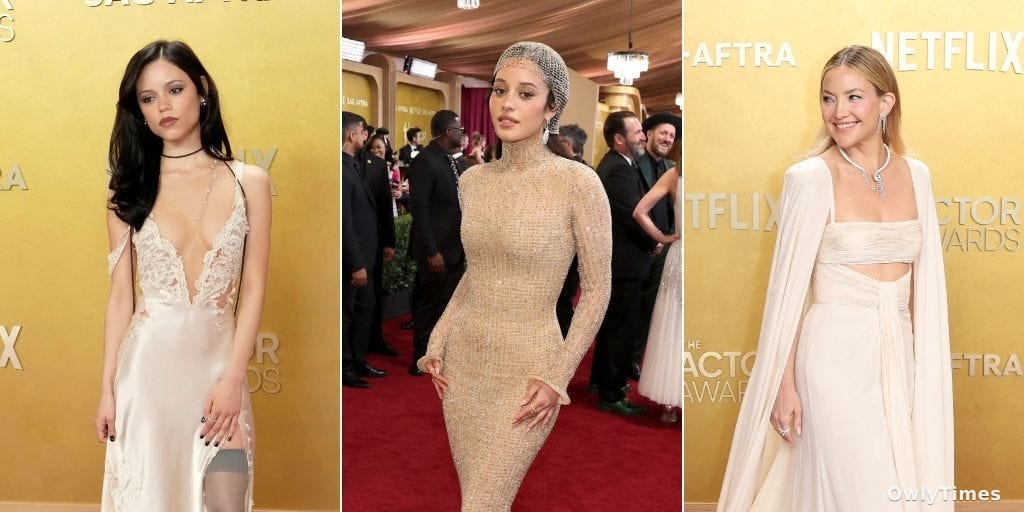

The Shrine Auditorium in Los Angeles wasn’t just hosting an awards show on Sunday night; it was staging a quiet rebellion against the relentless churn of Hollywood’s present. As Jenna Ortega, Kate Hudson, and Chase Infiniti navigated the red carpet, shimmering in warm neutrals and vintage-inspired silhouettes, the 32nd Actor Awards – formerly the Screen Actors Guild Awards – felt less like a celebration of current successes and more like a deliberate yearning for a bygone era of glamour. The “Reimagining Hollywood Glamour From the ‘20s and ‘30s” dress code wasn’t simply a stylistic choice; it was a collective exhale, a momentary pause from the hyper-digital, IP-driven landscape that now dominates the industry.
This isn’t just about fashion. The rebrand itself, from SAG to simply “Actors Awards,” signals a strategic pivot. For years, the Screen Actors Guild was perceived, even internally, as a union first and an awards show second. The shift aims to elevate the ceremony’s cultural profile, to position it as a genuine rival to the Golden Globes and, ultimately, the Oscars. But in doing so, it’s also acknowledging a growing anxiety within the acting community: the fear of being reduced to a cog in a content machine, overshadowed by franchises and algorithms. The emphasis on “actors” – the people – feels like a direct response to that threat.
Original reporting: Business Insider.
The evening’s winners underscored this tension. Keri Russell’s win for “The Diplomat” – a tightly-written, character-driven political thriller – felt like a victory for nuanced performance over spectacle. Russell, radiant in a custom Louis Vuitton gown, embodies a kind of grounded, intelligent femininity that’s increasingly rare in mainstream television. Her recognition, alongside Owen Cooper’s for “Adolescence,” suggests a hunger for stories that prioritize emotional depth and complex characters. This is particularly notable given the current climate, where streaming services are prioritizing quantity over quality, and tentpole franchises consistently dominate box office receipts. In 2025, streaming subscriptions grew by 8% but viewership of original films decreased by 12%, according to Nielsen data – a clear indication that audiences are becoming more discerning.
Beyond the gowns and the golden statuettes, the awards offered a glimpse into the evolving power dynamics within Hollywood. Chase Infiniti’s striking Louis Vuitton ensemble, paired with a matching headpiece, wasn’t just a fashion statement; it was a declaration of arrival. Nominated for her role in “One Battle After Another” alongside Leonardo DiCaprio, Infiniti represents a new generation of actors who are leveraging social media and strategic brand partnerships to build their own platforms. Her $2.3 million Instagram following dwarfs DiCaprio’s, a statistic that speaks volumes about the changing landscape of celebrity. This isn’t to diminish DiCaprio’s enduring star power, but to highlight the fact that actors are no longer solely reliant on studio marketing to reach audiences.
Even the presence of newcomers like Connor Storrie and Yerin Ha felt significant. Storrie, presenting despite not being nominated, represents the influx of talent from outside the traditional Hollywood pipeline. Ha, fresh off her breakout role in “Bridgerton,” embodies the global reach of streaming, demonstrating how platforms like Netflix are creating opportunities for actors from diverse backgrounds. The fact that Kate Hudson’s bespoke Valentino dress and Emily P. Wheeler jewelry totaled half a million dollars, however, serves as a stark reminder of the industry’s inherent inequalities. While opportunities are expanding, access remains unevenly distributed.
The 32nd Actor Awards weren’t just a night of celebrating performances; they were a microcosm of Hollywood’s current identity crisis. The industry is grappling with the challenges of streaming, the rise of AI, and the shifting expectations of audiences. The deliberate embrace of Old Hollywood glamour wasn’t simply nostalgia; it was a plea for a return to values that feel increasingly endangered: artistry, craftsmanship, and the enduring power of a compelling story, told by a talented actor. The question now is whether this yearning for the past can translate into a viable path forward, or if it will remain a fleeting moment of elegance in an increasingly chaotic landscape. Will the “Actors Awards” truly become a champion for the people who bring stories to life, or will it ultimately succumb to the same pressures that are reshaping the industry it seeks to celebrate?