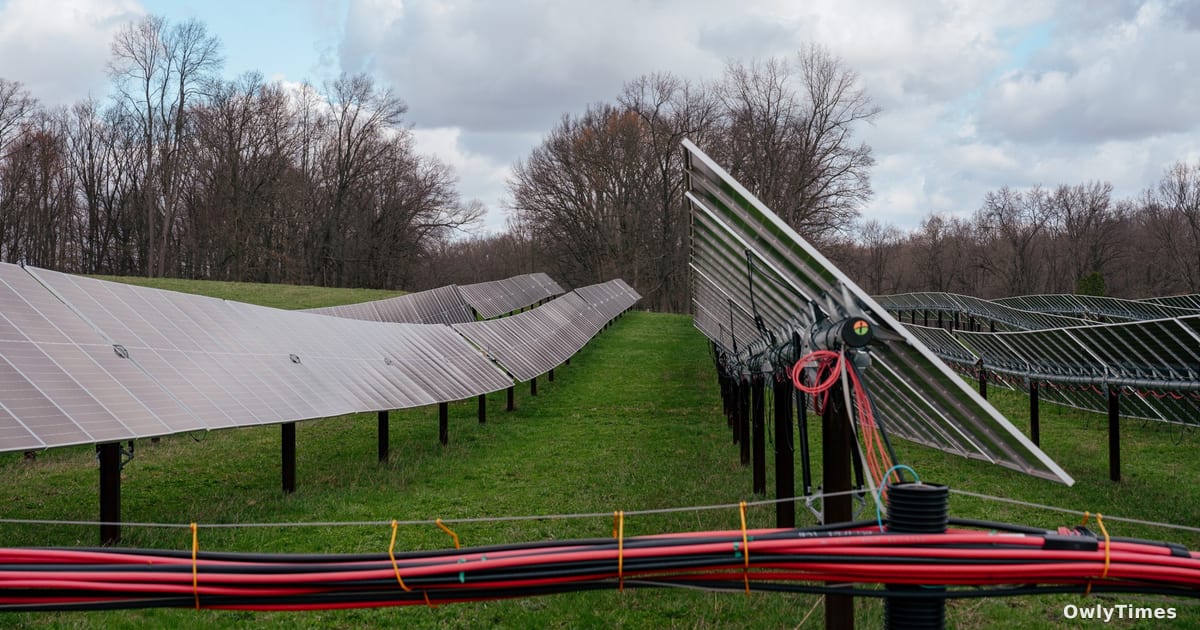

The transition to renewable energy is often framed as a purely technological or economic challenge, but in rural America, the debate has shifted toward a more personal and contentious frontier: public health. While proponents see solar farms as a path to energy independence and farm sustainability, a growing movement of local opposition is successfully stalling projects by centering their arguments on perceived, though largely unsubstantiated, health risks. This tension has created a regulatory bottleneck that is slowing the expansion of solar infrastructure just as the national demand for electricity reaches a critical inflection point.
The reality of this "solar backlash" is that scientific evidence is increasingly being sidelined in favor of community-led skepticism. Critics frequently cite concerns regarding electromagnetic fields, noise pollution, and the potential for toxic leaching into groundwater. However, researchers, such as Troy Rule, a law professor at Arizona State University, have noted that these fears are often rooted in misinformation. In fact, many solar components are encased to prevent environmental exposure, and electromagnetic field levels near these facilities are comparable to those found in common household appliances. Despite this, the narrative of "health risk" has become a potent tool for blocking development, even in cases where state-level technical requirements have been met.
The situation in Michigan serves as a prime example of this collision between local authority and state-level energy goals. Kevin Heath, a farmer in southeastern Michigan, saw a solar lease as a vital financial lifeline to keep his family’s land intact. Yet, in 2023, Milan Township passed an ordinance effectively banning large solar projects on agricultural land following intense community pushback. This local resistance is not an isolated incident; according to the U.S. Energy Information Administration, Michigan is one of only four states slated for the majority of the nation’s new solar capacity this year, making the state’s internal policy disputes a major factor in national energy trends.
Limitations to these arguments are stark, particularly when one examines the legal and scientific framework. In St. Clair County, for instance, the health department’s medical director, Dr. Remington Nevin, authored memos suggesting that solar sites posed an "unreasonable threat" to public health. This prompted a local regulation that was later ruled "invalid, null, and void" by a circuit court judge in February. Despite the ruling, the county’s decision to appeal underscores the depth of the divide. Critics of these bans argue that officials are prioritizing anecdotal fears over documented land-use impacts, such as the runoff from traditional agricultural practices like herbicide use, which face significantly less scrutiny.
The impact of this uncertainty is measurable. Last year, new solar installations in the United States dropped by 14%, a decline occurring even as consumer energy costs continue to climb. For developers like Craig Adair of Open Road Renewables, the challenge is that evidence-based solutions—such as vegetative buffers to mitigate noise or established recycling protocols for decommissioned panels—are often ignored during the emotionally charged process of local zoning board meetings. Even when a project is technically sound, as seen in the recent denial of a permit by the Ohio Power Siting Board, the "consistent and substantial opposition" from the public can outweigh the technical merits of a proposal.
Looking ahead, the direction of this industry will likely be determined by the legal outcomes of current challenges to state authority. The Michigan Public Service Commission has attempted to create a pathway for developers to bypass restrictive local ordinances, but this move is currently being contested by nearly 80 local and county governments. The next development to watch will be the outcome of these ongoing legal challenges to the commission's authority, which will indicate whether state-level mandates can successfully harmonize with local zoning, or if the patchwork of regional opposition will continue to dictate the pace of the nation’s clean energy transition.