
Is the digital age making our political discourse so toxic that we’ve lost the ability to distinguish between a tragedy and a partisan battlefield? The real story here isn't just the gruesome murder of a 78-year-old former MP; it’s the immediate, frantic attempt by various factions to claim the narrative before the police even had a chance to process the crime scene.
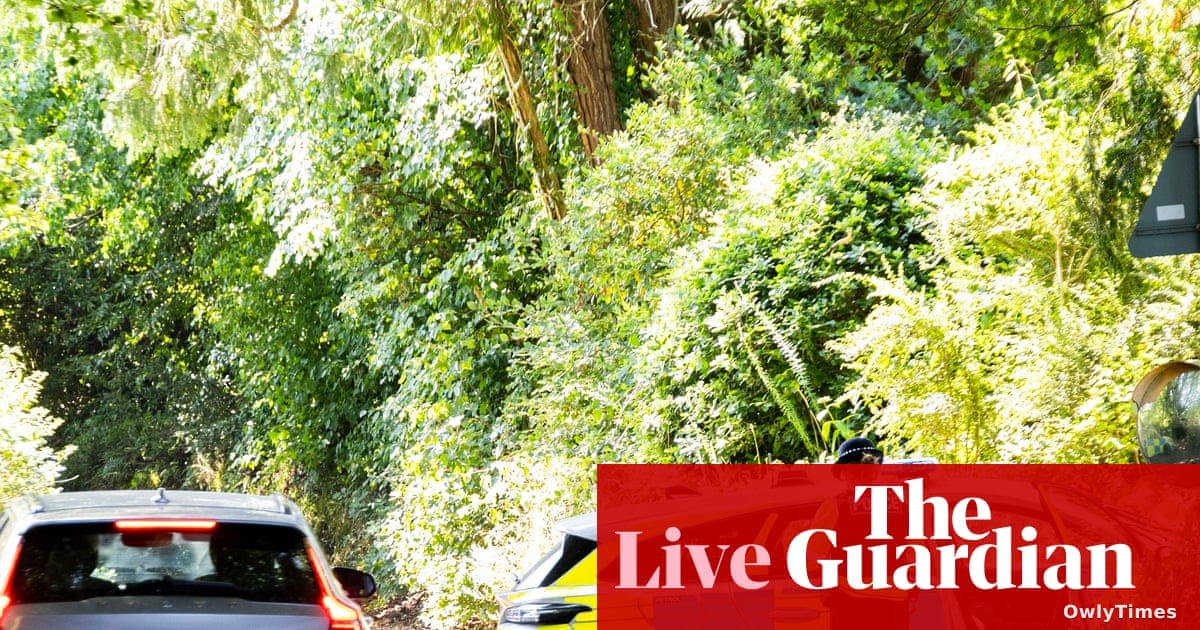
Ann Widdecombe, a fixture of British public life who transitioned from a Conservative minister to a high-profile Reform UK spokesperson, was found dead in her isolated home in Haytor, Devon, last Thursday. According to the BBC, the 28-year-old suspect—a white British man from Rotherham—was arrested on Saturday. While Devon and Cornwall Police initially stated there was "nothing to suggest" the killing was politically motivated, that stance crumbled by Monday.
The investigation has now been handed over to Counter Terrorism Policing, with the suspect rearrested on suspicion of the commission, preparation, or instigation of acts of terrorism. As ABC News reports, the head of National Counter Terrorism Policing, Laurence Taylor, confirmed that "new information and evidence" necessitated the pivot. This shift highlights a recurring frustration in modern policing: the gap between initial public statements and the reality of a "dynamic and complex investigation." Jonathan Hall KC, the government’s independent reviewer of terrorism legislation, told the BBC he was "slightly surprised" by the local police's early insistence on ruling out political motives, noting it would be better to simply admit uncertainty than to reverse course later.
The political reaction to this pivot has been as volatile as the crime itself. Writing for The Guardian, John Crace observes that while most of the political class maintained a respectful silence, certain corners of the Reform UK camp opted for conspiracy. Reform’s Zia Yusuf took to social media to allege that the government and the House of Commons Speaker, Lindsay Hoyle, had deliberately limited security for their party members. When confronted, Yusuf doubled down, framing the Speaker’s calls for calm as an attempt to protect an "establishment narrative."
This impulse to politicize a death is like watching someone try to navigate a high-speed highway using a rearview mirror; it blinds you to the road ahead. Home Secretary Shabana Mahmood confirmed to the Commons that the suspect was not known to the Prevent anti-terror scheme, a detail that refutes some of the more speculative theories circulating online. Meanwhile, the practical impact for ordinary citizens and public figures is a tightening of security protocols. Mahmood has offered Reform leader Nigel Farage a meeting with the chair of the Royal and VIP Executive Committee (Ravec) to discuss the protection of all Reform politicians.
The sheer distance involved in this case—the suspect was arrested in Rotherham, roughly 270 miles from the crime scene in Devon—suggests a calculated movement that police are still working to map. CCTV footage, first reported by the Sun and referenced by the BBC, shows the suspect leaving a property in Rotherham on Wednesday morning with an object protruding from his pocket, hours before the attack is believed to have occurred.
As for what happens next, the "heightened" police presence in the Devon area will persist for the coming weeks. The next definitive signal will come when the Crown Prosecution Service determines if the evidence gathered by counter-terrorism units is sufficient to move from an arrest to a formal charge. Until then, the case remains a stark reminder that in an era of social media, the loudest voices often speak before the facts have even left the room.