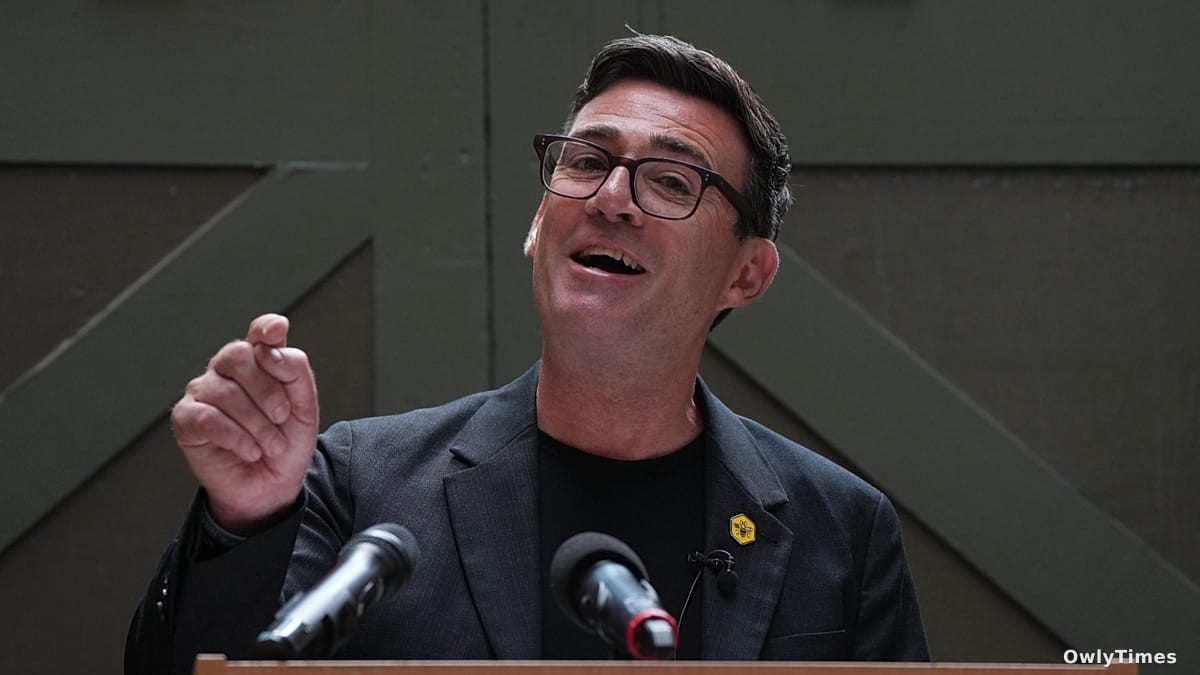

The strategic calculus driving Andy Burnham’s ascent to the premiership is rooted in a deliberate pivot toward “Manchesterism”—a brand of business-friendly socialism designed to project regional stability as a national template. By consolidating support among Labour MPs—who have almost unanimously backed his leadership bid following the resignation of Sir Keir Starmer—Burnham is positioning himself not merely as a successor, but as an architect of a decentralized British state. The political move relies on the perception that his administrative track record in Greater Manchester can be scaled to Downing Street, a high-stakes gamble that hinges on his ability to rebalance power away from Whitehall before his mandate is tested by systemic economic pressures.
Who benefits and who loses in this transition is already becoming clear. Regional local authorities and mayors stand to gain significantly if Burnham delivers on his promised “rebalancing of power,” which, according to the BBC, includes a new No 10 unit based in Manchester tasked with devolving control over housing and transport. Conversely, the central civil service apparatus in London faces a potential loss of influence. Simultaneously, Burnham’s stated desire to increase public control over water and energy sectors—citing the Greater Manchester bus network franchise model—puts private utility stakeholders on notice, though he has stopped short of advocating for full-scale nationalization, a point the BBC notes as a careful avoidance of the massive fiscal burden such a move would entail.
Burnham’s cultural signaling acts as a deliberate extension of his political identity, bridging the gap between grassroots northern roots and national leadership. As reported by Euronews, the MP for Makerfield has made Manchester-centric bands like Oasis and Elbow central to his campaign imagery. This is not merely aesthetic; it mirrors the historical precedent of politicians utilizing regional cultural identity to forge a connection with a disillusioned electorate, much like the "Cool Britannia" era of the late 1990s. Yet, beyond the music, Burnham’s agenda faces a "bulging in-tray" of inherited crises, as noted by The Guardian. He must navigate a volatile geopolitical landscape, including a potential high-stakes encounter with Donald Trump at the G20 summit in Miami this November, while managing the fiscal reality of a £298bn defence investment plan.
The tension between populist ambition and fiscal constraint defines the primary obstacle for the incoming Prime Minister. While Burnham has pledged the “biggest council house building programme since the post-War period,” he simultaneously promises to adhere to the outgoing government’s strict debt and spending rules, according to the BBC. This creates a direct policy contradiction that his administration will have to resolve. The Guardian highlights that while Burnham has ruled out raising income tax, national insurance, or VAT, he has signaled "some room" for movement elsewhere, with allies speculating on a potential rise in capital gains tax or a restructuring of business rates to favor high-street retailers over out-of-town warehouses.
The political chess move to watch next is the looming battle over judicial reform. Burnham has reportedly committed privately to scrapping plans to limit jury trials—a departure from the path set by his predecessor—but this puts him on a collision course with prominent Labour figures, including former ministers Jess Phillips and Alex Davies-Jones, who argue the measure is essential to address the court backlog, as detailed by The Guardian. With a potential entry into Downing Street as early as July 20, the speed of his transition will be the first test of whether his “Manchesterism” can command the loyalty of his own parliamentary party.