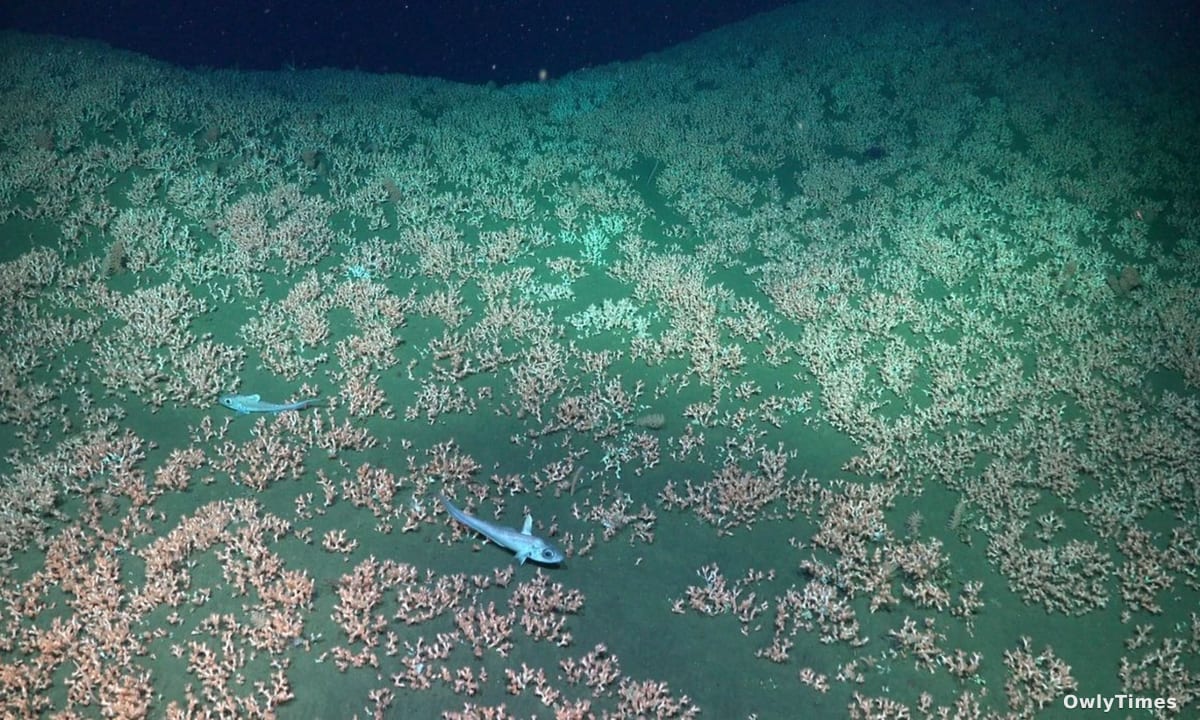

The ocean depths have long held an allure of the unknown, but recent expeditions off the coast of Argentina are revealing that our understanding of deep-sea ecosystems is far more incomplete than previously imagined. It’s not simply a matter of finding new species, though that’s certainly happening. The significance lies in the interconnectedness being revealed – a complex web of life fueled by unexpected energy sources and vulnerable to human impact despite its remoteness. This isn’t just about adding to a species count; it’s about fundamentally revising our maps of biodiversity and the urgent need to update conservation strategies to reflect this new reality.
Leading this groundbreaking work is Maria Emilia Bravo at the University of Buenos Aires, whose strategic selection of dive targets using high-definition video from the remotely operated vehicle SuBastian aboard the research vessel Falkor (too) has unveiled a landscape of surprising abundance. The footage didn’t just confirm the presence of deep-sea coral reefs; it revealed the sheer scale of one particular reef built by the stony coral Bathelia candida, stretching across at least 0.15 square miles – an area comparable in size to Vatican City. This is a substantial finding, considering that deep-sea coral reefs are notoriously slow-growing and often categorized as Vulnerable Marine Ecosystems, meaning they are particularly susceptible to damage from bottom-trawling fishing gear. The discovery extends known reef habitats southward by approximately 373 miles, immediately expanding the areas where protective measures should be considered.
Based on the original earth.com report.
Beyond the coral itself, the expedition documented nearly thirty previously unrecognized animal species, highlighting the biodiversity hotspot that exists along Argentina’s continental slope. But the story doesn’t end with the reefs. A 2024 paper published by Bravo and her colleagues also confirmed the existence of Argentina’s first deep-sea cold seeps – areas where methane and other chemical compounds leak from the seafloor, supporting unique microbial ecosystems. One active seep, spanning 0.39 square miles, raises critical questions about the relationship between these seep communities and the nearby coral reefs. Are they linked by larval dispersal, nutrient flow, or some other yet-undiscovered mechanism? The team is now analyzing chemical fingerprints in collected samples to trace the origins of food sources and understand how these ecosystems are interconnected.
Perhaps one of the most striking discoveries was the filming of Argentina’s first deep-water whale fall – a whale carcass resting on the seafloor at a depth of 2.4 miles. These “whale falls” are, in effect, oases of life in the otherwise food-scarce deep sea, supporting a succession of scavenger and microbial communities over decades. The presence of a whale fall suggests a level of ecological complexity previously unappreciated in this region. Adding to the unusual finds, the team also encountered a giant phantom jellyfish, Stylophora gigantea, near 820 feet underwater, with juvenile fish sheltering within its bell. This sighting underscores the importance of visual exploration, as many deep-sea giants remain elusive until directly observed by remotely operated vehicles.
However, the expedition wasn’t solely a celebration of discovery. The presence of plastic fishing nets, garbage bags, and even an old videotape – marked with a Korean sticker, hinting at long-distance travel – on the seafloor served as a stark reminder of the pervasive reach of human pollution. This waste accumulates in the cold, dark depths where decomposition is incredibly slow, posing a long-term threat to these fragile ecosystems. The findings also reveal a troubling overlap between known seep areas and blocks currently offered for oil and gas exploration, as noted in Bravo’s 2024 paper. This creates a direct conflict between resource extraction and the preservation of newly discovered biodiversity.
It’s important to note the limitations to consider. While the visual documentation is compelling, formally identifying and classifying the newly observed species requires physical samples and detailed taxonomic analysis – a process that takes time and expertise. Simply seeing an animal doesn’t equate to a confirmed new species. Furthermore, the expedition covered a limited area of the Argentine continental slope. While the discoveries are significant, they likely represent only a fraction of the biodiversity that remains hidden in these unexplored depths. The next crucial research steps involve continued exploration, detailed taxonomic work, and comprehensive ecological studies to understand the long-term dynamics of these ecosystems. Specifically, researchers need to determine how resilient these communities are to disturbance, and what level of protection is necessary to ensure their survival. Will current fishing regulations be sufficient, or will more stringent measures – like marine protected areas – be required? The answers to these questions will determine whether these newly discovered wonders of the deep will thrive, or fade into obscurity before we truly understand them.





