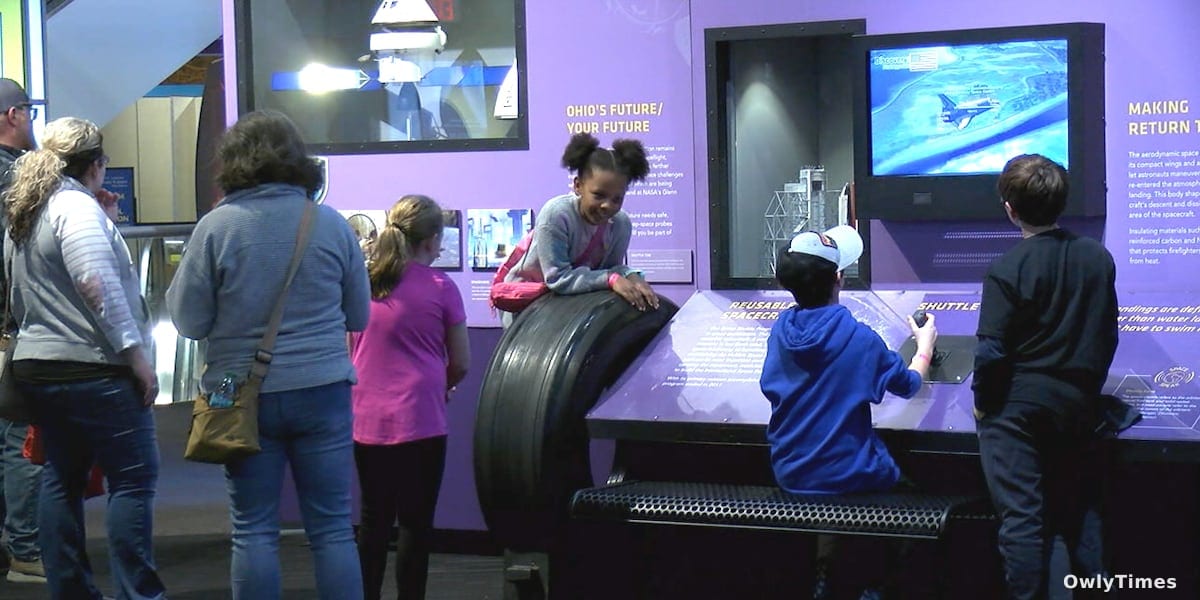

The surge of public interest surrounding the Artemis II mission, visible even in the hours leading up to launch at institutions like the Great Lakes Science Center in Cleveland, isn’t simply about witnessing another rocket leave the Earth. It reflects a subtle but significant shift in how we perceive space exploration: less as a race for national prestige, and more as a complex engineering challenge demanding widespread scientific literacy. While headlines focus on the astronauts – and rightly so – the enthusiasm of attendees like eleven-year-old Weston Clark, who prefers “sticking to the ground and learning more about it,” points to a growing public appetite for understanding the how and why behind these ambitious endeavors, not just the spectacle. This isn’t a generation dreaming solely of being astronauts; it’s a generation preparing to build the infrastructure that will make sustained space travel possible.
Beyond Liftoff: The Focus on Systemic Testing
The Artemis II mission, a ten-day lunar flyby, is being framed as a crucial stepping stone towards more complex missions, particularly those aimed at Mars. But the significance extends beyond simply circling the moon. As Abigail Kraynak of the Great Lakes Science Center explained, the mission’s primary function is to rigorously test life support systems in the harsh environment of deep space. This isn’t about discovering new things on the moon, but about ensuring humans can survive long enough to get to Mars and back. This emphasis on systemic testing – power, communication, and life support – represents a maturation of NASA’s approach. Previous missions often prioritized achieving a specific goal, like landing on the moon; Artemis II prioritizes validating the technologies needed for sustained, long-duration spaceflight. The fact that the first stage separation, a relatively unglamorous moment, is Clark’s favorite part of a launch underscores this shift in focus.
This piece references the cleveland19.com report.
Cleveland’s Unsung Role in Deep Space
What often gets lost in national coverage of NASA is the critical, and often understated, role played by regional centers like the NASA Glenn Research Center in Cleveland. Kraynak rightly points out that “all roads to the moon and Mars go through Cleveland,” due to the city’s expertise in power systems, communication technologies, and oversight of the European Service Module. This isn’t merely a matter of civic pride; it’s a demonstration of the distributed nature of modern space exploration. The Artemis program isn’t solely a product of Houston or Cape Canaveral; it’s a collaborative effort leveraging specialized expertise across the country and internationally. In 2023, NASA Glenn received approximately $600 million in funding, a 12% increase from the previous year, directly supporting work on Artemis components. This investment reflects the growing recognition of Cleveland’s vital contribution, and the economic benefits that flow from it.
Engaging the Next Generation Through Hands-On Learning
The Great Lakes Science Center’s response to the Artemis II launch – livestreaming the prelaunch, hosting interactive stations on space food, and planning April workshops like “Go for Launch!” and “Over the Moon” – exemplifies a successful strategy for fostering STEM engagement. The workshops, offering activities like rubber band-powered rocket design for a $5 materials fee, are particularly noteworthy. They move beyond passive observation and encourage active participation, allowing children to grapple with the fundamental principles of physics and engineering. The inclusion of augmented reality experiences through the NASA Glenn Visitor Center app further bridges the gap between theoretical knowledge and practical application. This approach is crucial, as STEM fields currently face significant workforce shortages; according to the U.S. Bureau of Labor Statistics, STEM occupations are projected to grow 10.8% from 2022 to 2032, much faster than the average for all occupations.
Limitations to Consider and Future Directions
While the public enthusiasm and educational outreach surrounding Artemis II are encouraging, it’s important to acknowledge limitations. The Science Center’s activities, while valuable, reach a limited audience. Furthermore, the focus on STEM engagement often overlooks the importance of humanities and social sciences in understanding the broader implications of space exploration – the ethical considerations, the geopolitical dynamics, and the philosophical questions raised by our expanding presence in the cosmos. The success of Artemis II, and subsequent missions, hinges not only on technological advancements but also on informed public discourse and responsible policy-making. Looking ahead, the next critical research step isn’t simply building bigger rockets or more sophisticated life support systems. It’s understanding how to effectively translate the excitement generated by missions like Artemis II into sustained, long-term investment in STEM education and a broader, more inclusive conversation about the future of space exploration. Will we see a measurable increase in students pursuing STEM degrees in the years following Artemis II, and more importantly, will those opportunities be equitably distributed? That’s the question we should be watching for.





