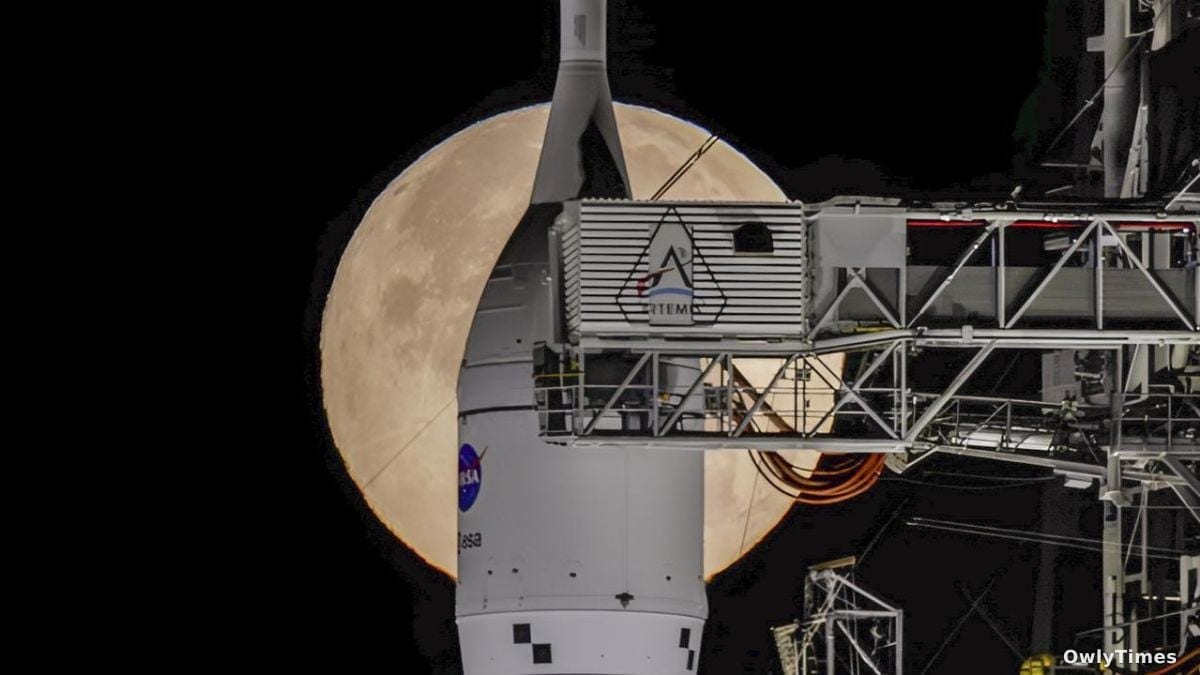

The persistent challenges surrounding NASA’s Artemis II mission aren’t simply about delayed gratification for space enthusiasts; they reveal a critical tension at the heart of modern space exploration: the collision between ambitious goals and the realities of aging infrastructure and complex engineering. While headlines proclaim a “trouble-free countdown” as of Tuesday, April 1st, 2026, and an 80% chance of favorable launch conditions, the path to this point has been marked by repeated setbacks – a narrative often glossed over in the rush to celebrate potential success. This isn’t a story of inevitable progress, but of painstaking problem-solving against a backdrop of limited launch windows and increasingly urgent scientific objectives.
The Weight of Repeated Delays
The Artemis II mission, slated to send astronauts Reid Wiseman, Victor Glover, Christina Koch, and Jeremy Hansen (representing the Canadian Space Agency) on a lunar flyby, represents the first crewed mission to the moon since Apollo 17 in 1972. The significance is undeniable, yet the journey to the launchpad has been fraught with difficulties. Initial launch attempts in February and March were scuttled by hydrogen fuel leaks, a recurring issue with the Space Launch System (SLS) rocket. More recently, clogged helium lines further postponed the launch, highlighting vulnerabilities in the system’s intricate network of propellant management. These aren’t isolated incidents; they represent a pattern of challenges that underscore the difficulty of reviving and maintaining hardware designed decades ago, even with substantial upgrades. Jeff Spaulding, senior test director, acknowledged the weight of the moment, stating, “Everybody’s pretty excited and understands the significance of this launch,” but the underlying anxiety about potential further complications is palpable.
Drawn from ScienceAlert.
Beyond the Headlines: What the Data Reveals
It’s crucial to understand what the “trouble-free countdown” actually signifies. It doesn’t mean all potential problems have been eradicated, but rather that pre-launch checks are proceeding without immediate red flags. The team is preparing to begin fueling the 32-story SLS rocket on Wednesday morning, a process that previously triggered the hydrogen leaks. The 80% favorable weather forecast, while encouraging, leaves a 20% chance of unfavorable conditions – a risk that could easily push the launch back again. NASA operates within a narrow launch window each month, dictated by the alignment of the Earth, moon, and sun, making each delay particularly costly in terms of time and resources. The repeated postponements also raise questions about the long-term viability of the SLS program, particularly as commercial alternatives like SpaceX’s Starship continue to develop.
Limitations to Consider: Aging Infrastructure and System Complexity
The Artemis II mission isn’t simply a test of astronautical prowess; it’s a stress test for the entire NASA infrastructure. The SLS rocket, while powerful, relies on components and technologies developed during the Space Shuttle era. Maintaining and adapting these systems for modern missions is a constant battle against entropy and obsolescence. The hydrogen leaks, for example, aren’t necessarily indicative of a fundamental design flaw, but could stem from aging seals and connections. Furthermore, the sheer complexity of the SLS – with its multiple stages, engines, and propellant systems – creates numerous potential points of failure. Each component must function flawlessly in concert, and even a minor malfunction can jeopardize the entire mission. This inherent complexity is a trade-off for the SLS’s immense lifting capacity, but it also introduces a significant degree of risk.
The Next Steps and the Future of Lunar Exploration
Assuming a successful launch on Wednesday evening, the Artemis II mission will send the crew on a trajectory around the moon, without landing or orbiting. This flyby is designed to test the Orion spacecraft’s life support systems and heat shield, crucial components for future lunar landing missions. However, the true test will come with Artemis III, currently scheduled for 2025, which aims to return humans to the lunar surface. The data gathered from Artemis II will be critical in assessing the readiness of the SLS and Orion for this more ambitious undertaking. The question now isn’t just whether Artemis II will launch, but whether the lessons learned from its challenges will be sufficient to ensure the success of Artemis III and the long-term sustainability of NASA’s lunar exploration program. Will the agency prioritize addressing the root causes of these recurring issues, or continue to rely on reactive fixes? The answer will determine whether the current momentum towards a sustained lunar presence can be maintained.