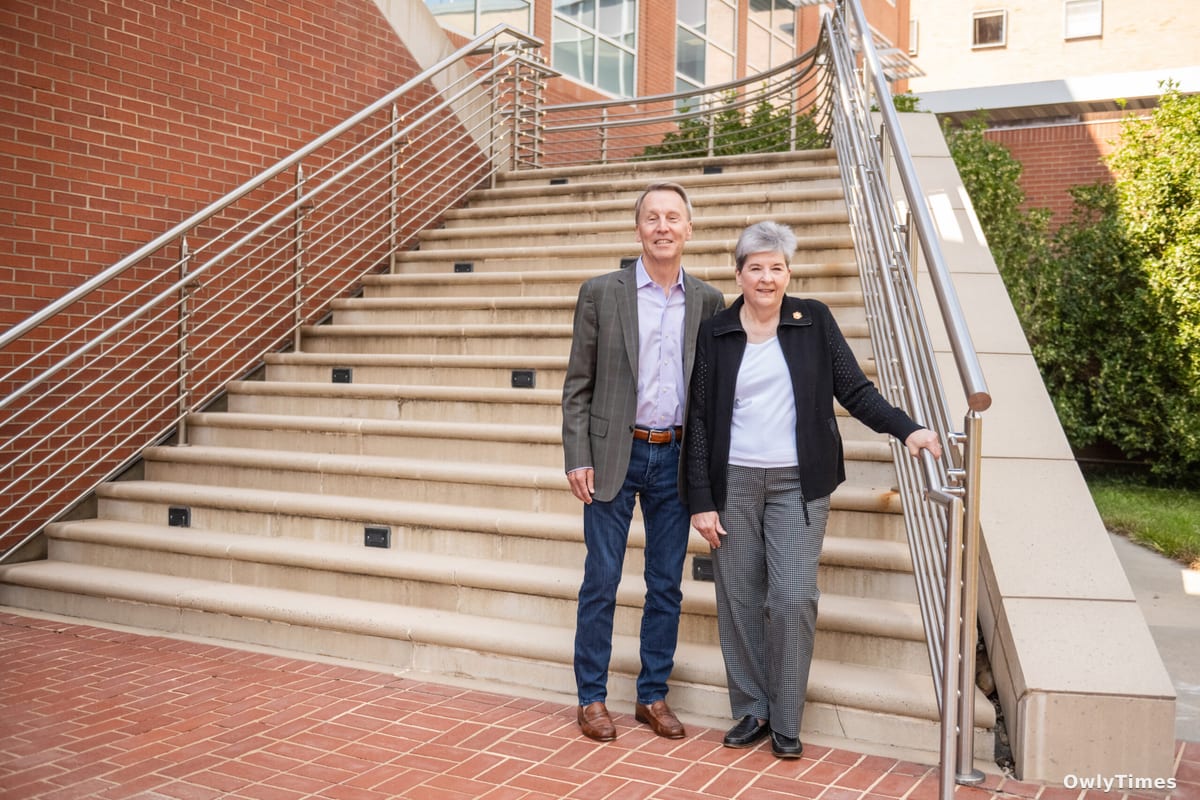

The Enduring Power of Applied Mathematics: A Clemson Couple Invests in the Future of Decision-Making
The current fervor surrounding Artificial Intelligence often frames the field as entirely new, a disruptive force reshaping our world. But the underlying principles – the rigorous application of mathematics and statistics to solve complex problems – have been quietly evolving for decades. A recent $1.25 million gift to Clemson University’s School of Mathematical and Statistical Sciences by Jeff ’84 and Karen ’82 Camm isn’t simply about funding AI research; it’s a recognition of this foundational history and a strategic investment in the future of “decision intelligence” – the ability to use data, including that generated by AI, to make sound judgments. This isn’t a story about chasing the latest tech trend, but about reinforcing a long-standing approach to problem-solving that has proven remarkably adaptable.
The Camms’ gift establishes the Jeff ’84 and Karen ’82 Camm Endowed Professorship in Data Science and Decision Intelligence. While headlines might emphasize the “data science” component, Jeff Camm – himself a professor and former associate dean at Wake Forest University – stresses the critical importance of the “decision intelligence” aspect. “Faculty are the difference makers,” he stated, reflecting on the influence of Clemson professors who steered his own career path. He explained that the goal isn’t just to generate data insights, but to equip students with the analytical skills to translate those insights into effective action. This focus is particularly noteworthy given the current debate around AI’s potential for bias and misinformation; the ability to critically evaluate data outputs is becoming increasingly vital.
See the original news.clemson.edu story for the full account.
The story of how Jeff Camm arrived at Clemson illustrates this point. Initially intending to teach high school math, he was encouraged by a statistics professor to explore Clemson’s then-innovative management science program. This wasn’t a purely theoretical exercise. Unlike many academic programs at the time, Clemson’s program, supported by a substantial National Science Foundation grant, actively partnered with companies like Milliken, offering students the chance to tackle real-world challenges. This emphasis on applied learning – a hallmark of the program – proved decisive for Camm, and it’s a model the new professorship aims to revitalize. The management science program itself no longer exists, but its spirit of practical application is being carried forward in the evolving data science curriculum.
Karen Camm’s journey also highlights the changing landscape of technology and the enduring value of a strong mathematical foundation. Originally a computer engineering major during a period when universities were actively recruiting women into STEM fields, she ultimately found her passion in mathematics, supplementing her studies with management science. Her early career, teaching computer classes on bulky, metal “portable” computers and later instructing Ford Motor Company assembly line workers, underscores the importance of bridging the gap between technical expertise and practical application – a theme central to the Camms’ philanthropic vision. This early experience also demonstrates how quickly technology evolves, reinforcing the need for adaptable skills and a focus on fundamental principles.
The establishment of an endowed professorship is a significant step for Clemson, allowing the university to attract and retain leading researchers in a highly competitive field. According to Colin Gallagher, Director of the School of Mathematical and Statistical Sciences, such gifts are crucial for enhancing research, teaching, and the University’s national and international reputation. However, it’s important to acknowledge the limitations of relying solely on philanthropic funding. While generous gifts like the Camms’ are invaluable, they don’t address systemic issues of funding disparities within public universities. A sustained commitment from state and federal sources is essential to ensure long-term stability and accessibility for all students.
Ellen Breazel, assistant director of data science, program development and industrial relations, offers a crucial perspective on the role of AI within this broader context. She emphasizes that AI is “a tool, not a solution,” and that critical thinking skills are more important than ever. This sentiment echoes concerns voiced by many experts about the potential for over-reliance on AI-generated outputs without proper scrutiny. The future endowed professor will be tasked with researching how to best utilize modern tools for decision intelligence, but the emphasis on critical evaluation suggests a cautious approach to embracing new technologies.
Looking ahead, the success of this professorship will depend not only on attracting a talented researcher but also on fostering strong partnerships with industry. These collaborations will provide students with valuable learning opportunities and career pathways, mirroring the model that initially drew Jeff Camm to Clemson. The question now is whether Clemson can effectively translate this renewed focus on applied learning and decision intelligence into a curriculum that prepares students to navigate the complex ethical and practical challenges of a data-driven world – and whether other institutions will follow suit, prioritizing critical thinking alongside technological innovation.