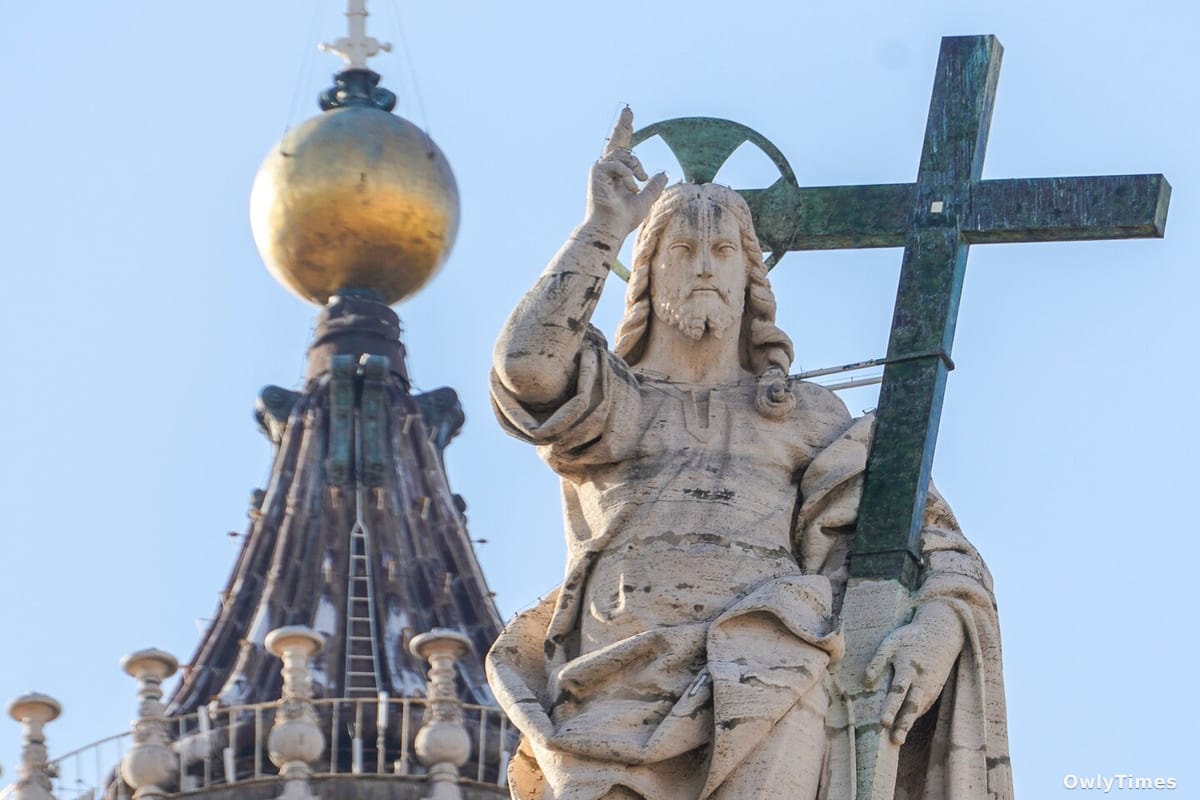

The seemingly innocuous observation that “Christ is king” – a foundational belief for billions – carries a newly sharpened political edge in March 2026. It isn’t the theology itself that’s shifted, but the strategic deployment of religious messaging as a counter-pressure to eroding democratic norms, a tactic echoing historical power plays where faith served as both a unifying force and a tool for consolidating authority. The Associated Press’s reporting on the continued observance of Christ the King Sunday isn’t simply a religious note; it’s a signal flare in a broader contest over cultural and political legitimacy. This isn’t about faith, it’s about who gets to define the ultimate authority.
The Rise of Sacralized Politics
The timing of renewed attention to the “Christ is king” proclamation, as reported by Peter Smith of the AP on March 5, 2026, coincides with a period of heightened political polarization and declining trust in secular institutions. Polling data released last month by the Pew Research Center shows a 15% increase since 2020 in Americans identifying as religiously affiliated, with a significant portion citing a desire for “moral clarity” in leadership. This isn’t necessarily a wholesale rejection of democratic principles, but a vulnerability exploited by political actors offering faith-based solutions to complex problems. The invocation of divine authority, historically, has been a method for circumventing debate and establishing unquestionable rule – think of the Divine Right of Kings in 17th-century Europe, or the theocratic regimes that have punctuated history. The current iteration isn’t about establishing a formal theocracy, but about imbuing political positions with a moral weight that resists compromise.
Source material: The Washington Post.
Who Benefits and Who Loses from Divine Mandates?
The primary beneficiaries of this trend are political factions seeking to mobilize a base of religiously motivated voters. Specifically, the resurgence of “Christ is king” rhetoric aligns with the messaging of several prominent figures within the New Right movement, who consistently frame their policy objectives – restrictions on reproductive rights, limitations on LGBTQ+ rights, and a more assertive foreign policy – as divinely ordained. These figures, while representing a minority within their respective parties, wield disproportionate influence through well-funded media networks and grassroots organizing. Conversely, those who lose are proponents of secular governance, civil rights advocates, and anyone prioritizing evidence-based policymaking. The framing of political issues as matters of religious conviction effectively shuts down reasoned discussion and demonizes opposing viewpoints as inherently immoral. The danger isn’t necessarily that these factions will achieve outright political dominance, but that they will succeed in further fracturing the already fragile consensus around democratic norms.
Christ the King and the Erosion of Institutional Trust
The annual observance of Christ the King Sunday by Catholics and many Protestants, as Smith notes, is traditionally a celebration of Jesus’s spiritual reign. However, the appropriation of this concept by political actors transforms it into a challenge to earthly authority. This echoes a pattern observed in other nations facing democratic backsliding. In Poland, for example, the Catholic Church’s increasing influence over government policy has been linked to a weakening of judicial independence and restrictions on press freedom. The parallel isn’t about theological equivalence, but about the strategic use of religious institutions to undermine checks and balances. A 2024 report by Freedom House documented a global trend of authoritarian regimes leveraging religious nationalism to justify repression and consolidate power. The United States, while historically resistant to such trends, isn’t immune. The January 6th insurrection, with its overt displays of Christian iconography, served as a stark warning.
The Next Move: Defining the Boundaries of Faith and State
The political chess move to watch isn’t whether religious belief will continue to play a role in American politics – it already does. It’s whether a clear line can be drawn between personal faith and the exercise of state power. Specifically, the upcoming Supreme Court case Henderson v. State of Texas, which challenges a state law mandating the display of the Ten Commandments in public school classrooms, will be pivotal. A ruling upholding the law would signal a further erosion of the separation of church and state, effectively endorsing a particular religious worldview as official state policy. The outcome will reveal the extent to which the Court is willing to accommodate the sacralization of politics, and whether it will prioritize religious freedom for all or privilege the beliefs of a vocal minority. The question isn’t simply about a classroom display; it’s about the future of religious pluralism and the preservation of a secular public square.