
The Strategic Vacuum: How Daines Engineered Montana’s Senate Race
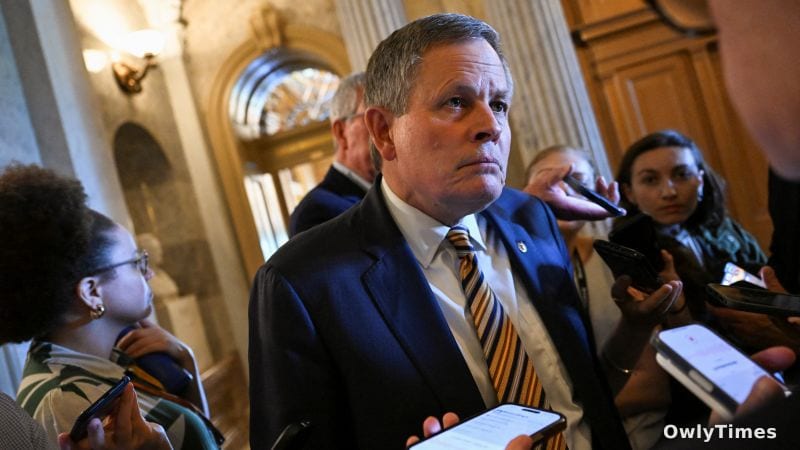
The abrupt withdrawal of Steve Daines from the Montana Senate race wasn’t a matter of personal ambition reconsidered, but a calculated maneuver to control the battlefield. The timing – a mere minutes before the filing deadline – wasn’t accidental. It was a preemptive strike designed to freeze out potential Democratic challengers and clear a path for a preferred candidate, Kurt Alme, effectively dictating the terms of the election before the campaign even began. This wasn’t about Daines deciding he didn’t want to run; it was about ensuring someone else couldn’t.
Drawn from CNN.
The core strategic calculus revolves around opportunity cost for both parties. Had Daines stepped aside earlier, Montana would have become a prime recruiting ground for Democrats. Names like former Senator Jon Tester, and former Governors Brian Schweitzer and Steve Bullock immediately surfaced as potential contenders. Each of these figures possesses statewide recognition and fundraising capacity – qualities that could have transformed Montana from a likely Republican hold into a competitive, and expensive, battleground. The GOP’s fear wasn’t simply losing the seat, but the diversion of resources away from other, potentially more vulnerable, incumbents. We saw a similar dynamic play out in 2022 with competitive Senate races in states like Pennsylvania and Arizona, where significant Democratic investment strained party resources.
This tactic isn’t unprecedented. Last year, Democratic Representative Chuy Garcia in Illinois executed a remarkably similar play, withdrawing late in the race to bolster a chosen successor. While criticized as undemocratic, these maneuvers highlight a growing trend: parties prioritizing candidate selection over open primaries, particularly in states where the political landscape is shifting. The parallel to Garcia’s move is striking, suggesting a playbook is emerging for strategically managing candidate access. The difference here is the level of coordination and speed – Daines’ team moved with precision, reacting to Kurt Alme’s resignation as US attorney on Wednesday afternoon and leveraging the filing deadline to maximum effect.
The Alme Factor: A Handpicked Candidate and Presidential Endorsement
The speed with which Donald Trump endorsed Kurt Alme – minutes after the filing deadline – underscores the level of coordination within the Republican party. Trump’s Truth Social post framing Daines’ decision as “passing the torch” wasn’t a spontaneous reaction, but a pre-approved message. This swift endorsement is a clear signal to donors and activists: Alme is the party’s chosen candidate, and resources should be directed accordingly. Alme’s relative obscurity before Wednesday is precisely the point. He’s a known quantity within Montana’s legal circles, but lacks the profile to attract a significant independent fundraising base or generate the same level of enthusiasm as a more established politician. This allows the party to control the narrative and limit potential internal dissent.
Who benefits and who loses in this scenario is fairly clear. The Republican party benefits from avoiding a potentially costly and divisive primary, and from preventing a strong Democratic candidate from emerging. Steve Daines maintains significant influence within the party, having successfully orchestrated the succession. Kurt Alme gains a clear path to the Senate, albeit one paved by a maneuver that raises questions about democratic process. The losers are Montana voters, who are effectively denied a broader choice of candidates, and independent candidate Seth Bodnar, who rightly criticized Daines for “coronating his handpicked successor.” Bodnar’s statement highlights the inherent tension between party control and voter agency.
Beyond the Deadline: The Implications for Montana’s Political Landscape
The immediate consequence of Daines’ maneuver is a significantly altered political landscape in Montana. The absence of a high-profile Democratic challenger dramatically improves the GOP’s chances of holding the seat. However, this doesn’t guarantee a smooth victory. Alme will still need to campaign, raise funds, and connect with voters. His lack of name recognition will be a significant hurdle, and Democrats will undoubtedly attempt to portray him as an establishment puppet. The question now is whether Alme can overcome this disadvantage and present himself as a credible alternative.
The financial implications are also noteworthy. With a less competitive race, overall spending is likely to be lower than initially anticipated. This could free up resources for other Senate contests, but it also means less attention – and potentially less scrutiny – on Montana’s political dynamics. The $3.8 million already raised by Daines will likely be transferred to Alme’s campaign, giving him a significant head start. However, this transfer also raises questions about the influence of established donors and the potential for quid pro quo arrangements. The Federal Election Commission will be watching closely to ensure compliance with campaign finance laws.
The political chess move to watch next isn’t about fundraising or endorsements, but about whether a late-entry Democratic challenger emerges through a write-in campaign. While the filing deadline has passed, Montana’s election laws allow for write-in candidates. The viability of such a campaign is low, but it would serve as a potent symbol of voter dissatisfaction and could force Alme to address the concerns raised by Daines’ maneuver. The question is: will a prominent Montana Democrat risk a long-shot bid to challenge the legitimacy of this carefully orchestrated succession?