
Is anyone actually surprised that the people who built the best weather app in the business are back, building another weather app? After Apple absorbed Dark Sky in 2020, promising to integrate its magic into Apple Weather, many assumed that was the end of hyper-local, obsessively accurate forecasting. The real story here isn't just another weather app launch – it’s a pointed critique of Silicon Valley’s tendency to dismantle genuinely useful things in the name of “integration.” The team behind Dark Sky, now operating under the decidedly un-futuristic name of Acme Weather, isn’t trying to beat Apple at its own game; they’re admitting the game is fundamentally flawed.
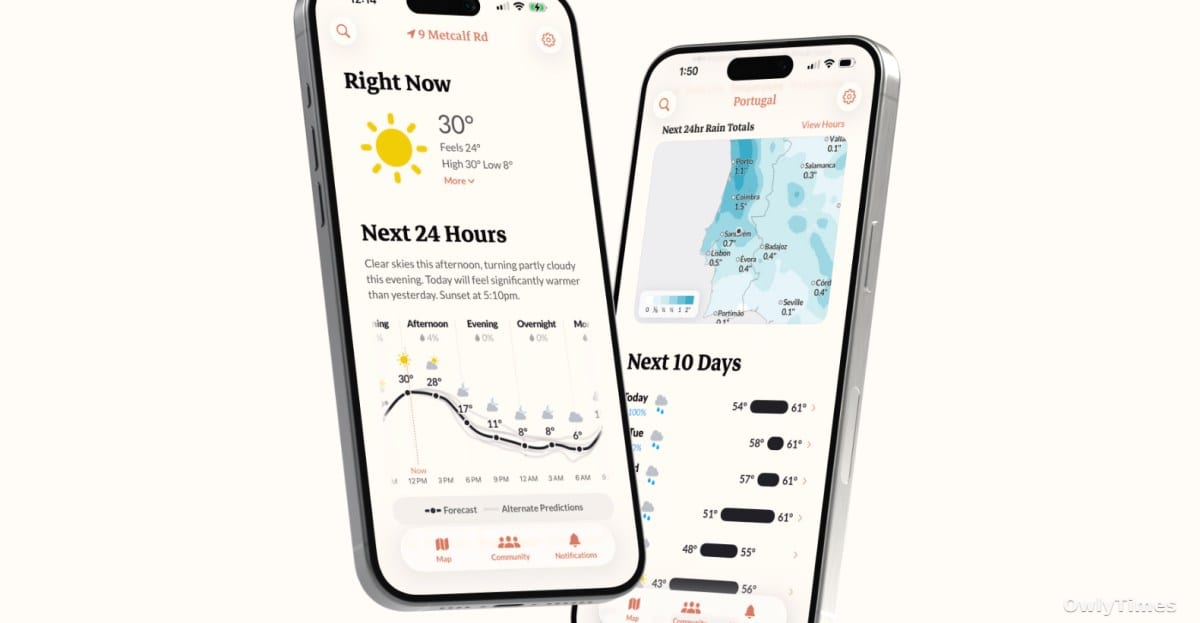
The core innovation of Acme Weather, currently available only on iOS with an Android version looming sometime in the future, isn’t a new algorithm or a slicker interface. It’s honesty. Instead of presenting a single, confident prediction – the standard practice, and one that inevitably leads to disappointment – Acme Weather shows you multiple possible forecasts. Think of it like this: your financial advisor doesn’t tell you exactly what the stock market will do tomorrow, they give you a range of scenarios. This isn’t about lowering expectations; it’s about acknowledging the inherent chaos of atmospheric systems. The app displays these alternate predictions as a series of lines, visually representing the uncertainty. A tight cluster of lines means a reliable forecast, while a wider spread signals potential for change.
This approach is a direct response to the limitations of even the most sophisticated forecasting models. While Dark Sky cost a mere $3.99 before its acquisition, Acme Weather demands a $25 annual subscription. The creators, led by Andrew Liszewski, justify the price hike by claiming superior data sourcing – pulling from satellite data, ground stations, and radar – and a commitment to providing more detailed information. But the price isn’t just about data; it’s about a different philosophy. Apple Weather, for all its polish, often feels like a simplification, a smoothing-over of the messy reality of weather. Acme Weather is betting that users will pay for nuance, for a forecast that doesn’t pretend to know everything.
See the original The Verge story for the full account.
The app also leans heavily into crowdsourcing, allowing users to report local conditions that appear on a shared map. This isn’t a new feature – many weather apps have some form of user reporting – but Acme Weather’s implementation feels more integrated, less like an afterthought. Combined with detailed maps displaying radar, lightning strikes, and other relevant data, the app aims to create a real-time, hyper-local picture of what’s happening. This is particularly crucial during severe weather events, where official forecasts can lag behind rapidly changing conditions. The return of Dark Sky’s lauded notification system, offering customizable alerts for everything from minute-by-minute rainfall to rainbow sightings, further solidifies this focus on timely, actionable information.
But the bigger question isn’t whether Acme Weather is a better app than Apple Weather – it’s whether this model can survive. Silicon Valley rewards scale, and often punishes specialization. Apple can afford to give away a decent weather forecast because it’s bundled with a $1,000 phone. Acme Weather has to convince users that a $25 annual subscription is worth the added accuracy and honesty. My prediction? We’ll see a surge of interest, a wave of early adopters who appreciate the app’s nuanced approach. But the real test will come next year. Will enough users renew their subscriptions to prove that there’s a viable market for a weather app that doesn’t pretend to have all the answers? Watch closely – the fate of Acme Weather could signal whether there’s still room for independent, thoughtful innovation in a world increasingly dominated by tech giants.