
$100 Billion Valuation: The Quiet Triumph of Building Over Raiding
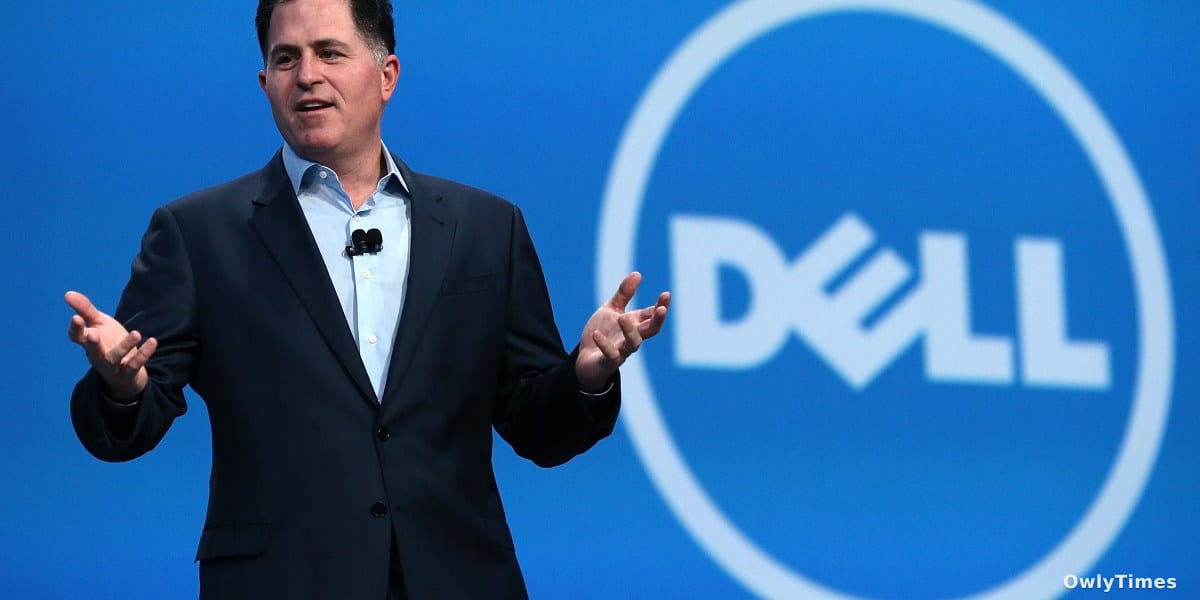
A 30% compound annual growth rate – that’s the return Michael Dell has delivered to investors since 2018, a figure dramatically eclipsing the -25.6% collapse of Carl Icahn’s investment vehicle over the same period. This isn’t simply a tale of two billionaires; it’s a definitive market correction, signaling a decisive shift away from the short-term, extractive tactics of activist investors towards the enduring power of long-term, integrated value creation. The story of Dell, and its near-demise at the hands of Icahn in 2013, isn’t a historical footnote – it’s a blueprint for how to win in today’s business landscape, and a warning to those who prioritize financial engineering over fundamental growth.
The summer of 2013 marked a critical juncture. Dell, fighting to take his company private and rebuild it away from the pressures of quarterly earnings, faced a hostile takeover attempt by Icahn, whose proposal centered on stock buybacks, warrants, and a rapid dismantling of the company for quick profit. As detailed in Dell’s own account, Play Nice But Win, Icahn lacked a coherent operational plan, relying instead on aggressive media campaigns and legal challenges. This wasn’t merely a boardroom battle; it was a clash between entrepreneurial vision and what Dell characterizes as “destructive financial engineering.” The outcome, increasingly clear with the benefit of hindsight, effectively signaled the beginning of the end for the era of the aggressive corporate raider.
Original reporting: Fortune.
The key to understanding Dell’s subsequent success lies in its capital allocation strategy following the 2013 take-private deal. While Icahn sought to break up the company, Dell and his private equity partners embarked on an ambitious offensive, culminating in the $67 billion acquisition of EMC in 2016 – the largest technology buyout in history. This wasn’t reckless expansion; it was a strategically brilliant move facilitated by a complex financial structuring involving a tracking stock (DVMT) tied to EMC’s VMware interest. This allowed Dell to control a crucial asset – virtualization and cloud infrastructure – without immediately absorbing the full cash cost. The subsequent $21.7 billion absorption of the tracking stock in 2018 and the tax-free spin-off of VMware in 2021, generating an $11.5 billion dividend to deleverage the balance sheet, demonstrate a level of financial sophistication Icahn simply couldn’t match.
This strategic maneuvering isn’t just about avoiding financial ruin; it’s about building a sustainable, integrated technology behemoth. Consider the divergent trajectories: Dell’s return to public markets in late December 2018 at $46 per share has blossomed into a current price of $153.55, fueled by a doubling of AI server revenues expected to reach $50 billion. This momentum was recently underscored by a 22% surge in market value following a recent quarter where revenue soared to $33.38 billion, exceeding forecasts of $31.73 billion and delivering earnings of $3.89 per share against expectations of $3.53. Meanwhile, Icahn Enterprises (IEP) has plummeted from near $68 a share in October 2018 to a dismal $8.11, a stark illustration of value destruction. The contrast is particularly damning when examining Icahn Enterprises’ annual reports, which consistently reveal losses in its investment division.
The implications extend beyond the fortunes of two individuals. Dell’s success highlights the importance of long-term investment in innovation and integration, a model sharply contrasted by the fragmented fates of former competitors like Compaq, Gateway, and Sun Microsystems, all now either defunct or absorbed. Dell’s ability to maintain a cohesive ecosystem – encompassing devices, software, systems, networks, and cloud infrastructure – is a critical differentiator. This isn’t simply about avoiding the pitfalls of short-term activism; it’s about recognizing that in the modern technology landscape, synergy and comprehensive solutions are paramount. The recent shoutout from the State of the Union regarding “Trump Accounts lift off” further underscores Dell’s position as a key player in national infrastructure.
The narrative also challenges the prevailing myth of the heroic activist investor. While figures like Icahn once commanded fear and respect, Dell’s victory demonstrates that a focus on building lasting value, rather than extracting short-term gains, is ultimately more rewarding. This shift is reflected in Icahn’s increasingly low public profile and the broader decline in influence of traditional activist strategies. The market is rewarding builders, not raiders. This isn’t to say that all activist intervention is inherently negative, but the Dell saga proves that a purely financial, short-sighted approach is ultimately unsustainable.
What this means for your wallet: watch closely for companies prioritizing long-term R&D and strategic acquisitions over stock buybacks and dividend payouts. The Dell story suggests that these are the businesses most likely to deliver sustained growth and shareholder value – and avoid the fate of Icahn Enterprises. The question now is whether the market will continue to favor substance over sizzle, and whether the next generation of investors will learn from the lessons of the Dell-Icahn showdown. Will we see a resurgence of long-term investing, or will the allure of quick profits continue to drive short-sighted decision-making?