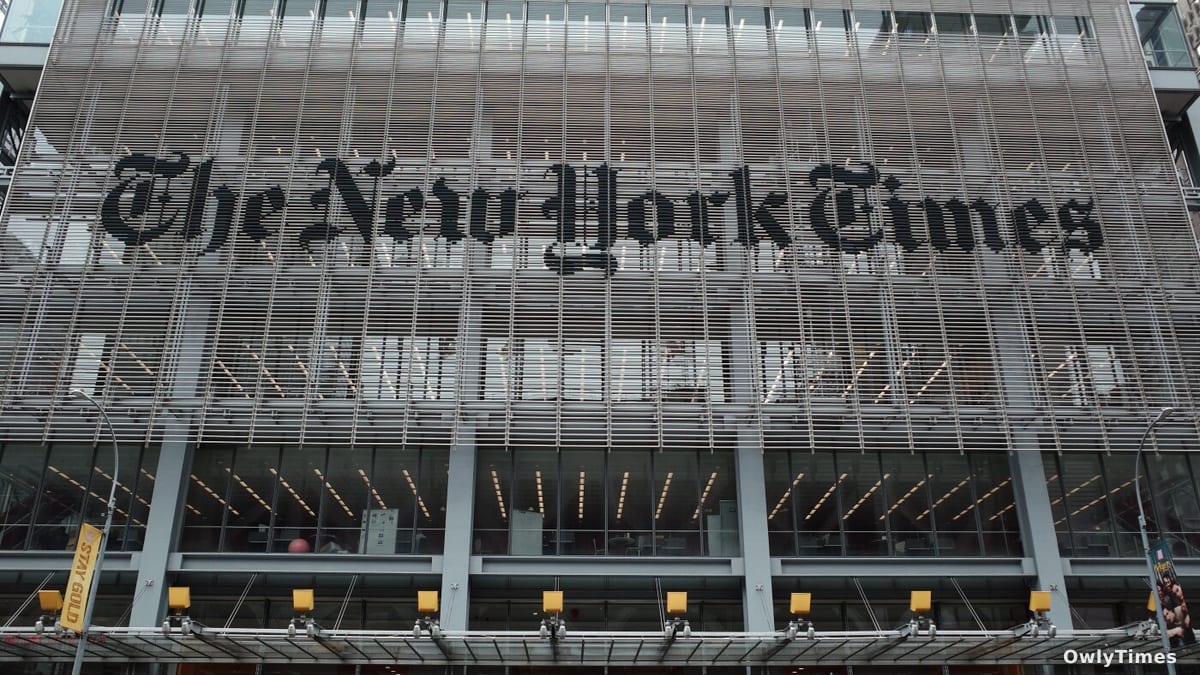

The strategic calculus behind the Department of Justice’s recent aggressive legal maneuvers suggests a concerted effort to establish executive control over the flow of sensitive information, effectively transforming the machinery of federal investigations into a tool for source identification and institutional discipline. By issuing subpoenas to journalists and pursuing sweeping records requests, the administration is moving to penalize the disclosure of internal security vulnerabilities while simultaneously exerting pressure on state-level election administration.
The Escalation Against The New York Times
The Justice Department has issued subpoenas to four New York Times journalists—Julian E. Barnes, Eric Lipton, Tyler Pager, and Eric Schmitt—compelling them to appear before a federal grand jury in Manhattan this Wednesday, according to NPR. The legal action follows the newspaper’s reporting on security concerns regarding the president’s new Air Force One, a $400 million Boeing 747-8 gifted by Qatar. Both NPR and The Independent confirm that federal agents served these subpoenas at the journalists’ homes on Friday evening.
The reporting revealed that the Secret Service advised President Trump to avoid the new jet for his trip to a NATO summit in Turkey due to a lack of defensive countermeasures present on older models. While the Times reports that a senior FBI official contacted the newsroom prior to publication to demand the story be killed and sources identified, the DOJ claims its actions are a standard response to unauthorized leaks. A Justice Department spokesperson emphasized to The Independent that "reporters are not the targets," but rather the individuals leaking national security secrets.
Mapping the Power Dynamics
Who benefits from these subpoenas is a matter of administrative deterrence; by forcing journalists to testify, the government creates a chilling effect on internal whistleblowers. Those who lose are the institutional guardrails of the press, as highlighted by David McCraw, senior vice president and deputy general counsel for the Times, who described the home visits as a "brazen act" intended to intimidate the media. Historically, this aligns with the administration's broader posture toward the press, which has included previous legal clashes with ABC News, CBS News, The Washington Post, and The Wall Street Journal.
The move is led by U.S. Attorney for the Southern District of New York Jay Clayton, a Trump nominee for national intelligence director. The timing is particularly pointed: Bruce D. Brown, president of the Reporters Committee for Freedom of the Press, notes that these subpoenas violate longstanding DOJ practice to use reporters as a last resort. This pattern of friction echoes the administration’s earlier, more intrusive investigative tactics, such as the search of Washington Post reporter Hannah Natanson's home earlier this year, where agents seized electronic devices.
A Broadening Legal Battlefield
Beyond the media, the DOJ’s investigative reach has met resistance in the courtroom regarding its inquiries into the 2020 election. ABC News reports that U.S. District Judge William Ray ruled against the DOJ’s attempt to obtain the names and contact information of all Fulton County election workers and volunteers. While the DOJ argued the information was necessary to identify potential witnesses to election irregularities, Judge Ray quashed the subpoena, labeling it an "overly broad fishing expedition" and noting that the statute of limitations for any 2020-related crimes has expired.
The political chess move to watch next is the scheduled appearance of Jay Clayton before the Senate Intelligence Committee this Wednesday. As noted by NPR, this hearing will serve as the primary venue for lawmakers to challenge the legality and ethics of the current DOJ pressure campaign against the press.