
The £10,000 Drone Revolution: Battlefield Necessity Drives a Shadow Passenger Market
£10,260. That’s the current list price of the DJI FlyCart 100, a heavy-lift cargo drone capable of carrying 85 kilograms. While companies like Volocopter, EHang, and Eve Air Mobility pursue years-long certification processes for passenger drones, this figure reveals a critical, and largely unacknowledged, reality: the technology for human transport via drone is already here, and it’s being deployed outside the bounds of regulation, driven by immediate needs and, increasingly, criminal opportunity. Follow the money – or, in this case, the desperate need for rapid evacuation and the lucrative potential of bypassing security – and a clear picture emerges: a shadow market for drone-based passenger transport is taking shape, fueled by affordability and a disregard for safety protocols.
This piece references the newscientist.com report.
The narrative of passenger drones has long focused on sleek, urban air taxis promising to alleviate congestion. However, the first wave of human-carrying drone flights isn’t occurring in futuristic cityscapes, but on the battlefields of Ukraine and, potentially, in the hands of smugglers and militants. In August 2025, Oleksandr Syrskyi, commander-in-chief of Ukraine’s armed forces, confirmed testing of drones for medical evacuation. This isn’t about convenience; it’s about the “golden hour” – the critical timeframe for treating trauma – and the limitations of traditional evacuation methods in a warzone saturated with drone threats. Roy Gardiner of Defense Tech for Ukraine succinctly explains the urgency: “getting a badly wounded soldier to advanced medical care…dramatically increases the survival rate.” This demand is overriding the lack of official certification, creating a de facto operational environment for passenger drones.
This isn’t simply a matter of adapting existing cargo drones. The development of heavy multicopter drones specifically for casualty evacuation is an “urgent priority” on both sides of the conflict, according to Gardiner. While helicopter air ambulances offer superior medical care during transport, the speed and relative smoothness of a drone flight – compared to navigating treacherous terrain with uncrewed ground vehicles – present a compelling alternative. The contrast is stark: established air ambulance services represent a multi-billion dollar industry with stringent safety regulations, while this emergent battlefield application operates with minimal oversight, prioritizing speed over comprehensive medical support.
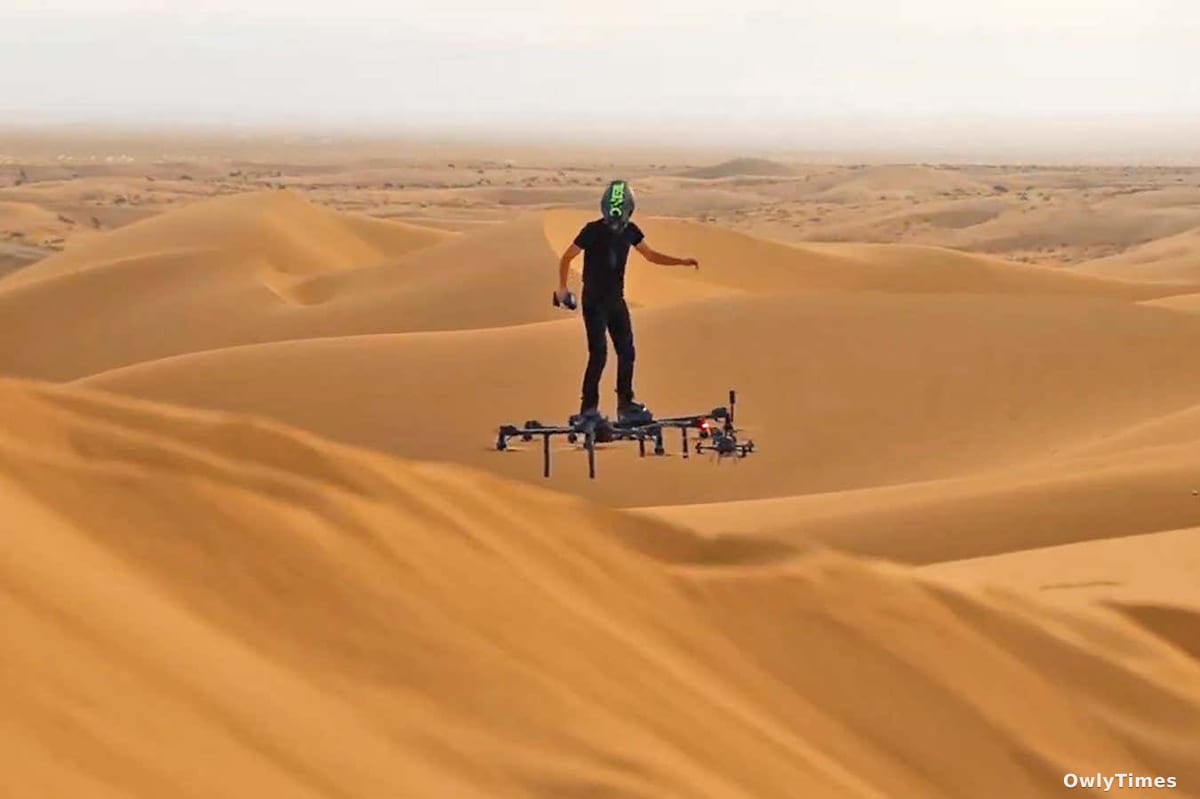
Beyond the immediate humanitarian crisis in Ukraine, a more troubling trend is emerging. Intelligence reports, notably from Australia-based DroneSec, indicate growing interest in human-carrying drones among criminal organizations. A video surfaced showing the Pakistan-based militant group Lashkar-e-Taiba utilizing a heavy-lift drone to transport a passenger within a training camp, demonstrating a clear intent to exploit the technology. Robert Bunker of C/O Futures highlights the core issue: “These systems can be used for human smuggling…over a secure border wall.” The £10,000 price point of a capable drone like the FlyCart 100 dramatically lowers the barrier to entry for illicit operations, making it a viable alternative to traditional smuggling routes.
The implications extend beyond border security. Bunker points to the potential for drones to facilitate prison escapes and even transport armed individuals into secure facilities, exploiting perceived physical barriers like walls, rivers, and canyons. This isn’t a hypothetical threat; small drones are already used for contraband smuggling into prisons. The leap to human transport represents a significant escalation, and one that security agencies are only beginning to address. While commercial passenger drones will undergo rigorous testing and adhere to strict safety standards, the unregulated, opportunistic use of cargo drones presents an immediate and evolving challenge.
What this means for your wallet: the proliferation of affordable, heavy-lift drones isn’t just a technological story; it’s a security story. Expect increased investment in counter-drone technology and border security measures. More subtly, the potential for disruption to established transportation and logistics networks – even if currently limited to illicit activities – could impact insurance rates and supply chain costs in the long term. The key question for investors and consumers alike is this: at what point does the cost of mitigating the risks associated with unregulated drone transport outweigh the benefits of the technology itself?