
The persistent human fascination with apocalyptic scenarios, fueled by Hollywood blockbusters like “2012,” often overshadows the genuinely fascinating, albeit incredibly slow, geological processes shaping our planet. While the dramatic, sudden shifts depicted in fiction remain firmly in the realm of imagination, a quiet, continuous reshaping is underway in East Africa. The Afar region of Northern Ethiopia isn’t poised to trigger a global catastrophe, but it is the site where the African continent is actively splitting apart, a process that offers a unique window into the birth of a new ocean – and a compelling case study in how scientific nuance often gets lost in sensationalized reporting.
The narrative surrounding Afar frequently veers into alarmist territory, with headlines proclaiming the continent is “breaking apart.” Emma Watts, a volcanologist who was part of a recent research team studying the region, acknowledges the communication challenge. “People see that and they’re like, ‘Oh no, it’s breaking apart!’ No, it’s very, very slow… I could say it until I’m blue in the face, but people still go for the clickbait title,” she told CNN. The reality is far more protracted: we’re talking about a process unfolding over millions of years, not days or even centuries. This isn’t “The Day After Tomorrow”; it’s the day after a few million years. The region’s significance lies not in impending doom, but in its accessibility – a rare opportunity to observe continental rifting in its early stages.
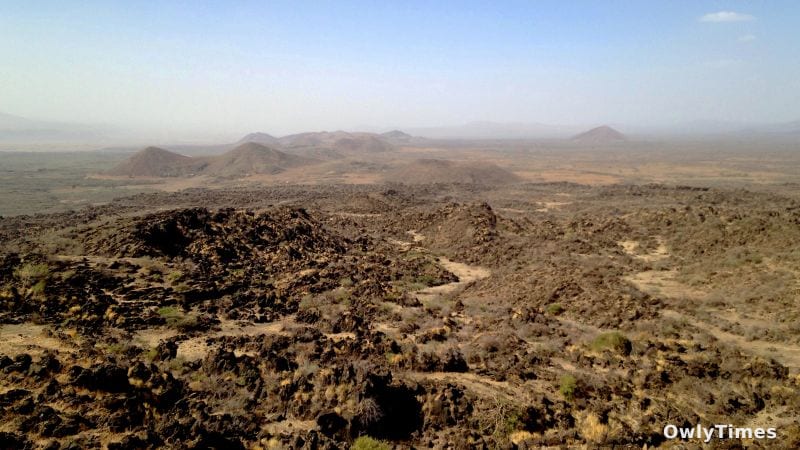
Afar’s unique geological position, at the intersection of three tectonic plates – the Main Ethiopian Rift, the Gulf of Aden Rift, and the Red Sea Rift – makes it a focal point for studying how continents divide. As these plates diverge, molten rock rises from the mantle, eventually forming new oceanic crust. While this process occurs globally, Afar is exceptional because the nascent ocean floor isn’t yet submerged. This allows researchers to directly study the mechanisms driving continental breakup, something typically hidden beneath miles of seawater. Watts explains, “Afar is a beautiful place because it (the new ocean floor) is not quite yet submerged. It’s giving us a window into a process that we don’t normally see.” The area itself is a harsh environment, with summer temperatures exceeding 50 degrees Celsius (122 Fahrenheit) and a landscape dominated by the volcanic Erta Ale, locally known as “the gateway to hell.” But for scientists, it’s a paradise of geological data.
Recent research, published last June, has revealed a dynamic interplay between a deep mantle plume and the rifting process. Geologists had long suspected the existence of this plume – a column of hot rock rising from deep within the Earth – but Watts and her team provided evidence of its pulsing nature, describing it as a “heartbeat.” This isn’t a steady rhythm, however. The plume’s activity varies across the three rifts, responding to the specific tectonic conditions of each. “Before this study, we thought the plume was simple: it came up, it was one composition,” Watts stated. “But we actually think it might have heterogeneities (varied characteristics) within the plume, whether that’s the amount of melt or what it’s made up of. That’s also then interplaying with that rifting rate, causing these variations.” This discovery challenges previous assumptions about the plume’s uniformity and highlights the complex relationship between mantle dynamics and surface deformation.
Drawn from CNN.
It’s crucial to understand the scale of these movements. The Red Sea and Gulf of Aden rifts are spreading at approximately 15 millimeters per year – roughly the rate of fingernail growth. The Main Ethiopian Rift is even slower, at around 5 millimeters annually. While measurable, these rates are hardly indicative of an imminent continental fracture. In fact, continental rifting often fails, as evidenced by the Midcontinent Rift in North America, which attempted to split the continent around the Great Lakes but ultimately stalled. This underscores that the formation of a new ocean isn’t a foregone conclusion, even in a region as geologically active as Afar.
Beyond the geological insights, Afar is proving to be a treasure trove for paleontological discoveries. The rifting process exposes ancient sedimentary layers, revealing clues about the region’s evolutionary history. A recent find, published in Nature in January, unearthed a 2.6-million-year-old fossil of Paranthropus, an extinct human relative nicknamed “Nutcracker Man” due to its powerful jaw muscles. Previously, Paranthropus remains were primarily found in southern and eastern Africa. This discovery, located 1,000 kilometers north of previous finds, suggests the species was more adaptable and geographically widespread than previously believed. Further fossilized teeth, dating between 2.6 and 2.8 million years ago, discovered last August, indicate the coexistence of multiple hominin species in the region, adding another layer of complexity to our understanding of human evolution.
The November eruption of Hayli Gubbi, a long-dormant volcano in Afar, serves as a reminder of the region’s inherent hazards. The resulting ash cloud disrupted air travel as far away as India and blanketed local grasslands. Watts emphasizes the need for improved understanding of these volcanic risks, stating, “I think often with risk in the region, we don’t know that much, because the eruptions haven’t been witnessed that frequently… I would love to continue making sure that we understand those volcanoes and help move science along with what’s happening with rifts and the hazards that we get.” The ongoing research in Afar isn’t just about understanding the Earth’s past and present; it’s about mitigating potential risks and preparing for the future.
Looking ahead, the next steps involve continued monitoring of volcanic activity, refining models of mantle plume dynamics, and further exploration for paleontological remains. But perhaps the most important task is improving public communication about these processes. The sensationalized headlines distract from the genuine scientific value of the research. The question isn’t if Africa will eventually split apart, but how – and what clues the Afar region will reveal about the forces shaping our planet along the way. Will we see a shift in media coverage towards more nuanced reporting, or will the allure of apocalyptic narratives continue to overshadow the slow, steady rhythm of geological time?





