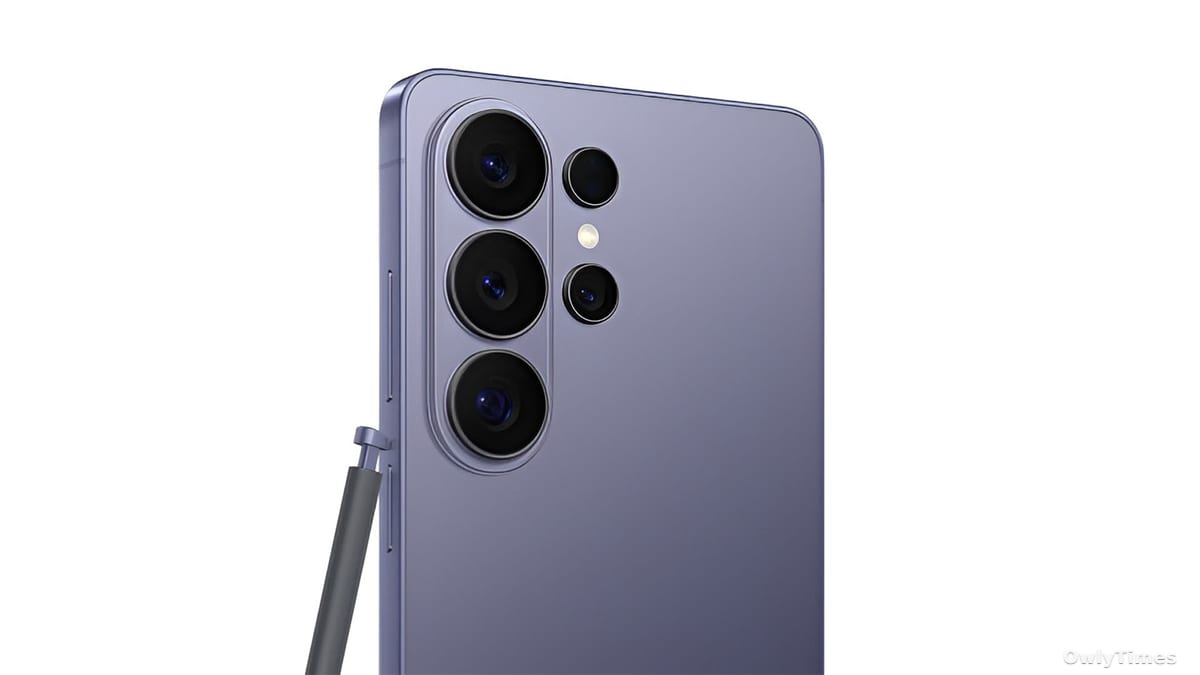

Is Samsung deliberately boring us? For years, the company has clung to incremental updates while Apple consistently pushes the envelope, and the latest news surrounding the Galaxy S26 Ultra’s battery is a prime example. The real story here isn't the 5,000mAh battery capacity – a figure unchanged since the S20 Ultra six years ago – it’s Samsung’s apparent willingness to settle for “good enough” in a market demanding innovation. This isn’t just about specs; it’s about a fundamental shift in consumer expectations and where Samsung fits into that future.
The Stagnation of 5,000mAh
The initial reaction to the S26 Ultra’s battery specs was, predictably, disappointment. While 5,000mAh isn’t bad, it feels…tired. Consider this: the average smartphone user is doing demonstrably more with their device than they were in 2018. Streaming higher-resolution video, running increasingly complex AI tasks, and generally being “always on” all drain power. To maintain the same 31-hour video playback runtime as the Galaxy S25 Ultra with the same capacity suggests either a remarkable leap in efficiency or, more likely, a carefully curated marketing statistic. Samsung’s official messaging reinforces this, stating the S25 Ultra and S26 Ultra offer identical endurance, a claim that feels less like a feature and more like an admission.
This piece references the wccftech.com report.
The Snapdragon Gamble and Cooling Concerns
The situation is further complicated by the inclusion of the Qualcomm Snapdragon 8 Elite Gen 5 for Galaxy. This new chipset promises performance gains, but also generates more heat. As anyone who’s left their phone in the sun knows, heat is the enemy of battery life. Samsung is reportedly addressing this with a larger vapor chamber, a fancy term for a more robust cooling system. But a larger cooler doesn’t magically solve the problem; it merely mitigates it. The question remains: will the efficiency gains of the new chip be enough to offset the increased thermal output, especially when users are pushing the phone to its limits with demanding tasks like gaming or AI processing?
The Illusion of Battery Life Numbers
Let’s be real about those 31-hour video playback claims. Companies routinely test battery life in laboratory conditions that bear little resemblance to real-world usage. Dimmed screens, specific video codecs, and disabled background processes all contribute to inflated numbers. Momentary Digital, a tipster on Weibo, initially suggested a difference in battery life was coming, but those claims remain unsubstantiated. This highlights a broader issue: the disconnect between advertised battery life and the experience of the average user. We’re told to expect a full day of use, but how many people actually achieve that without reaching for a charger by late afternoon?
AI and the Promise of Smarter Power Management
There is a glimmer of hope in Samsung’s ongoing development of Galaxy AI. Smarter software can optimize power consumption by learning user habits and intelligently managing background processes. If Samsung can truly leverage AI to predict and adapt to usage patterns, it could squeeze more life out of the existing battery capacity. However, this is a software solution to a hardware problem, and relying solely on AI feels like a band-aid on a deeper issue. The company is banking on incremental improvements to AI battery management to mask the lack of a substantial battery upgrade.
The current situation with the Galaxy S26 Ultra isn’t about a single battery specification; it’s a symptom of a larger trend. Samsung is playing it safe, prioritizing stability over innovation, and hoping that its brand loyalty will be enough to maintain its market share. But in a world where consumers are increasingly demanding more from their devices, “good enough” simply isn’t going to cut it. Expect to see a growing number of users, particularly those who actively use power-intensive features, to gravitate towards competitors who are willing to take bigger risks. My prediction? Within the next two years, Samsung will be forced to significantly increase battery capacity – or risk becoming the Nokia of the Android world: a once-dominant force relegated to nostalgia.